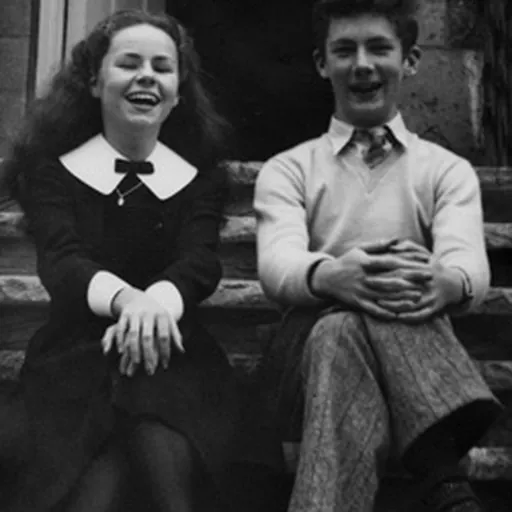
Claude Jutra
Canadian actor, film director, and screenwriter
About Claude Jutra
Lived 1930 – 1986 (aged 56). Claude Jutra was a Canadian film director, actor, screenwriter, film actor, television actor and director.
Claude Jutra (; March 11, 1930 – November 5, 1986) was a Canadian actor, film director, and screenwriter.
The Prix Jutra, and the Academy of Canadian Cinema and Television's Claude Jutra Award, were named in his honour because of his importance in Quebec cinema history. The awards were renamed in 2016, as were streets named for him, following the publication of allegations that he had sexually abused children during his lifetime.
Life and career Jutra was born and raised in Montreal, Quebec as Claude Jutras.
He went to work at the National Film Board of Canada in 1956 where he trained in all facets of filmmaking, although his first film for the NFB, Trio-Brio, was permanently lost when the organization moved its head office from Ottawa to Montreal.
With financing and production provided by the NFB, Jutra co-wrote and directed the 1971 film Mon oncle Antoine, which until very recently has been ranked as the best Canadian movie ever made. As well as directing several cinema vérité shorts such as Wrestling and The Devil's Toy (1966 film), he also co-directed with Norman McLaren and starred in the innovative pixilation Academy Award-nominated short A Chairy Tale.
He was offered the Order of Canada in 1972 but declined because he was a Quebec separatist. In 1984, he was awarded the Prix Albert-Tessier, given to individuals for an outstanding career in Québec cinema.
Death Jutra was diagnosed with early-onset Alzheimer's disease in the early 1980s. He was reported missing on November 5, 1986. His body was found in the St. Lawrence River in April 1987, with a note in his pocket reading "Je m'appelle Claude Jutra" ("My name is Claude Jutra");
Allegations of child sexual abuse In 2016, 30 years after his death, interviews with anonymized friends of Jutra claiming he was a pederast were made public in journalist Yves Lever's book Claude Jutra, biographie, Lever said that "one of Jutra's victims was under 14 years old."
On February 17, 2016, La Presse published an interview with an alleged victim of Jutra, who requested to remain anonymous, relating sexual abuse from the ages of 6 to 16. On the same day, Cinéma Québec removed Jutra's name from their awards following a request from the Minister of Culture of Quebec, Hélène David. To begin the renaming process, she requested the Commission de toponymie (Quebec Toponymy Commission) compile a list of streets and public places in the province bearing Jutra's name.
Of the controversy, The Globe and Mail wrote: "Few legendary figures have fallen so quickly and so completely. Merely 24 hours after the official publication of the first explosive allegation of child abuse against the Canadian cinematic pioneer, the film industry and governments started scrubbing the name Claude Jutra from every trophy, park and street."
Selected films
As actor A Chairy Tale - 1957 À tout prendre - 1964 The Rape of a Sweet Young Girl (Le viol d'une jeune fille douce) - 1968 Préambule - 1969 Act of the Heart - 1970 We Are Far from the Sun (On est loin du soleil) - 1971 Mon oncle Antoine -1971 Love on the Nose - 1974 (TV) Pour le meilleur et pour le pire - 1975 The Flower Between the Teeth (La fleur aux dents) - 1976 Arts Cuba - 1977 (voice) Two Solitudes - 1978 Riel - 1979 (TV) Till Death Do Us Part - 1982 (TV) The Tin Flute (Bonheur d'occasion) - 1983
As director Jutra made his debut as a director with Le dément du lac Jean-Jeunes - it explored themes that remained throughout his work, a nostalgia for childhood, madness, and troubled waters.
His collaboration with Michel Brault began at this early period. Mouvement perpétuel was influenced by Jean Cocteau's Le Sang d'un poète. L'École de la peur (1953) was the first television film made in Quebec. Toward the end of the 1950s, he moved to France, and François Truffaut, who became a friend, asked him to direct Anna la Bonne (1959), a Cocteau scenario. In 1960, Jutra returned to Canada.
Fiction Le dément du lac Jean-Jeunes - 1948, short film Perpetual Movement (Mouvement perpétuel) - 1949, short film L'école de la peur - 1953, TV movie Pierrot des bois - 1956, short film A Chairy Tale - 1957 short animated film co-directed with Norman McLaren Les mains nettes - 1958 Anna la bonne - 1959, short film from a scenario by Jean Cocteau À tout prendre - 1963 Marie-Christine - 1970, short film Mon oncle Antoine - 1971 Kamouraska - 1973 For Better or For Worse (Pour le meilleur et pour le pire) - 1975 Ada - 1977, TV movie created for anthology series For the Record Dreamspeaker - 1977, TV movie created for anthology series For the Record Seer Was Here - 1977, TV movie created for anthology series For the Record The Patriarch - 1978, episode of The Beachcombers The Wordsmith - 1979, TV movie Surfacing - 1980 By Design - 1981 Un petit bonhomme de chemin - 1982, unfinished film The Dame in Colour (La dame en couleurs) - 1985 My Father, My Rival - 1985, TV movie
Documentaries Au service de l'esprit troublé (Short film Co-Directed with Stanley Jackson, 1955) Chantons maintenant (Short film, 1956) Jeunesses musicales (Short film, 1956) Rondo de Mozart (Short film, 1957) Félix Leclerc, troubadour (Short film, 1958) Fred Barry, comédien (Short film, 1959) Le Niger, jeune république (Short film, 1961) La Lutte (Wrestling) (Short film Co-Directed with Marcel Carrière, Claude Fournier and Michel Brault, 1961) Québec-U.S.A. ou l'invasion pacifique (Short film Co-Directed with Michel Brault, 1962) Petit discours de la méthode (Short film Co-Directed with Pierre Patry, 1963) Ciné boum (Short film Co-Directed with Robert Russell, 1964) Comment savoir... (1966) Rouli-roulant (Short film, 1966) The Devil's Toy (Short film, 1966) Au coeur de la ville (Short film, 1969) Wow (1969) Québec fête juin '75 (Co-Directed with Jean-Claude Labrecque, 1976) Arts Cuba (Short film, 1977)
Awards and nominations
Canadian Film Awards
(1950) Canadian Film Award, Amateur for Perpetual Movement (Mouvement perpétuel) (1958) Canadian Film Award, Arts and Experimental for A Chairy Tale (shared with Norman McLaren) (1964) Canadian Film Award, Feature Film for À tout prendre (shared with Robert Hershorn) (1971) Canadian Film Award, Direction (Feature) for Mon Oncle Antoine (1977) Canadian Film Award, Direction (Non-Feature) for Dreamspeaker
Genie Awards
(1986) Genie Award, Best Achievement in Direction for The Dame in Colour (La Dame en couleurs) (1986) Genie Award, Best Screenplay for The Dame in Colour (La Dame en couleurs)
Film about Claude Jutra Jutra's close friend, filmmaker Paule Baillargeon, directed the feature documentary Claude Jutra: An Unfinished Story in 2002.
Marie-Josée Saint-Pierre used a mix of archival footage of Jutra with animation to create the 2014 short documentary film Jutra.
Legacy George Lucas stated in an interview that he shot the first Star Wars film like a Jutra documentary.
Besides the film awards (Claude Jutra Award and Jutra Award), a number of places bear or bore Jutra's name, all found in Quebec:
Multiple parks and streets later were renamed or scheduled to be renamed after the pederasty allegations in 2016.
Don’t just read it —
keep it.
Full-length biographies made to live with: read them, listen on the way to work, watch them tonight.
- E-book
- Audio
- Video
Instant download · yours to keep · every purchase keeps this site free
Important facts
People in Claude Jutra's life
Named in this biography and alive at the same time


Related people
Same field, nearest in time



Contemporaries
People whose lives overlapped Claude Jutra's
Frequently asked questions
Who was Claude Jutra?
Canadian actor, film director, and screenwriter (1930–1986)
When was Claude Jutra born?
Claude Jutra was born on 11 March 1930 in Montreal.
When did Claude Jutra die?
Claude Jutra died on 5 November 1986 in Montreal.
What was Claude Jutra's occupation?
Claude Jutra was a film director, actor, screenwriter, film actor, television actor and director.
What nationality was Claude Jutra?
Claude Jutra was Canadian.
Sources & further reading
Cite this page
APA: Biography.guide. (2026). Claude Jutra. https://biography.guide/claude-jutra/
MLA: "Claude Jutra." Biography.guide, https://biography.guide/claude-jutra/.
Chicago: "Claude Jutra." Biography.guide. https://biography.guide/claude-jutra/.
Data last updated: 2026-09-21 · Spot an error? Report a correction.
Portrait: Wikimedia Commons · author & licence
Page generated 2026-09-27 04:59 UTC