
About Marian Arkwright
Lived 1863 – 1922 (aged 58–59). Marian Arkwright was a British composer.
Marian Ursula Arkwright (25 January 1863 – 23 March 1922) was an English composer, pianist and string player (viola and double bass). She was one of the first women in England to earn a Bachelor of Music degree (in 1895), and the first woman to earn a doctorate in music, which she gained in 1913. Arkwright worked as an orchestral musician, composer and conductor, and received a prize for an orchestral work from The Gentlewoman.
Life Marian Arkwright was born in Norwich, Norfolk, England on 25 January 1863, a descendent of Richard Arkwright, the inventor of the Spinning Jenny. Her brother was the musicologist Godfrey Edward Pellew Arkwright.
Arkwright studied piano with Bernhard Althaus (1831–1917) and also took piano lessons from Charles Hallé. She also studied double bass with Charles Henry Winterbottom and composition with J.S. Liddle, organist at Newbury. She was awarded the L.R.A.M. in 1891, earned a Bachelor of Arts in music at Durham University in 1895, and a doctorate in music at the same university in 1913,
After completing her studies, she worked as an orchestral musician and composer and conducted orchestras including the Newbury Amateur Orchestral Union.
In 1906 she received the £25 first prize (Edith Swepstone came second) It was first performed at Newbury in 1907 and repeated in the same year by the Bournemouth Symphony Orchestra, with the composer conducting. Her Melbourne Suite for strings was composed for the 1907 Australian Exhibition of Women's Work.
Works Arkwright published three volumes of violin and piano duets and two Concert Pieces for viola and piano. She was noted for unusual instrument combinations. She took an interest in folk music and her Japanese Symphony contained Japanese airs that she had noted down herself, following a trip to Japan with Lucy Broadwood. Nigel Burton considers her The Dragon of Wantley, a ballad for three voices, to be her best children's work.
Her 1914 Requiem Mass was well received in the early stages of World War 1, A more authentic response to the war came later, in Through the Mist, a musical account of the returning of the body of the Unknown Warrior on HMS Verdun in 1920.
Orchestral A Blackbird's Matins, concert overture (performed in Cambridge, 1900) Hymn of Pan, scena for baritone and orchestra Japanese Suite for strings (1911) (aka In Japan?) Melbourne Suite for strings (1907) Symphony in A minor, The Japanese (before 1912) Through the Mist (1920) Variations on an air by Handel (fp. Bournemouth, 1897) Winds of the World, symphonic suite (fp. Bournemouth, February 1908)
Choral Atalanta in Calydon, cantata for soloists, chorus and orchestra The Dragon of Wantley, ballad for treble voices, piano and string quartet (1915, published Cary & Co) In convertendo, psalm, three part canon The Last Rhyme of True Thomas, for chorus with string quartet and piano Requiem Mass for chorus and orchestra (1914, published Cary & Co) Three Kings from out the Orient, psalm, with bassoon obligato Up to those bright and gladsome hills, psalm, two part canon
Operetta The Water Babies, based on the book by Charles Kingsley
Chamber music Piano and violin duets, Vol. 1, 2 and 3 (published A Cary & Co) Quintet for piano, oboe, clarinet, horn and bassoon A Retrospect, cello solo Rêveries for piano, oboe and viola Scherzo and Variations for piano, clarinet and bassoon Trio for piano, oboe and horn Trio for pianoforte, oboe and viola Two concert pieces for viola and piano (published Breitkopf & Hartel)
Song Bright is the ring of words (published Cary & Co) Children's song (published Cary & Co) Come, pretty wag (1897) In the midst of the woods, two part song The Lark now leaves his watery nest (published Banks & Son, York) Renewal, two part song with piano
Don’t just read it —
keep it.
Full-length biographies made to live with: read them, listen on the way to work, watch them tonight.
- E-book
- Audio
- Video
Instant download · yours to keep · every purchase keeps this site free
Important facts
People in Marian Arkwright's life
Named in this biography and alive at the same time





Related people
Same field, nearest in time
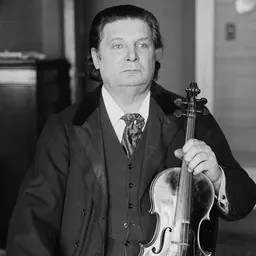

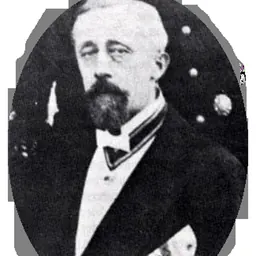
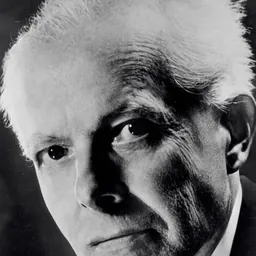
Contemporaries
People whose lives overlapped Marian Arkwright's

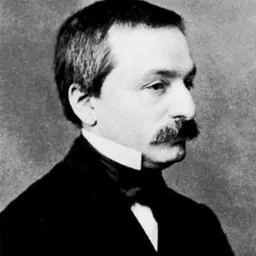


Frequently asked questions
Who was Marian Arkwright?
British composer
When was Marian Arkwright born?
Marian Arkwright was born in 1863 in Norwich.
When did Marian Arkwright die?
Marian Arkwright died on 23 March 1922 in Highclere.
What was Marian Arkwright's occupation?
Marian Arkwright was a composer.
What nationality was Marian Arkwright?
Marian Arkwright was British.
Sources & further reading
Cite this page
APA: Biography.guide. (2026). Marian Arkwright. https://biography.guide/marian-arkwright/
MLA: "Marian Arkwright." Biography.guide, https://biography.guide/marian-arkwright/.
Chicago: "Marian Arkwright." Biography.guide. https://biography.guide/marian-arkwright/.
Data last updated: 2026-09-20 · Spot an error? Report a correction.
Page generated 2026-09-27 05:22 UTC