
About Edith Swepstone
Lived 1885 – 1930 (aged 44–45). Edith Swepstone was a British composer and music educator.
Edith Mary Swepstone (4 January 1862 – 5 February 1942) was an English composer and music teacher. She studied music at the Guildhall School and later worked as a lecturer at the City of London School. She died in Tonbridge, Kent.
Career She studied music at the Guildhall School in London, England In 1895 she was giving music lectures at the City School of London. Though the music is not located, 14 of Swepstone’s orchestral works were presented in a total of 24 performances, between 1899 and 1933. There are only three recorded instances of her orchestral music having been performed elsewhere. The minuet and rondo of her Symphony in G minor were performed in Leyton on 10 March 1887 with the composer conducting the Aeolian Ladies' Orchestra, and the opening movement at the Guildhall School of Music on 7 December 1889 as part of a concert of student works. Swepstone’s influence is apparent in that, of all the pieces played at the series and written by women, over half were her compositions.
Orchestral Symphony in G minor (1887, first complete performance Bournemouth, 3 February 1902) Les Tenebres overture (fp. Queen's Hall, 1897, Bournemouth 1903) Daramona, symphonic poem (fp. Bournemouth, 26 October 1899) The Ice Maiden, suite (fp. Bournemouth, 26 November 1900) A Vision, tone poem (first performed Bournemouth, 1903) Paolo and Francesca, prelude (fp. Bournemouth, February 1906) Mors Janua Vitae, funeral march (fp. Bournemouth, April 1906) The Wind in the Pines, symphonic poem (fp. Bournemouth, 1909) The Horn of Roland, overture (fp. Bournemouth, 1910) Moonrise on the Mountains, symphonic poem, (fp. Bournemouth, 26 November 1912) Woods in April, symphonic poem, (fp. Bournemouth, 1914) The Roll of Honour, march (fp. Bournemouth, June 1916) Morte d’Arthur, symphonic poem, (fp. Bournemouth, 1920) The Four Ships, suite (fp. Bournemouth, 3 September 1924)
Chamber Foreshadowings, with cello accompaniment Horn Quintet in D Lament for Violin and Piano Piano Quintet in E minor Piano Quintet in F minor Quintet for piano and wind in E flat Requiem for cello and Piano String Quartet Lyrical Cycle Piano Trio in A minor Piano Trio in D minor Piano Trio in G minor Une Larme, for clarinet and piano
Choral and song The Crocuses' Lament, Two-Part Song for female voices Foreshadowings The Ice Queen, cantata, female voice Idylls of the Morn, cantata, female voice 'O may I join the Choir invisible', text George Eliot Robert Louis Stevenson's Songs for Children Set to Music A Song of Twilight text by A.R. Aldrich Three-Part Song for female voices, with Pianoforte Accompaniment, text by F.R. Haverga
Don’t just read it —
keep it.
Full-length biographies made to live with: read them, listen on the way to work, watch them tonight.
- E-book
- Audio
- Video
Instant download · yours to keep · every purchase keeps this site free
Important facts
People in Edith Swepstone's life
Named in this biography and alive at the same time


Related people
Same field, nearest in time

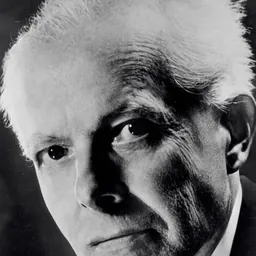


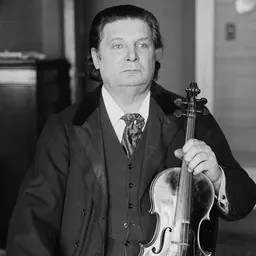
Contemporaries
People whose lives overlapped Edith Swepstone's
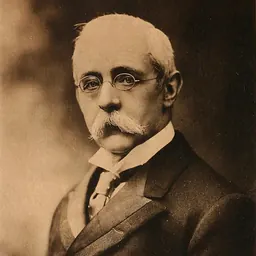


Frequently asked questions
Who was Edith Swepstone?
British composer
When was Edith Swepstone born?
Edith Swepstone was born in 1885 in Stepney.
When did Edith Swepstone die?
Edith Swepstone died in 1930 in Tonbridge.
What was Edith Swepstone's occupation?
Edith Swepstone was a composer and music educator.
What nationality was Edith Swepstone?
Edith Swepstone was British.
Sources & further reading
Cite this page
APA: Biography.guide. (2026). Edith Swepstone. https://biography.guide/edith-swepstone/
MLA: "Edith Swepstone." Biography.guide, https://biography.guide/edith-swepstone/.
Chicago: "Edith Swepstone." Biography.guide. https://biography.guide/edith-swepstone/.
Data last updated: 2026-09-22 · Spot an error? Report a correction.
Page generated 2026-09-27 05:33 UTC