
María Teresa Freyre de Andrade
Cuban librarian and information scientist
About María Teresa Freyre de Andrade
Lived 1896 – 1975 (aged 79). María Teresa Freyre de Andrade was a Cuban bibliographer and librarian.
María Teresa Freyre de Andrade (27 January 1896 – 20 August 1975) was a Cuban librarian and information scientist, the founder of the national public library system in Cuba (Red Nacional de Bibliotecas Públicas), and a pioneer of modern Cuban librarianship. She was the first director of the José Martí National Library in Havana, having been appointed by Fidel Castro after the Cuban Revolution in 1959. Freyre de Andrade envisioned a model of the biblioteca popular, a “popular library,” which, in contrast to a public library where “the book stands still on its shelf waiting for the reader to come searching for it,” would be “eminently active” in finding its readers.
Biography and education Freyre de Andrade was born on 27 January 1896 in St. Augustine, Florida, where her father, Fernando Freyre de Andrade, had sought refuge for his family. Her family later returned to Cuba to fight in the revolution, where Fernando rose to the rank of general. Freyre de Andrade was forced to move to Paris in 1932 after the Machado regime killed three of her uncles. She studied French and library science at the Sorbonne between 1936 and 1937 and graduated in 1938 with a diploma in librarianship from the Ecole de Chartes.
In the early 1960s, Freyre de Andrade led the creation of the National Libraries Directorate (Dirección Nacional de Bibliotecas). This enabled her to put into practice her dream of integrating all the existing libraries across Cuba. Her work, which both integrated existing libraries and created new ones, resulted in the National Network of Public Libraries (Red Nacional de Bibliotecas Públicas), which provided each province with a public library to serve their information needs. As Director of the DGB, Freyre de Andrade attended each of these libraries several times a year, traveled across provinces to check the proper functioning of each and every one of the libraries that made up the network.
Freyre de Andrade also inspired and developed a new model for political librarianship in Cuba, which rather than copying English models of libraries, was designed to "take an active part in what is the Revolution.” Cuban librarians under Freyre de Andrade actively sought out materials that had previously been censored from library collections before the revolution, including politically critical publications from the 1950s. As part of this project of revolutionary librarianship, Freyre de Andrade and her Cuban library colleagues also became involved in the broader project of creating Cuba's own "computing industry and information infrastructure," which ultimately led to "a distinctive new field of information science, which inherited the revolutionary ideals of Cuban librarianship."
As part of her work leading the National Library, Freyre de Andrade led collection development for children's literature. Per Eliseo Diego, who was in charge of the Department of Children's Literature and Narratives at the Martí National Library in Havana at the beginning of the Cuban Revolution: "The Revolution had the right to appoint María Teresa Freyre de Andrade as director of the National Library. She had the happy initiative of creating the first public library for children that existed in Cuba and that led our youngest readers to get in touch with books that until then they had no access."
Legacy In 2004, the Cuban Association of Librarians (ASCUBI) formalized the creation of the María Teresa Freyre de Andrade National Prize, which is awarded to distinguished personalities for their work in public libraries. The Association of Cuban Historians also created an award in her name for librarians who support the work of historians.
The Jose Martí National Library, unusually for a national library, contains within its space a public circulating library, the María Teresa Freyre de Andrade Circulating room, in her honor.
Don’t just read it —
keep it.
Full-length biographies made to live with: read them, listen on the way to work, watch them tonight.
- E-book
- Audio
- Video
Instant download · yours to keep · every purchase keeps this site free
Important facts
People in María Teresa Freyre de Andrade's life
Named in this biography and alive at the same time
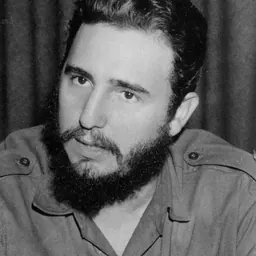

Related people
Same field, nearest in time



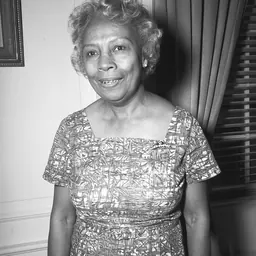

Contemporaries
People whose lives overlapped María Teresa Freyre de Andrade's

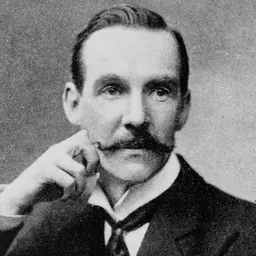

Frequently asked questions
Who was María Teresa Freyre de Andrade?
Cuban librarian and information scientist (1896-1975)
When was María Teresa Freyre de Andrade born?
María Teresa Freyre de Andrade was born on 27 January 1896 in St. Augustine.
When did María Teresa Freyre de Andrade die?
María Teresa Freyre de Andrade died on 20 August 1975 in Havana.
What was María Teresa Freyre de Andrade's occupation?
María Teresa Freyre de Andrade was a bibliographer and librarian.
What nationality was María Teresa Freyre de Andrade?
María Teresa Freyre de Andrade was Cuban.
Sources & further reading
· Wikipedia: María Teresa Freyre de Andrade
· DBpedia: María Teresa Freyre de Andrade
Cite this page
APA: Biography.guide. (2026). María Teresa Freyre de Andrade. https://biography.guide/maria-teresa-freyre-de-andrade/
MLA: "María Teresa Freyre de Andrade." Biography.guide, https://biography.guide/maria-teresa-freyre-de-andrade/.
Chicago: "María Teresa Freyre de Andrade." Biography.guide. https://biography.guide/maria-teresa-freyre-de-andrade/.
Data last updated: 2026-09-20 · Spot an error? Report a correction.
Page generated 2026-09-27 04:59 UTC