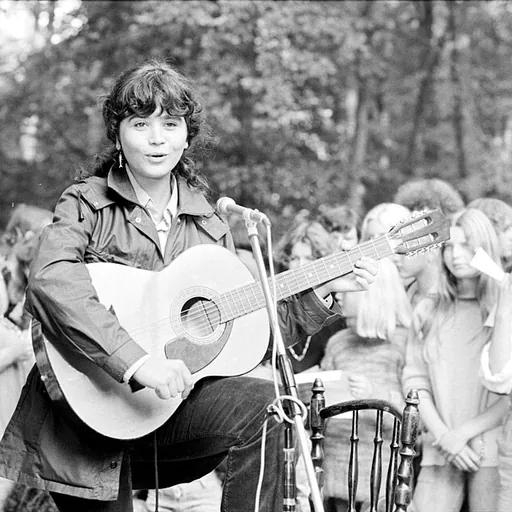
About Maria Schneider
Lived 1952 – 2011 (aged 58). Maria Schneider was a French television actor, film actor and model.
Maria-Hélène Schneider (27 March 1952 – 3 February 2011), known professionally as Maria Schneider, was a French actress.
She first appeared on stage in Paris at the age of 15 and then moved on to work in films, initially as an extra, but had already advanced to more substantial roles by the age of 20.
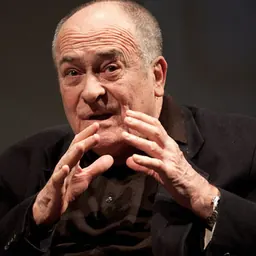
Schneider achiedved international recognition at the age of 19 for her performance opposite Marlon Brando in Bernardo Bertolucci's controversial Last Tango in Paris (1972). The film became controversial for its explicit sexual content and its infamous sexual assault scene. The film was nominated for Academy Award for Best Picture.
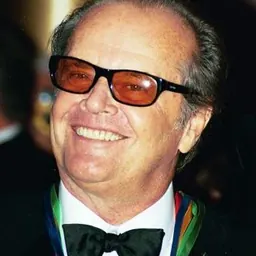
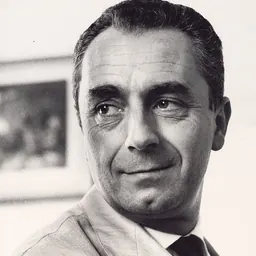
In 1975 she starred opposite Jack Nicholson in Michelangelo Antonioni's critically acclaimed The Passenger. Although the film showcased her abilities, a reputation for walking out of films during production resulted in her becoming unwelcome in the industry. However, she re-established stability in her personal and professional life in the early 1980s, and became an advocate for equality and improving the working conditions for actresses.
She continued acting in film and TV until a few years before she died in 2011 after a long illness.
Early life and family Schneider was born in Paris to Daniel Gélin, a French actor, and Marie-Christine Schneider from Romania, a model who ran a bookshop in Paris. Gélin was married to actress and producer Danièle Delorme during the affair and his lack of fatherly involvement was deeply felt by his daughter. Gélin never recognised Schneider as his daughter, though he publicly acknowledged his paternity in the 1970s. Schneider was first brought up by her mother in a town near the French border with Germany. Eventually, her mother was unwilling to attend to her and entrusted her to a nurse for two years. Maria Schneider later lived for several years with her maternal uncle Michel Schneider and his wife. She reconnected with her biological father when she was sixteen, by visiting him unannounced.
Schneider later said that she had met Gélin only "three times". Her cousin Vanessa Schneider wrote, in a biographical book published in 2018, that Maria Schneider had actually been in regular contact with her father during her late teens. It was he who first brought her to a film set. Over the years, Maria Schneider and her biological father met irregularly. She eventually bonded with her half-siblings (who had been unaware of her until after she starred in Last Tango in Paris), especially her half-sister Fiona Gélin. While working on a film set, she met Brigitte Bardot, who having worked with her father on several productions, was "horrified" that the young actress was homeless and offered her a room in her house. Through Bardot, Schneider met people in the film business, including Warren Beatty, who was greatly impressed by Schneider, and introduced her to the William Morris Agency. This was followed by relatively substantial roles in films such as Roger Vadim's Hellé (1972); The Old Maid (La Vieille Fille) (1972) with Philippe Noiret; Dear Parents (Cari genitori) (1973) opposite Florinda Bolkan and Catherine Spaak; and Dance of Love (1973), based on a play by Arthur Schnitzler. (The latter film is also known as Merry-Go-Round, which is distinct from Schneider's 1981 film of the same name directed by Jacques Rivette.)
Last Tango in Paris and related controversies Schneider gained international renown for her performance at the age of 19 in the sexually explicit Last Tango in Paris (1972), directed by Bernardo Bertolucci. In a graphic portrayal of anonymous sex with an older man, she performed several nude scenes. However, it has been acknowledged that the film's explicit "butter" rape scene, which both Bertolucci and her co-star Marlon Brando knew about, was not revealed to her until Bertolucci informed just before the filming of it. In 2007, she said: In 2013, Bertolucci said he had withheld the information from her to generate a real "reaction of frustration and rage". Brando alleged that Bertolucci had wanted the characters to have real sex, but Brando and Schneider both said it was simulated. Actress Jessica Tovey, writing in The Guardian, argued that Bertolucci's defense of pursuing an artistic vision was "bogus" and that what occurred was "a violation."
In 2001, Schneider commented:
In the 1970s, criminal proceedings were brought against Bertolucci in Italy for obscenity; the film was sequestered by the censorship commission and all copies were ordered destroyed. An Italian court revoked Bertolucci's civil rights for five years and gave him a four-month suspended prison sentence. In 1978 the Appeals Court of Bologna ordered three copies of the film to be preserved in the national film library with the stipulation that they could not be viewed, until Bertolucci was later able to re-submit it for general distribution with no cuts.
Schneider said that due to her experience with the film – and her treatment afterward as a sex symbol rather than as a serious actress – she decided never to work nude again. She started struggling with depression, became a drug addict and made several suicide attempts. She remained friends with Brando as the years went on but still condemned Bertolucci, she said Bertolucci was “very manipulative, both of Marlon and myself, and would do certain things to get a reaction from me. Some mornings on set he would be very nice and say hello and on other days, he wouldn’t say anything at all.” “I was too young to know better,” she added. “Marlon later said that he felt manipulated, and he was Marlon Brando, so you can imagine how I felt.”
She later became a women's rights advocate, in particular fighting for more female film directors, more respect for actresses and better representation of women in film and other media.
1970s, post-Last Tango
In 1975, Schneider was cast opposite Jack Nicholson in the well-received Michelangelo Antonioni film The Passenger, which remains one of the highlights of her career, and was the personal favorite of the actress. The picture, produced by Carlo Ponti (as with The Passenger and Dear Parents) and also featuring Robert Vaughn, Vic Morrow, and Sydne Rome, went largely unnoticed by the public and critics alike.
During the 1970s, Schneider traveled (including to the Hopi Reservation and Navajo Nation and was replaced mid-production with Teresa Ann Savoy, who had appeared in the director's previous film Salon Kitty.
Around the same time, Schneider agreed to star in Luis Buñuel's That Obscure Object of Desire (1977), and showed up on set, yet argued with the filmmaker over how her role would be portrayed in light of Schneider's growing concern regarding the depiction of women in cinema , and because of excessive nudity. Schneider ultimately dropped out, and Buñuel made the creative, unusual decision to replace her with not one but two actresses for the same role: Carole Bouquet and Ángela Molina. She was asked to play Mary, mother of Jesus in Franco Zeffirelli's 1977 television miniseries Jesus of Nazareth; Schneider said she did not feel right for the part, though later regretted missing out on this opportunity, and instead eventually appeared in Zeffirelli's 1996 film Jane Eyre in a brief appearance as Bertha Mason. Schneider left production without completing her scenes and had to be replaced with a double. The film was finally released in 1981 to mediocre reviews.
The 1980s The 1980s were a much quieter period for Schneider, both personally and professionally. Following increasing issues with her drug use (including cocaine, LSD, and heroin ), Schneider once and for all overcame these problems by the early '80s - which she accredited to her "angel", which may have been life-partner Maria Pia. She told The New York Times in February 1973:
In early 1976, she abandoned the film set of Caligula (reportedly due to its pornographic content, saying "I am an actress, not a prostitute!") and checked herself into a mental hospital in Rome for several days to be with her then-lover, photographer Joan Patrice Townsend daughter of author Robert Townsend. This, coupled with her refusal to perform nude, led to Schneider's dismissal from the film. The 1970s were turbulent years for Schneider, marked by excessive drug use and a suicide attempt. Schneider said that she disliked the instant fame accorded to her from Last Tango in Paris. She suffered abuse and began taking drugs. I was rock 'n' roll. About drugs, we did not know at the time, it was so dangerous. There was an ideal, to change society and especially a thirst for novelty ... I have lost seven years of my life and I regret it bitterly ... I started using drugs when I became famous. I did not like the celebrity, and especially the image full of innuendo, naughty, that people had of me after Last Tango. In addition, I had no family behind me, who protect you ... I suffered abuse. People who come up to tell you unpleasant things on planes. I was tracked down, and I felt hounded.
Death Schneider died of cancer on 3 February 2011 at age 58. Her funeral was held on 10 February 2011 at the Church of Saint-Roch, Paris. In addition to her partner Maria Pia Almadio, half-siblings Fiona and Manuel Gélin, and her uncle Georges Schneider, the funeral was attended by actors, directors, and producers in French cinema such as Dominique Besnehard, Bertrand Blier, Christine Boisson, Claudia Cardinale, Alain Delon, and Andréa Ferreol. Delon read a tribute from Brigitte Bardot. Schneider was cremated afterwards at Père Lachaise crematorium, and her ashes were to be scattered at sea at the foot of the Rock of the Virgin in Biarritz, according to her last wishes.
Legacy and honours In 2001, Schneider was the guest of honor at the 23rd Festival Créteil Films de Femmes. According to Schneider, Marcel Carné, director of Children of Paradise (1945) and one of the most important directors of the late 1930s, would have died in poverty but for La Roue Tourne supporting him for the last 10 years of his life.
On 1 July 2010, Schneider was awarded the medal of Chevalier, Ordre des Arts et des Lettres, for her contributions to the arts by Minister of Culture and Communication, Frédéric Mitterrand. He had acted with her in Jacques Rivette's film, Merry-Go-Round (1981).
After Schneider's death, Patti Smith released a song on her 2012 album Banga called "Maria", which was dedicated both to the actress and nostalgic memories of the 1970s.
In 2018, her cousin Vanessa Schneider published Tu t'appelais Maria Schneider, a book about her.
On 2 February 1983, Schneider participated in an interview for the TV show Cinéma, Cinémas, which asked her about the filming of Last Tango in Paris. Elisabeth Subrin based a 60-second short film on that interview, which became part of a compilation for Strand Releasing's 30th Anniversary. The 1983 Maria Schneider interview for Cinéma, Cinémas is now the basis for Subrin's 25-minute work, Maria Schneider, 1983, which premiered at the 2022 Cannes Film Festival in the Director's Fortnight section.
In 2024, her life story was adapted into the French film Being Maria, in which Schneider is portrayed by Anamaria Vartolomei.
Filmography
Films
Television Television Year Title Role Notes 1984 Buio nella valle Miniseries 1985 A Song for Europe TV film, A Crime of Honour 1987 Résidence surveillée L'or noir de Lornac 1988 Silvia è sola TV movie 1993 Contrôle d'identité TV movie 1995 Navarro Samira Episode: "L'ombre d'un père" 1998 Angelo nero TV movie Il cuore e la spada Queen Maga of Ireland TV movie 2004 Maigret 2008 A.D. La guerre de l'ombre Miniseries
Don’t just read it —
keep it.
Full-length biographies made to live with: read them, listen on the way to work, watch them tonight.
- E-book
- Audio
- Video
Instant download · yours to keep · every purchase keeps this site free
Important facts
Family & relationships
People in Maria Schneider's life
Named in this biography and alive at the same time





Related people
Same field, nearest in time


Contemporaries
People whose lives overlapped Maria Schneider's

Frequently asked questions
Who was Maria Schneider?
French actress (1952-2011)
When was Maria Schneider born?
Maria Schneider was born on 27 March 1952 in 15th arrondissement of Paris.
When did Maria Schneider die?
Maria Schneider died on 3 February 2011 in 15th arrondissement of Paris.
What was Maria Schneider's occupation?
Maria Schneider was a television actor, film actor and model.
What nationality was Maria Schneider?
Maria Schneider was French.
Sources & further reading
· DBpedia: Maria Schneider (actress)
Cite this page
APA: Biography.guide. (2026). Maria Schneider. https://biography.guide/maria-schneider-television-actor/
MLA: "Maria Schneider." Biography.guide, https://biography.guide/maria-schneider-television-actor/.
Chicago: "Maria Schneider." Biography.guide. https://biography.guide/maria-schneider-television-actor/.
Data last updated: 2026-09-22 · Spot an error? Report a correction.
Portrait: Wikimedia Commons · author & licence
Page generated 2026-09-27 04:57 UTC