
About Maria Lorena Barros
Lived 1948 – 1974 (aged 26). Maria Lorena Barros was a Filipino activist, known for Martial Law in the Philippines.
Maria Lorena Morelos Barros (March 18, 1948 – March 24, 1976) was a Filipino activist. She founded the Malayang Kilusan ng Bagong Kababaihan (Free Movement of New Women) or MAKIBAKA, a militant women's organization shortly before the Martial Law regime of Ferdinand Marcos. When Martial Law was declared, she went underground, was later captured and was a top political prisoner. She escaped to the countryside as a guerrilla fighter and was killed during a military ambush at 28 years old.
Birth, Childhood and Education Maria Lorena Morelos Barros was born on March 18, 1948. Her father was Romeo Barros. Her mother Alicia Morelos was secretary of the family corporation and an assistant to the owner of a movie house. Lorena grew up with her mother, maternal grandfather and aunts in a modest home. Her family valued education and proper manners.
Lorena Barros studied until Grade II at the Instituto de Mujeres (Academy for Women) and finished grade school at St. Joseph's College. She was described as an inquisitive, conscientious and affectionate child. She was among the top students in her school. At a young age, Laurie, as she was affectionately called, was an early reader.
Lorena enrolled in the Far Eastern University (FEU) Girls High School, this time as a scholar.
Lorena's mother was also overprotective Lorena would be in the forefront of the struggle. At this time, she wrote mostly in Filipino, in order to be understood by the masses. was established, with Lorena as the founding chair. —that of imperialism, feudalism and bureaucrat capitalism. The foundation of MAKIBAKA was important because it articulated the women's question within the broader framework of national and class oppression. In addition, it helped organize women within the ranks of the revolutionary forces.
Their first major activity was the protest of the Binibining Pilipinas or the Miss Philippines Beauty Pageant held at the Araneta Coliseum on April 18, 1970. Countless poems, songs and plays are written in her honor. Lilia Quindoza Santiago in her book In the Name of the Mother writes, “Barros is now a symbol of poet, warrior, lover, woman. Many young women writers derive inspiration from her writings, principles and struggle; her name is often mentioned in meetings of women members of the movement.” and the musical "Lorena" by Joi Barrios, both of which were based on Lorena's life and the letters written to her mother and fellow activists. Another was the play “Ang mga Lorena”, which was staged by the youth cultural group Sinagbayan at the University of the Philippines Diliman in December 2008. In this play, her story is intertwined to that of UP student activists Karen Empeno and Sherlyn Cadapan, who were abducted by military personnel in June 2006 and still remain missing until today.
Among the poems dedicated to her are E. San Juan's “Ang Tagumpay Ni Maria Lorena Barros” (“The Victory of Lorena Barros”) (1983) and “Maria Lorena Barros, Pumuputol Sa Alambre’t Rehas” (“Maria Lorena Barros, who cuts the wires and the prison bars”) ( written in 2009) and Bienvenido Lumbera's "Ang mga Lorena"(“The Lorenas”).
The song composed by the activist singers Inang Laya mentions her name as one of the women heroes (along with Gabriela Silang, Teresa Magbanua, Tandang Sora, Liza Ballando and Liliosa Hilao) who have fought in the revolution.
In the University of the Philippines, the Lorena Barros Hall in Vinzons’ Hall—the student activity center in the university—was named in her honor. She is also among the 298 revolutionary heroes and martyrs honored on the Bantayog ng mga Bayani Wall of Remembrance, which lists the names of the activists who were killed, disappeared or who fought during the Marcos dictatorship.
Because of MAKIBAKA, of which Lorena Barros was the founding chair, several women's groups were formed that would protest against the Martial Law and would seek to address the structural inequalities of the Philippines and mobilize women, particularly from the grassroots. MAKIBAKA eventually evolved into GABRIELA (General Assembly Binding Women for Reforms, Integrity, Equality, Leadership, and Action), a broad alliance of women's organizations, which was founded in April 1984 a year after the assassination of Benigno “Ninoy” Aquino Jr. GABRIELA is an anti-imperialist grassroots-based women's organization that aims to liberate women through fighting for national sovereignty, democratic governance, land reform and basic services for the people; end militarization and discrimination among men and women; and build solidarity among international women's groups to fight “sexism, imperialism and militarism”.
Poems of Lorena Barros “Documentary of a War” Philippine Collegian. 3 Apr. 1968. Rpt. In Sarilaya: Women in Arts and Media. Eds. Sr. Mary John Mananzan, Ma. Asuncion Azcuna and Fe Mangahas. Manila: Institute of Women's Studies, 1989. 107–110. “There is a new scavenger.” Philippine Collegian. 29 Aug. 1968. “The Swingles Came to Town.” Philippine Collegian. 16 Jan. 1969. “Awit Panalubong sa Turista ng mga Taga-Tanauan.” Philippine Collegian. 27 Feb. 1969. “Dalwampu’t Isa.” Philippine Collegian. 3 Sept. 1969. “A Park is Born.” Collegian Folio. 1st Semester 1968–1969. Rpt. in In the Name of the Mother. Ed. Lilia Quindoza Santiago. Quezon City: UP Press, 2002. 149. “Sampaguita.” Ulos. 1973. Rpt. in Kamao: Tula ng Protesta 1970–1986. Eds. Alfrredo Salanga, et al. Manila: CCP, 1987. 94–95. “Ipil is harder to bear.” Kamao: Tula ng Protesta 1970–1986. Eds. Alfrredo Salanga, et al. Manila: CCP: 1987. 94–95. Rpt. in In the Name of the Mother. Ed. Lilia Quindoza Santiago. Quezon City: UP Press, 2002. 335. “Yesterday I had a talk.” Kamao: Tula ng Protesta 1970–1986. Eds. Alfrredo Salanga, et al. Manila: CCP 1987. 96. Rpt. in In the Name of the Mother. Ed. Lilia Quindoza Santiago. Quezon City: UP Press, 2002. “Ina” From a letter dated to Alicia Morelos 23 July 1973. Six Young Filipino Martyrs. Ed. Asuncion David Maramba. Pasig: Anvil, 1997.
Don’t just read it —
keep it.
Full-length biographies made to live with: read them, listen on the way to work, watch them tonight.
- E-book
- Audio
- Video
Instant download · yours to keep · every purchase keeps this site free
Important facts
People in Maria Lorena Barros's life
Named in this biography and alive at the same time



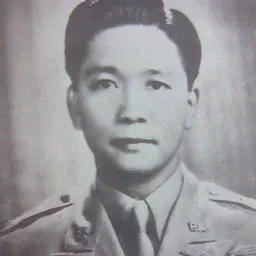

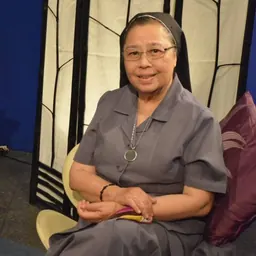
Related people
Same field, nearest in time


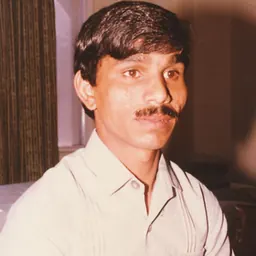



Contemporaries
People whose lives overlapped Maria Lorena Barros's
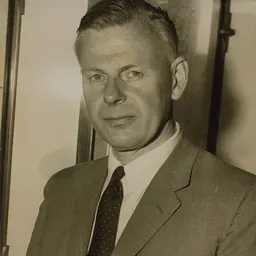


Frequently asked questions
Who was Maria Lorena Barros?
Filipino activist
When was Maria Lorena Barros born?
Maria Lorena Barros was born on 18 March 1948.
When did Maria Lorena Barros die?
Maria Lorena Barros died on 24 March 1974 in Quezon Province.
What was Maria Lorena Barros's occupation?
Maria Lorena Barros was an activist.
What was Maria Lorena Barros known for?
Maria Lorena Barros was known for Martial Law in the Philippines.
What nationality was Maria Lorena Barros?
Maria Lorena Barros was Filipino.
Sources & further reading
· Wikipedia: Maria Lorena Barros
· DBpedia: Maria Lorena Barros
Cite this page
APA: Biography.guide. (2026). Maria Lorena Barros. https://biography.guide/maria-lorena-barros/
MLA: "Maria Lorena Barros." Biography.guide, https://biography.guide/maria-lorena-barros/.
Chicago: "Maria Lorena Barros." Biography.guide. https://biography.guide/maria-lorena-barros/.
Data last updated: 2026-09-20 · Spot an error? Report a correction.
Page generated 2026-09-27 05:24 UTC