
About Maria da Graça Amado da Cunha
Lived 1919 – 2001 (aged 81). Maria da Graça Amado da Cunha was a Portuguese pianist.
Maria da Graça Amado da Cunha (1919–2001) was a Portuguese classical pianist, best known for interpreting the works of the Portuguese composer Fernando Lopes-Graça. She was a feminist and an opponent of the right-wing Estado Novo regime that governed Portugal between 1933 and 1974.
Early life Maria da Graça Faro Amado da Cunha was born in Lubango (prior to 1975 known as Sá da Bandeira) in Portuguese Angola on 24 November 1919. At an early age she moved to Lisbon where she attended the National Conservatory, studying under the pianist José Vianna da Motta, the composer Luís de Freitas Branco and the French composer Francine Benoît. She became best known as a promoter of Portuguese music and as an interpreter of the piano compositions of the Portuguese composer Fernando Lopes-Graça. Although she retired from piano playing at a relatively early age, in the 1960s, she maintained a friendship with Lopes-Graça for over 50 years.
In 1942, she was a founder, together with Lopes Graça, Benoît and others, of the Sonata Society, which gave public concerts of Portuguese and other contemporary music until 1960, often giving first performances. The Society highlighted, in particular, works by female composers, such as Benoît, Berta Alves de Sousa and Elvira de Freitas. Lopes-Graça, Benoît and Cunha also founded the magazine Gazeta Musical (later Gazeta Musical e de Todas as Artes), in 1950. Cunha also published music criticism in magazines such as Seara Nova.
Activism Cunha married Roger D’Avellar, a pilot working for the Portuguese airline TAP Air Portugal. In 1961 she was painted by Abel Manta, one of the most prominent Portuguese modernist painters. The oil painting can be found at the National Music Museum in Lisbon. Manta was married to Clementina Carneiro de Moura, a member of the Associação Feminina Portuguesa para a Paz (Portuguese Women's Association for Peace - AFPP), as was Francine Benoît, and Cunha also joined this organization. Although declaring itself apolitical, many of the AFPP's members were anti-fascists opposed to the Estado Novo. She also became a member of the Movement of Democratic Unity (Portuguese: Movimento de Unidade Democrática - MUD), which was a quasi-legal platform of Portuguese democratic organizations that opposed the Estado Novo and was founded in October 1945.
Maria da Graça Amado da Cunha died in Lisbon on 12 February 2001.
Discography Cunha produced two albums of piano music by Lopes-Graça: Maria da Graça Amado da Cunha Interprets Lopes-Graça. Vol. I. Eleven variations; eight bagatelles. Ed. PortugalSom/Strauss, 1996. Maria da Graça Amado da Cunha Interprets Lopes-Graça. Vol. II. Nine brief dances; Sonata No. 2; Variations on a popular Portuguese theme. Ed. PortugalSom/Strauss, 1996.
Don’t just read it —
keep it.
Full-length biographies made to live with: read them, listen on the way to work, watch them tonight.
- E-book
- Audio
- Video
Instant download · yours to keep · every purchase keeps this site free
Important facts
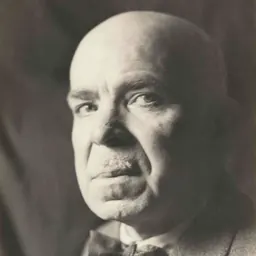
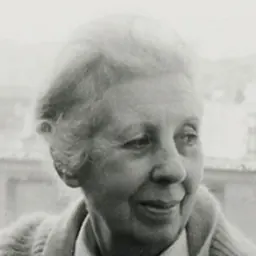
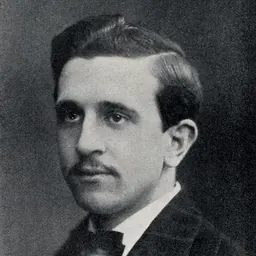
People in Maria da Graça Amado da Cunha's life
Named in this biography and alive at the same time



Related people
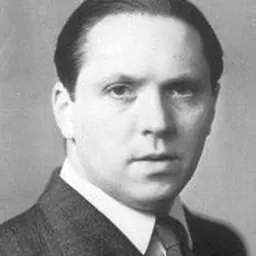
Same field, nearest in time



Contemporaries
People whose lives overlapped Maria da Graça Amado da Cunha's


Frequently asked questions
Who was Maria da Graça Amado da Cunha?
Portuguese pianist
When was Maria da Graça Amado da Cunha born?
Maria da Graça Amado da Cunha was born on 24 November 1919 in Lubango.
When did Maria da Graça Amado da Cunha die?
Maria da Graça Amado da Cunha died on 12 February 2001 in Lisbon.
What was Maria da Graça Amado da Cunha's occupation?
Maria da Graça Amado da Cunha was a pianist.
What nationality was Maria da Graça Amado da Cunha?
Maria da Graça Amado da Cunha was Portuguese.
Sources & further reading
· Wikipedia: Maria da Graça Amado da Cunha
· DBpedia: Maria da Graça Amado da Cunha
Cite this page
APA: Biography.guide. (2026). Maria da Graça Amado da Cunha. https://biography.guide/maria-da-graca-amado-da-cunha/
MLA: "Maria da Graça Amado da Cunha." Biography.guide, https://biography.guide/maria-da-graca-amado-da-cunha/.
Chicago: "Maria da Graça Amado da Cunha." Biography.guide. https://biography.guide/maria-da-graca-amado-da-cunha/.
Data last updated: 2026-09-22 · Spot an error? Report a correction.
Page generated 2026-09-27 05:31 UTC