
Maria d' Aragona
Italian noble
About Maria d' Aragona
Lived 1503 – 1568 (aged 64–65).
Maria d'Aragona (1503–1568; born in d'Avalos Castello in Ischia) was the daughter of Duke Ferdinando di Montalto and Catalina Cardona and the granddaughter of King Ferdinand I of Naples, also called King Ferrante. As a child, Maria d’Aragona grew up in a castle with the poet Vittoria Colonna, who had married d'Avalos's nephew. It was here that Maria met Sannazaro, Tansillo, and Bernardo Tasso who would entertain her in later life at her own salons in Naples, Milan, and Pavia.
Marriage and family
In 1523, Maria d'Aragona married Costanza's grandnephew Marchese Alfonso d'Avalos del Vasto.
Arts
Maria produced a salon in which many poets inhabited. They included Paolo Giovio, Girolamo Muzio, Pietro Aretino, Giulio Camillo and Bernardo Spina, who had taken part in Costanza’s circle. Luca Contile chronicled the life of Maria’s husband and her sister in his Lettere, which was later published in Venice.
Downfall and rise
In 1544, Del Vasto lost twelve thousand men while fighting the French at Ceresole. He was a broken man who had never recovered from his wounds. He died in 1546. After her husband's death, Maria moved her entourage out of the palace in Milan to resettle with her seven children and her sister Giovanna in Pavia. In 1547 they boarded a ship and proceeded to return to Ischia and reestablish their salon at Castel dell’Ovo in Naples.
Rebellion
On May 13, 1547, the Viceroy of Naples, Pedro Álvarez de Toledo, turned against his people, closed the city’s literary academics, and imprisoned their leaders, Ferrante, Carafa and Angelo di Costanzo.
Aftermath
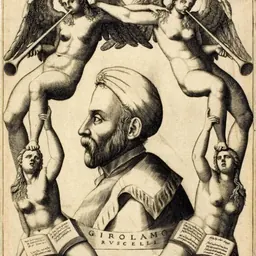
In 1551, the Academy of the Dubbiosi in Venice launched plans for a work entitled “The Temple of the Divine Lady Giovanna d’Aragona”. One year later, editor Girolamo Ruscelli published a tribute to Maria d’Aragona under the title “A lecture … on a sonnet in honor of the divine lady the Marchese del Vasto”. The Venetian editor Lodovico Dolce announced the publication of the first of four anthologies featuring Napoleonic writers who had participated in Maria d’ Aragona’s circle. The Poems by Maria’s husband led off the first and second editions of the text, Rime di diversi napoletani. Here body showed signs of syphilis and anogenital warts, which both are sexually transmitted infections. Treponema pallidum, the bacterium that causes syphilis, was isolated in a syphilitic gumma on her left arm, and human papilloma virus (HPV type 18), a common cause of genital warts and of vulvar and cervical cancer, was isolated from a papilloma in her right groin. The swelling of her left leg could correspond with edema from lymphogenic metastases from metastatic vulvar cancer, which may have been the leading cause of her death.
Don’t just read it —
keep it.
Full-length biographies made to live with: read them, listen on the way to work, watch them tonight.
- E-book
- Audio
- Video
Instant download · yours to keep · every purchase keeps this site free
Important facts
People in Maria d' Aragona's life
Named in this biography and alive at the same time





Contemporaries
People whose lives overlapped Maria d' Aragona's






Frequently asked questions
Who was Maria d' Aragona?
Italian noble
When was Maria d' Aragona born?
Maria d' Aragona was born in 1503 in Ischia.
When did Maria d' Aragona die?
Maria d' Aragona died in 1568 in Naples.
Sources & further reading
Cite this page
APA: Biography.guide. (2026). Maria d' Aragona. https://biography.guide/maria-d-aragona/
MLA: "Maria d' Aragona." Biography.guide, https://biography.guide/maria-d-aragona/.
Chicago: "Maria d' Aragona." Biography.guide. https://biography.guide/maria-d-aragona/.
Data last updated: 2026-09-20 · Spot an error? Report a correction.
Page generated 2026-09-27 05:31 UTC