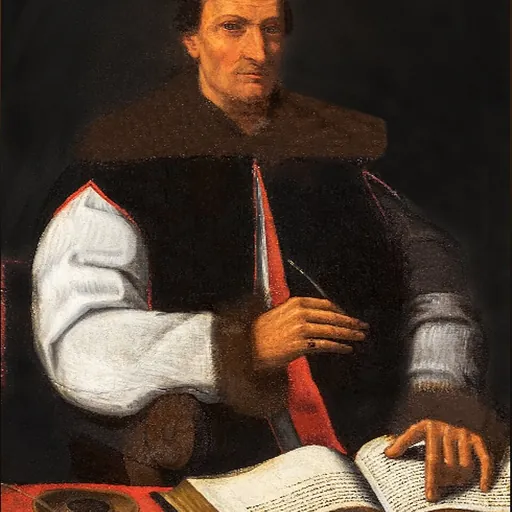
About Paolo Giovio
Lived 1483 – 1552 (aged 69). Paolo Giovio was an Italian historian, biographer, physician, museologist, humanist and catholic bishop.
Paolo Giovio (also spelled Paulo Jovio; Latin: Paulus Jovius; 19 April 1483 – 11 December 1552) was an Italian physician, historian, biographer, and prelate.
Early life Little is known about Giovio's youth. He was a native of Como; his family was from the Isola Comacina of Lake Como. He belonged to the Zanobi, one of the oldest and most prominent families in Como, and was devoted to his cultural patrimony, especially to Como’s great historians, the elder and younger Pliny.
His father, a notary, died around 1500. His guardian and mentor was his elder brother, Benedetto Giovio (1471– c. 1545), a prominent civic figure, local historian and antiquarian who, among other projects, was involved with Cesare Cesariano on the translation and annotation of Vitruvius’ De architectura (Como, 1521).
In compliance with his brother’s wishes, Paolo trained as a physician in Pavia and Padua (1498–1507), studying with Marcantonio della Torre and Pietro Pomponazzi. He graduated in 1511.
Career Giovio worked as physician in Como but, after the plague spread in that city he moved to Rome, settling there in 1513. He remained at the papal court for most of his career, moving among the great political and intellectual figures of the day and becoming a member of the Accademia della Virtù and the Accademia degli Intronati. Pope Leo X assigned him a cathedra (chair) of Moral Philosophy and, later, that of Natural Philosophy in the Roman university. He was also knighted by the Pope. In the same period he started to write historical essays. He wrote a memoir of Leo soon after his death.
In 1517, Giovio was appointed as the personal physician for Cardinal Giulio di Giuliano de' Medici (the future Pope Clement VII). In the field he wrote some treatises, like the De optima victus ratione, in which he expresses his doubts about the current pharmacology, and the need to improve prevention before the cure.
Giovio helped Clement VII during the 1527 sack of Rome. From 1526 to 1528, he stayed on the island of Ischia as Vittoria Colonna's guest. In 1528, he became bishop of Nocera de' Pagani. Giovio wrote an account of Dmitry Gerasimov's embassy to Clement VII, which related detailed geographical data on Muscovy.
In 1536, Giovio had a villa built for him on Lake Como, which he called Museo, and which he used for his collection of portraits of famous soldiers and men of letters. After Clement's death, he retired. As well as paintings, he sought antiquities, etc., and his collection was one of the first to include pieces from the New World. A set of copies of the paintings from the collection, now known as the Giovio Series, is on display in the Uffizi Gallery.
Death In 1549, Pope Paul III denied Giovio the title of Bishop of Como, and he moved to Florence, where he died in 1552.
Works
Giovio is chiefly known as the author of a celebrated work of contemporary history, Historiarum sui temporis libri XLV, of a collection of lives of famous men, Vitae virorum illustrium (1549‑57), and of Elogia virorum bellica virtute illustrium,
He is the oldest biographer of Raphael.
Giovio's notable work include: De romanis piscibus (1524) De legatione Basilii Magni Principis Moschoviae (1525) Comentario de le cose de' Turchi (1532) Elogia virorum litteris illustrium or Elogia doctorum virorum (1546) Descriptio Britanniae, Scotiae, Hyberniae et Orchadum (1548) Vitae (1549) Pauli Jovii historiarum sui temporis (1550–52) Elogia virorum bellica virtute illustrium (1551), as an eyewitness of many historical figures, and people involved in the Italian Wars including Gonzalo Fernández de Córdoba Dialogo dell'imprese militari et amorose (1555)
Don’t just read it —
keep it.
Full-length biographies made to live with: read them, listen on the way to work, watch them tonight.
- E-book
- Audio
- Video
Instant download · yours to keep · every purchase keeps this site free
Important facts
People in Paolo Giovio's life
Named in this biography and alive at the same time





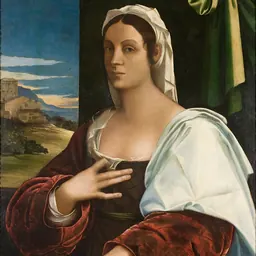

Related people
Same field, nearest in time
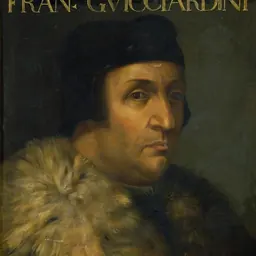

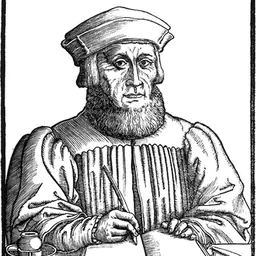
Contemporaries
People whose lives overlapped Paolo Giovio's

Frequently asked questions
Who was Paolo Giovio?
Italian prelate, physician and biographer (1483–1552)
When was Paolo Giovio born?
Paolo Giovio was born on 21 April 1483 in Como.
When did Paolo Giovio die?
Paolo Giovio died on 11 December 1552 in Florence.
What was Paolo Giovio's occupation?
Paolo Giovio was a historian, biographer, physician, museologist, humanist and catholic bishop.
What nationality was Paolo Giovio?
Paolo Giovio was Italian.
Sources & further reading
Cite this page
APA: Biography.guide. (2026). Paolo Giovio. https://biography.guide/paolo-giovio-historian/
MLA: "Paolo Giovio." Biography.guide, https://biography.guide/paolo-giovio-historian/.
Chicago: "Paolo Giovio." Biography.guide. https://biography.guide/paolo-giovio-historian/.
Data last updated: 2026-09-23 · Spot an error? Report a correction.
Portrait: Wikimedia Commons · author & licence
Page generated 2026-09-27 05:06 UTC