
About Maria Adelaide Coelho da Cunha
Lived 1869 – 1954 (aged 85). Maria Adelaide Coelho da Cunha was a Portuguese memoirist and writer, known for Involuntary commitment.
Maria Adelaide Coelho da Cunha (13 October 1869 – 23 November 1954) was a Portuguese socialite, and the daughter and heiress of Eduardo Coelho, founder of the major daily newspaper Diário de Notícias. She married Alfredo da Cunha, who succeeded Coelho in charge of the newspaper.
She became notorious, at age 48, for her scandalous elopement with the family chauffeur, Manuel Claro, 20 years her junior, and her subsequent wrongful psychiatric involuntary commitment and placement under judicial conservatorship.
Biography Shortly after Maria Adelaide Coelho da Cunha left her family home on 13 November 1918 without prior warning (sending back a note after reading about her disappearance in the newspapers, cryptically saying "I am alive but for all intents and purposes I consider myself dead and I would rather be considered so"), she was found to have eloped to Santa Comba Dão with the young family chauffeur, Manuel Claro. He was arrested and incarcerated in the Appellate Court Jail in Porto, while she was committed to the Count of Ferreira Psychiatric Hospital following the expert opinion of a medical panel comprising the country's leading psychiatrists, António Egas Moniz, Júlio de Matos, and José Sobral Cid.
Even though she publicly defended herself in the newspapers and published a book about her plight (Doida, Não!, published in 1920, followed by Doida, Não e Não! in 1923 after her husband replied to the first with Infelizmente Louca), her husband and then 26-year-old son retained possession of the family fortune, including Maria Adelaide's estate. — after which point the paper openly started to defend the political, economic, and military sectors that would bring about the dictatorial Estado Novo regime in 1926.
Maria Adelaide Coelho da Cunha was released from involuntary commitment in 1919, but she remained under conservatorship until 1944, after the death of her husband. Manuel Claro was released from prison in January 1922. The two spent the rest of their lives together in Porto, although they never married, until Maria Adelaide's death in 1954. and the movies Solo de Violino (1992, directed by Monique Rutler) and Ordem Moral (2020, directed by Mário Barroso).
Don’t just read it —
keep it.
Full-length biographies made to live with: read them, listen on the way to work, watch them tonight.
- E-book
- Audio
- Video
Instant download · yours to keep · every purchase keeps this site free
Important facts
People in Maria Adelaide Coelho da Cunha's life
Named in this biography and alive at the same time


Related people
Same field, nearest in time
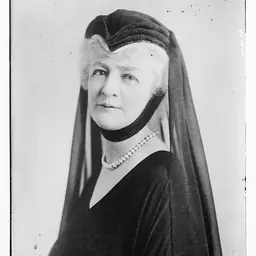
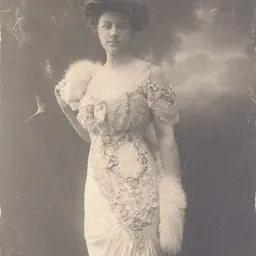

Contemporaries
People whose lives overlapped Maria Adelaide Coelho da Cunha's



Frequently asked questions
Who was Maria Adelaide Coelho da Cunha?
Portuguese socialite
When was Maria Adelaide Coelho da Cunha born?
Maria Adelaide Coelho da Cunha was born on 3 October 1869 in Lisbon.
When did Maria Adelaide Coelho da Cunha die?
Maria Adelaide Coelho da Cunha died on 23 November 1954 in Porto, Portugal.
What was Maria Adelaide Coelho da Cunha's occupation?
Maria Adelaide Coelho da Cunha was a memoirist and writer.
What was Maria Adelaide Coelho da Cunha known for?
Maria Adelaide Coelho da Cunha was known for Involuntary commitment.
What nationality was Maria Adelaide Coelho da Cunha?
Maria Adelaide Coelho da Cunha was Portuguese.
Sources & further reading
· Wikipedia: Maria Adelaide Coelho da Cunha
· DBpedia: Maria Adelaide Coelho da Cunha
Cite this page
APA: Biography.guide. (2026). Maria Adelaide Coelho da Cunha. https://biography.guide/maria-adelaide-coelho-da-cunha/
MLA: "Maria Adelaide Coelho da Cunha." Biography.guide, https://biography.guide/maria-adelaide-coelho-da-cunha/.
Chicago: "Maria Adelaide Coelho da Cunha." Biography.guide. https://biography.guide/maria-adelaide-coelho-da-cunha/.
Data last updated: 2026-09-20 · Spot an error? Report a correction.
Page generated 2026-09-27 05:30 UTC