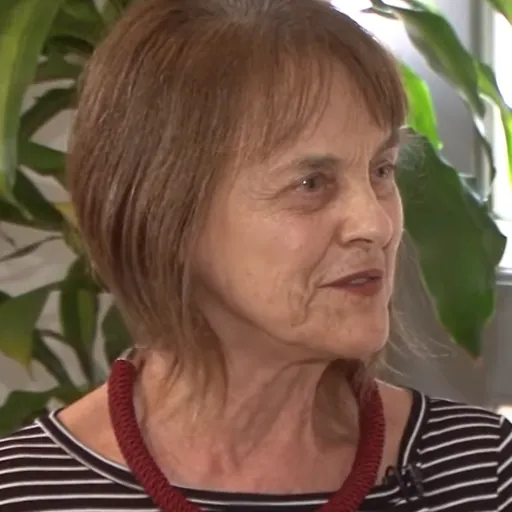
About Margareth Rago
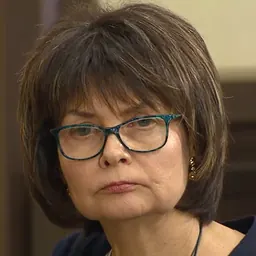
Born 1948. Margareth Rago is a Brazilian teacher and historian.
Luzia Margareth Rago (born 15 September 1948) is a Brazilian historian, researcher of women's studies and feminist. She is a professor at the State University of Campinas, where she has been a lecturer since 2000. Influenced by authors such as Michel Foucault, Gilles Deleuze, Jean-François Lyotard and Jacques Derrida, she seeks to establish a specific methodology for what she calls "feminist science".
Career Academic background In 1970, Rago graduated in history from the University of São Paulo (USP). Later, in 1979, she also graduated in philosophy from USP. Between 1982 and 1984, she worked as a professor at the Federal University of Uberlândia (UFU).
She earned a master's degree in history in 1984 from the State University of Campinas (UNICAMP), with a work entitled "Sem fé, sem lei, sem rei: liberalismo e experiência anarquista na República" , under the supervision of Edgar Salvadori De Decca. In another review of the book, feminist periodical Mulherio noted that Rago "points to a vast moralising enterprise, aimed at taming the working class" and reveals the "redefinition of the family" with the construction of "a new model of woman".
In 1990, she received her doctorate from UNICAMP, with a thesis entitled "Os prazeres da noite: prostituição e códigos da sexualidade feminina em São Paulo (1890-1930)" , also under the supervision of De Decca. She has received two post-doctoral degrees, the first of which she received 1999 and the second in 2003, both from UNICAMP.
Post-doctoral work In 2000, she served as director of the Edgard Leuenroth Archive (AEL), an institute linked to UNICAMP, and became a lecturer at UNICAMP itself. That same year, Rago took part in the international meeting "The Body of Women" organised by the Faculty of Medicine of the Federal University of Minas Gerais (UFMG) in Belo Horizonte. The event brought together "some of the greatest intellectuals from Brazil, Italy, France and Panama for an unprecedented debate on women", with "internationally renowned names"; besides herself, there were Michelle Perrot, Mary del Priore, Gabrielle Houbre, among other intellectuals. She was also one of the speakers at the meeting held in Rio de Janeiro to mark the centenary of Friedrich Nietzsche's birth, along with José Celso Martinez Corrêa, Fayga Ostrower and others.
In 2002, Rago, together with Luiz B. Lacerda Orlandi and Alfredo Veiga Neto, organised "Imagens de Foucault e Deleuze - ressonâncias nietzschianas" (Images of Foucault and Deleuze - Nietzschean resonances), a work that brings together the texts produced at the end of 2000 at a colloquium held at Unicamp. In the same year, she mediated a debate cycle in Rio de Janeiro titled "A política da palavra" (The politics of the word), which saw the participation of Tom Zé, Carlos Heitor Cony, Ferreira Gullar and others. In 2003, Rago held a series of seminars at the Paris Diderot University, in France. In 2009, she took part in Gabriela Leite's episode of Roda Viva as one of the interviewers. Between 2010 and 2011, she was a visiting professor at Columbia University, in New York City. She also coordinated and wrote several articles for the feminist studies journal Labrys.
Selected works Sem fé, sem lei, sem rei: liberalismo e experiência anarquista na República (Unicamp, 1984) Do Cabaré ao lar: a utopia da cidade disciplinar – Brasil, 1890-1930 (Paz e Terra, 1985); Os Prazeres da Noite: prostituição e códigos da sexualidade feminina em São Paulo, 1890-1930 (Paz e Terra, 1991); Trabalho feminino e sexualidade de Margareth Rago (Contexto, 1998) Narrar o passado, repensar a história (with Renato Aloizio de Oliveira Gimenes) (Editora da Unicamp, 2000); Foucault, a história e o anarquismo (Achiamé, 2004); A mulher brasileira nos espaços público e privado (Editora da Fundação Perseu Abramo, 2004); Feminismo e anarquismo no Brasil: audácia de sonhar (Achiamé, 2007) Subjetividades antigas e modernas (with Pedro Paulo Funari) (Annablume, 2008); Para uma vida não-fascista (with Alfredo Veiga-Neto) (Autêntica Editora, 2009); A aventura de contar-se: feminismos, escrita de si e invenções da subjetividade (Editora da Unicamp, 2013); É inútil revoltar-se? (Editora da Unicamp, 2017); Do cabaré ao lar: A utopia da cidade disciplinar e a resistência anarquista (Paz e Terra, 2018); Neoliberalismo, feminismos e contracondutas: perspectivas foucaultianas (Editora Intermeios, 2019); As Marcas da Pantera - percursos de uma historiadora (Editora Intermeios, 2021)
Don’t just read it —
keep it.
Full-length biographies made to live with: read them, listen on the way to work, watch them tonight.
- E-book
- Audio
- Video
Instant download · yours to keep · every purchase keeps this site free
Important facts
People in Margareth Rago's life
Named in this biography and alive at the same time



Related people
Same field, nearest in time


Contemporaries
People whose lives overlapped Margareth Rago's

Frequently asked questions
Who is Margareth Rago?
Brazilian feminist historian
When was Margareth Rago born?
Margareth Rago was born on 15 September 1948.
What is Margareth Rago's occupation?
Margareth Rago is a teacher and historian.
What nationality is Margareth Rago?
Margareth Rago is Brazilian.
Sources & further reading
Cite this page
APA: Biography.guide. (2026). Margareth Rago. https://biography.guide/margareth-rago/
MLA: "Margareth Rago." Biography.guide, https://biography.guide/margareth-rago/.
Chicago: "Margareth Rago." Biography.guide. https://biography.guide/margareth-rago/.
Data last updated: 2026-09-23 · Spot an error? Report a correction.
Portrait: Wikimedia Commons · author & licence
Page generated 2026-09-27 05:07 UTC