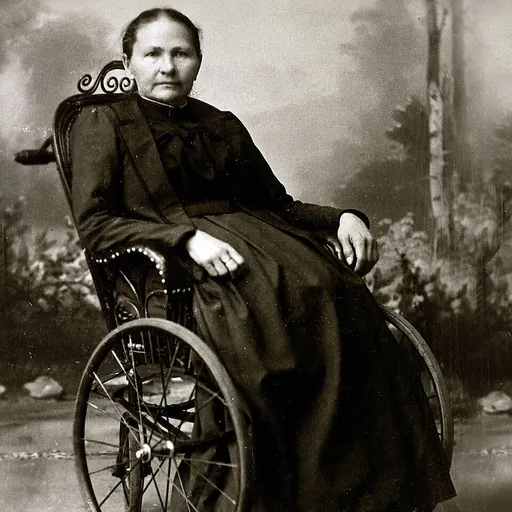
Margarete Steiff
Foundress of Margarete Steiff GmbH in Germany
About Margarete Steiff
Lived 1847 – 1909 (aged 61). Margarete Steiff was a designer, tailor and entrepreneur.
Margarete Steiff (24 July 1847 – 9 May 1909)
Born in Giengen, Kingdom of Württemberg, Margarete contracted polio as a child, leaving her with both legs paralyzed and pain in her right arm. After training as a seamstress, she was able to raise enough money to purchase a sewing machine by teaching people to play the zither. She began making clothes, eventually opening her own store in 1877. Around this time, Margarete came across a sewing pattern for a toy elephant, as well as patterns for mice and rabbits. Using felt and lambswool, Margarete made many of these toys as gifts for friends, and later began to sell some. Proving popular, the scale of production steadily increased, as did the variety of toys. In 1902, the company began making a toy bear with moveable joints based on a design by her nephew, Richard Steiff. Taking off in the United States, it was nicknamed after then-U.S. president Theodore Roosevelt, becoming the first "teddy bear". After three years, doctors finally diagnosed her with polio. Her parents were keen that she live a full life and investigated many medical treatments with little success. As a child she was taken to school in a small hand-pulled cart by her sisters and other neighborhood children. In her later reminiscences, she recalls, "All the children gathered around me and I organised games in which I was the center of attention. However, the older children often ran off and then I was left babysitting the tiny tots".
Margarete regularly attended school throughout her childhood and in spite of the pain in her right hand, went to the needlework classes of Frau Schelling where she completed her training as a seamstress at the age of 17. She occasionally worked with her sisters, who had opened a women's tailor shop.
Margarete also became an accomplished zither player, teaching others to play to earn some money. Her savings allowed her to buy a sewing machine, the first owned in the town of Giengen, and this led to another opportunity to earn income. Margarete worked on trousseaus for the town folk, and by her mid-twenties was making fashionable clothes and traveling to other towns to work and visit family, sending her cart ahead of her and traveling by post coach.
Entrepreneurship In 1877, Margarete opened a felt store and began making felt underskirts, which had just become fashionable, for the firm of Christian Siegle in Stuttgart. She was soon able to employ people to work for her and it became a thriving business. Margarete commented: "At this time I came across a pattern for a toy elephant. Felt was the ideal material for this toy and the filling would be of the finest lambswool. Now I could make these as gifts for the children in the family and I tried out the patterns in various sizes". In 1879, the American magazine The Delineator published a pattern for a cloth mouse, rabbit, elephant, and other animal patterns followed. The German magazine Modenwelt then reproduced these patterns. Margarete made many of these toys and gave them as gifts to friends, and by 1880 she started to sell them in small numbers. In the following years she widened her range of small cloth animals based on the magazine patterns, but with small alterations to the cloth used and accessories.
In 1892, Margarete's small company applied for a patent "for making of animals and other figures to serve as playthings". The patent number was DRP 66996, but this was later withdrawn when contested by another German toy manufacturer. Margarete's brother Fritz realised that there was an opportunity to sell large numbers of these toy animals and he took some samples to the market in Heidenheim, coming away with many orders. Production and turnover increased each year as did the variety of toys on offer. Pull-along and ride-on toys were also added with the development of metal frames inside the toys. By 1889, the company moved into a larger building, which had a corner shop where the toys and fabric could be displayed for sale. The words "Felt-Toy-Factory" were painted in large letters on the outside wall. Next came a printed catalogue for customers to order from, and the business grew.
In 1897, Margarete's creative nephew, Richard, joined the company. He had previously studied at the Kunstgewerbeschule (Arts and Crafts Academy) in Stuttgart, Germany. His sketches became the basis for many different Steiff toys.
In 1902, Richard designed "Bear 55 PB", the first soft toy with movable joints, which was to become the world's first teddy bear.
By 1903, a large shipment of toys had been sent to a New York showroom, but there was not much interest in the plush toy bears that were displayed there. In March 1903, Richard took jointed soft toy bears to a spring fair in Leipzig, where they caught the eye of an American buyer, who ordered 3,000 bears. From then on, "Bear 55 PB" became a bestseller in the United States - a remarkable achievement for a small German business from the Swabian Albs. Plush bears such as 55 PB became known as "teddy bears", named after the American President Theodore "Teddy" Roosevelt.
One million teddy bears were produced by 1907.
Legacy Margarete became an important figure in German female entrepreneurship. Originally from a small town in southern Germany and living with a life-long physical disability, she founded and grew a business that continues to be recognized around the world. In the literature on German entrepreneurs, she is cited as an idol for female entrepreneurship and innovation, growing her business beyond German borders. Steiff continues to be among the well-known plush toy manufacturers in the world. Vintage Steiff toys have become valuable collectibles, with auctions fetching prices that regularly make the news.
Don’t just read it —
keep it.
Full-length biographies made to live with: read them, listen on the way to work, watch them tonight.
- E-book
- Audio
- Video
Instant download · yours to keep · every purchase keeps this site free
Important facts
People in Margarete Steiff's life
Named in this biography and alive at the same time
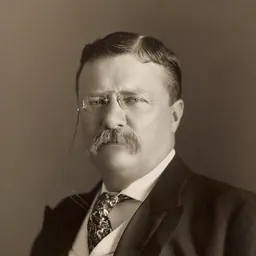

Related people
Same field, nearest in time



Contemporaries
People whose lives overlapped Margarete Steiff's



Frequently asked questions
Who was Margarete Steiff?
foundress of Margarete Steiff GmbH in Germany
When was Margarete Steiff born?
Margarete Steiff was born on 24 July 1847 in Giengen an der Brenz.
When did Margarete Steiff die?
Margarete Steiff died on 9 May 1909 in Giengen an der Brenz.
What was Margarete Steiff's occupation?
Margarete Steiff was a designer, tailor and entrepreneur.
What nationality was Margarete Steiff?
Margarete Steiff's recorded nationality: Kingdom of Württemberg.
Sources & further reading
Cite this page
APA: Biography.guide. (2026). Margarete Steiff. https://biography.guide/margarete-steiff/
MLA: "Margarete Steiff." Biography.guide, https://biography.guide/margarete-steiff/.
Chicago: "Margarete Steiff." Biography.guide. https://biography.guide/margarete-steiff/.
Data last updated: 2026-09-21 · Spot an error? Report a correction.
Portrait: Wikimedia Commons · author & licence
Page generated 2026-09-27 04:59 UTC