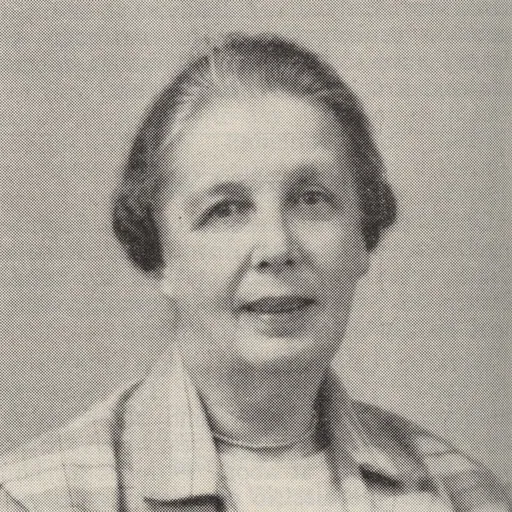
About Margaret Partridge
Lived 1891 – 1967 (aged 76). Margaret Partridge was a British electrical engineer.
Margaret Mary Partridge (8 April 1891 – 27 October 1967) was an electrical engineer, contractor and founder member of the Women's Engineering Society (WES) and the Electrical Association for Women (EAW). Her business worked with WES to identify and employ female apprentices, including Beatrice Shilling. Partridge also helped campaign to change the International Labour Organisation convention on night work for women in 1934, after Shilling was found working on her own in a power station at night, thus contravening the existing regulations.
Early life and education Margaret Partridge was born in Nymet Rowland, Devon on 8 April 1891, elder daughter (she also having two brothers) of independently wealthy landowner John Leonard James Partridge (1859–1922) and Eleanor Parkhouse (1858–1926), née Joyce. She was educated at Bedford High School, Bedford, and obtained the Arnott and Jane Benson scholarship to study mathematics at Bedford College, London from 1911, where she graduated with a bachelor's degree in 1914. After graduating, Partridge initially tried teaching, although Margaret Tuke, principal of Bedford College, recognised that “she is also likely to prove successful in a non-scholastic post, in which her powers as an organiser will have scope".
Engineering career 'Today a man met me in the road and threatened to cut down some wires because he didn't like the look of them.' In 1917, Partridge moved to the engineering company Arthur Lyon & Wrench, which manufactured searchlights. Taking advantage of the opportunities available to women working in industry during the First World War, she trained as an engineering apprentice and advanced to supervisor of the test department. At the end of the war, she decided to move back to the family home in Devon to set up her own electrical consulting business, M. Partridge & Co., Domestic Engineers, and advertised in the Women's Engineering Society's Journal The Woman Engineer under the slogan 'Women for Women's Work.' Her company soon expanded to bid for contracts to provide electricity supply for small towns and villages. She received a great deal of practical support and financial advice from Dr John Archibald Purves MIEE, an electrical engineer who would later advise on the electricity supply scheme for the whole of the west of England. Purves encouraged Partridge to set up electrical lighting companies for Cheriton Fitzpaine, Thorverton and Bampton
She presented a paper entitled Producing and Distributing Electricity at the International Conference of Women in Science, Industry and Commerce organised by Caroline Haslett and the Women's Engineering Society at the British Empire Exhibition on 16 July 1925, speaking alongside the American engineer Ethel H. Bailey and physical chemist Isabel Hadfield. thumb Blue plaque by Devon History Society at Margaret Partridge's former home in Willand, Devon.Partridge decided to help young women who were interested in engineering as a career by offering apprenticeships specifically for young women leaving school. She wrote to Caroline Haslett asking for recommendations and was successful in appointing Beatrice Shilling who was an immediate success. Partridge and her partner, Margaret Rowbotham, encouraged Shilling to study at Manchester University and Shilling became a pioneering aeronautical engineer. It was Shilling who was discovered working on her own in a power station at night in contravention of the ILO Convention concerning Employment of Women during the Night (1919), which stated that women were not permitted to do any kind of industrial work at night. This case, with support from the Women's Engineering Society, eventually led to a change in the convention in 1934, exempting women who were working in a supervisory role.
During World War II, Partridge was appointed as the Ministry of Labour Women's Technical Officer for the South West, advising factories on the employment of women in munitions.
Retirement and later work Following her retirement. Partridge continued to live in Devon, with Margaret Rowbotham, and encouraged the members of her local Women's Institute to wire the village hall for electricity.
Margaret Partridge died at her home, Harpitt, in Willand, Devon, on 27 October 1967.
The remains of both Margarets lie in Willand churchyard.
Work for the Women's Engineering Society Partridge joined the Women's Engineering Society in 1920. She became Vice-President in 1942, and President in 1943.
Commemoration A blue plaque was unveiled by Devon History Society at Margaret Partridge's former home in Willand, Devon in March 2019.
Don’t just read it —
keep it.
Full-length biographies made to live with: read them, listen on the way to work, watch them tonight.
- E-book
- Audio
- Video
Instant download · yours to keep · every purchase keeps this site free
Important facts
People in Margaret Partridge's life
Named in this biography and alive at the same time





Related people
Same field, nearest in time



Contemporaries
People whose lives overlapped Margaret Partridge's


Frequently asked questions
Who was Margaret Partridge?
electrical engineer
When was Margaret Partridge born?
Margaret Partridge was born on 8 April 1891 in Nymet Rowland.
When did Margaret Partridge die?
Margaret Partridge died on 27 October 1967 in Willand.
What was Margaret Partridge's occupation?
Margaret Partridge was an electrical engineer.
What nationality was Margaret Partridge?
Margaret Partridge was British.
Sources & further reading
· Wikipedia: Margaret Partridge
Cite this page
APA: Biography.guide. (2026). Margaret Partridge. https://biography.guide/margaret-partridge/
MLA: "Margaret Partridge." Biography.guide, https://biography.guide/margaret-partridge/.
Chicago: "Margaret Partridge." Biography.guide. https://biography.guide/margaret-partridge/.
Data last updated: 2026-09-23 · Spot an error? Report a correction.
Portrait: Wikimedia Commons · author & licence
Page generated 2026-09-27 05:08 UTC