
Margaret Fountaine
British entomologist, scientific illustrator and diarist
About Margaret Fountaine
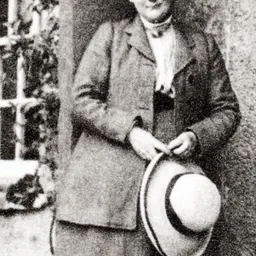
Lived 1862 – 1940 (aged 77). Margaret Fountaine was a British lepidopterist, scientific illustrator, scientific collector, diarist, entomologist and zoological collector.
Margaret Elizabeth Fountaine (16 May 1862 – 21 April 1940), was a Victorian lepidopterist (a person interested in butterflies and moths), natural history illustrator, diarist, and traveller who published in The Entomologist's Record and Journal of Variation. She is also known for her personal diaries, which were edited into two volumes by W.F. Cater for the popular market and published posthumously.
Fountaine was an accomplished natural history illustrator and had a great love and knowledge of butterflies, travelling and collecting extensively through Europe, South Africa, India, Tibet, America, Australia and the West Indies, publishing numerous papers on her work. She raised many of the butterflies from eggs or caterpillars, producing specimens of great quality, 22,000 of which are housed at the Norwich Castle Museum and known as the Fountaine-Neimy Collection. Her four sketch books of butterfly life-cycles are held at the Natural History Museum in London. The butterfly genus Fountainea was named in her honour.
Early life Fountaine was born in Norwich, the eldest of seven children of an English country clergyman, Reverend John Fountaine of South Acre parish in Norfolk. John Fountaine had married Mary Isabella Lee (died 4 July 1906) on 19 January 1860 – she was the daughter of Reverend Daniel Henry Lee-Warner of Walsingham Abbey in Norfolk. Fountain was baptised on 30 September 1862. and became an expert in tropical butterfly life-cycles. Fountaine undertook most of her work collecting butterflies alone. In the summers she would return to England to arrange her collection of butterflies. Fountaine compiled reports and drawings of the butterflies she found and sent them to entomological journals. However, many of her discoveries of tropical butterflies were not written up. Elwes was a seasoned scientific traveller and had served as vice-president of the Royal Horticultural Society and was fellow of the Royal Society. His butterfly specimen collection was the largest private collection in the country, and Fountaine felt her entomological efforts were childish in comparison.
Inspired, she travelled to Sicily with declared entomological ambitions. She was the first British butterfly collector to brave the south Italian Brigande. In Sicily she contacted the leading lepidopterist Enrico Ragusa
Following her expedition to Sicily Fountaine became a reputable collector and she formed professional relations with lepidopterists in the Natural History Department of the British Museum. In 1898 she travelled to Trieste, and met entomologists in Austria-Hungary and the German Empire. Her second article in The Entomologist was on species variation. In 1899 she went on an expedition to the French Alps, where she met up with Elwes, whose reference book on European butterflies she used. Fountaine started to collect caterpillars in the French Alps, which she breed to produce adult butterfly specimens. In subsequent articles in The Entomologist, she wrote on food plants, plant hosts and the environmental conditions that were needed to grow perfect butterfly specimens. Back in Britain she was praised by Elwes for the quality of her work and her collection. In her diary she wrote "yet I know that if I did not turn my long days of toil to some scientific account when I got the chance, for what else have I toiled?". In the summer of 1900 she and Elwes collected butterflies in Greece and they published an account of their findings in The Entomologist. She cooperated with Elwes on his Grecian Lepidoptera exhibition.
The money she had inherited from her uncle allowed her to travel extensively and expand her collection. It is however difficult to establish exact dates for her scientific expeditions, as she travelled mostly without a passport and did not record dates of arrival or departure in her diary. Between 1901 and her death in 1940 a number of important expeditions can nevertheless be established. In 1901 she went on an expedition to the region of Syria in the Ottoman Empire which led to a publication in The Entomologist. In the article she discussed the breeding of rare butterfly species. In Syria she hired the dragoman Khalil Neimy, who would become her travel companion. In 1903 she went on expedition to the Ottoman Empire and she returned to Istanbul with nearly 1,000 butterflies. Her articles in The Entomologist on the expedition discussed seasonal and geographical influences on butterfly species, prompting notes and letters on the subject in subsequent issues. But when Fountaine attended the Second International Congress of Entomology held in Oxford in 1912, she was invited by Edward Poulton, president of the Linnean Society, to formally join the society. This marked the height of her entomological career. 15 years earlier Beatrix Potter had been unable to attend a reading of her own paper at the society, because she was a woman. The botanist Marian Farquharson had petitioned learned societies to admit women. Farquharson's petition prompted members of the Linnean Society to put the matter to a vote in 1903. Female fellows were allowed, and in 1904 a ballot was taken on 15 prospective women fellows.
In the run-up to World War I Fountaine was on expedition in India, Ceylon, Nepal and the territories of the Qing Dynasty in what is considered Tibet. On the trip she produced watercolours of caterpillars and butterflies, which were published in The Entomologist. During the war Fountaine travelled to the US, and in 1917 published articles on her collection while volunteering for the Red Cross. In 1918 she ran out of money because she could not get her money wired to the USA. Thus she accepted paid work on specimens from the Ward's Natural Science Establishment. After the war Fountaine's last entomological expedition was to Khalil in the Philippines. An account of the expedition was published in The Entomologist and would 50 years later serve as a reference for conservation work.
Fountaine was in her mid-sixties, and while she continued to travel for expeditions, she focused her efforts on watercolours and collecting. She only published the occasional note on the expeditions in The Entomologist. She travelled to various places in West and East Africa, Indo-China, Hong Kong, the Malay States, Brazil, the West Indies and Trinidad. Her letters to Riley reveal that she was on the hunt for rare specimens. Aged 77 she suffered a heart attack in Trinidad. Reportedly she was found dead on a path on Mount St. Benedict, with a butterfly net in her hand.
Diaries In the box that was unsealed alongside her butterfly collection were Fountaine's diaries. She had filled twelve large volumes of cloth-bound books with some 3,203 pages and more than a million words, displaying a blend of Victorian reserve and startling candour. The diaries were edited by the assistant editor of the Sunday Times W. F. Cater into two books, published under the titles Love among the Butterflies and Butterflies and Late Loves.
During Fountaine's lifetime entomology was very fashionable among the affluent in Britain, and natural history societies were well attended. Naturalist publications were no longer produced only by elite scientists. A popular scientific publication was Emma Hutchinson's 1879 book "Entomology and Botany as Pursuits for Ladies", which encouraged women to study butterflies instead of just collecting them. Natural history was particularly popular among women in the Victorian era. Far from being eccentric, Fountaine's work as entomologist followed in the footsteps of Victorian amateur women scientists. A survey of The Entomologist's Record and Journal of Variation reveals that all editions, except the 1917 and the 1925 edition, have article contributions from women. However, Fountaine's membership of learned societies was pioneering. In 1910 the Royal Entomological Society only had six female fellows.
Legacy and eponyms In 1971 A. H. B. Rydon named the butterfly genus Fountainea in Fountaine's honour. Kenneth J. Morton named the Odonata species Ischnura fountainei in Fountaine's honour after she collected the type specimen of the species.
Fountaine's illustrations of African flora and fauna were featured in the 2019 Natural History Museum exhibition, Expeditions and Endeavours. Her illustrations have also been featured in the Natural History Museum 2014 publication, Women Artists: Images of Nature by Andrea Hart.
Don’t just read it —
keep it.
Full-length biographies made to live with: read them, listen on the way to work, watch them tonight.
- E-book
- Audio
- Video
Instant download · yours to keep · every purchase keeps this site free
Important facts
People in Margaret Fountaine's life
Named in this biography and alive at the same time




Related people
Same field, nearest in time


Contemporaries
People whose lives overlapped Margaret Fountaine's



Frequently asked questions
Who was Margaret Fountaine?
British entomologist, scientific illustrator and diarist (1862 - 1940)
When was Margaret Fountaine born?
Margaret Fountaine was born on 16 May 1862 in South Acre.
When did Margaret Fountaine die?
Margaret Fountaine died on 21 April 1940 in Trinidad.
What was Margaret Fountaine's occupation?
Margaret Fountaine was a lepidopterist, scientific illustrator, scientific collector, diarist, entomologist and zoological collector.
What nationality was Margaret Fountaine?
Margaret Fountaine was British.
Sources & further reading
· Wikipedia: Margaret Fountaine
Cite this page
APA: Biography.guide. (2026). Margaret Fountaine. https://biography.guide/margaret-fountaine/
MLA: "Margaret Fountaine." Biography.guide, https://biography.guide/margaret-fountaine/.
Chicago: "Margaret Fountaine." Biography.guide. https://biography.guide/margaret-fountaine/.
Data last updated: 2026-09-24 · Spot an error? Report a correction.
Page generated 2026-09-27 05:02 UTC