
About Margaret Diesendorf
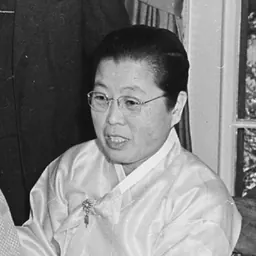
Lived 1912 – 1993 (aged 80). Margaret Diesendorf was an Austrian poet and writer.
Margaret Diesendorf née Máté (MA, D.Phil.), (1912–1993), was an Australian linguist, poet, editor, translator, and educationist. Born in Vienna, Austria, Diesendorf migrated to Australia in 1939. She published two books of poetry, made numerous translations of other people's works, and with Grace Perry, edited Poetry Australia. She read German and French including Goethe, Émile Zola and Racine, This was the beginning of the first of her many communications with writers, artists and philosophers which were ultimately to comprise an archive of letters, including her responses, always duplicated with carbon paper.
Three important aspects of Máté's life at this time were to affect her later life and work. Firstly, she discovered her aptitude for story-telling, and often used this skill at school. The third important aspect of this time was the death of her beloved uncle, who she nursed through his last illness, doing her homework at his desk by his bedside. This event brought her to a sudden realisation of the reality of death, and the fact that she herself would die. This was later to become an aspect of her poetry. She then gained the "Lehramt", a master's degree in education. Máté was in France undertaking post-doctoral work at the time of the "Anschluss", March 1938.
Australia
In September 1938, determined that her "linguistic brilliance should not serve Aryan totalitarianism", In mid-1939 Máté found a position teaching languages at Sydney Church of England Girls Grammar School, Moss Vale, where her vivacious nature and dedication, which included protecting her class from a savage bull, endeared her to both staff and students. However, she remained at SCEGGS only briefly, as she left to marry Walter Diesendorf in 1940.
The Diesendorfs lived for a time at Rose Bay, where Margaret taught at the Convent of the Sacred Heart and at Ascham School. She advocated the teaching of languages to young children, and presented Moliere's one-act plays, with ten-year-old actors, in the local church hall. as a bilingual edition containing 24 poems by 16 leading Australian poets with facing translations to French by Dautheuil and Diesendorf.
This publication embodied the editorial vision that "poetry shall cross linguistic barriers". It was enthusiastically supported by the French Embassy which distributed 3000 copies in the French-speaking world. But the project met with inflexible opposition from some executive members of the Poetry Society of Australia who held conservative editorial views This clash of views led Grace Perry to found South Head Press and publish a new journal Poetry Australia with the committed support of Diesendorf and other progressives. This was effectively an Australian "secession" that modernised and internationalised the Australian literary scene, and paved the way for numerous other multicultural literary and artistic ventures that followed.
By the mid-1960s, being highly regarded as a translator between English, French and German, Diesendorf and was engaged by the Australian Broadcasting Corporation to translate a series of field interviews with contemporary French writers, including Louis Aragon, René Victor Pilhes, Claude Simon and Alain Robbe-Grillet for the program Today's Writing. in an issue of recent international poetry, included a substantial section on new poetry from Australia, with an introduction by Diesendorf and her translations of poems by six leading Australian poets to French.
In subsequent years, when her main creative focus had become original poetry, Diesendorf continued to publish translations between English French and German, and would also create poems for bilingual publication in English and a second language together.
In 1988 Poetry Australia published The Body the Altar/ Der Körper Der Altar a bilingual volume of 72 translations into German by Diesendorf of selected poems of Grace Perry as "a last act of love to a colleague and friend". Diesendorf's approach to the translation of poetry was not to translate word for word, but to get to the heart of the original poet's inspiration and recreate it, with the same sentiments, style and meter, in the new language. She said: "The innocent first vision of the original has to be carried intact and fresh.... through the Death Valley of experience. ..... The translator must retrace the poet's creative process solely in the footsteps of his imagination"
By the time of her death in 1993, Diesendorf had also created a large number of her own English translations of her favourite poet in the German language, the Bohemian-Austrian poet Rainer Maria Rilke.
Editing and writing
From about 1963 Diesendorf began to focus more on her own writing than on teaching. In 1964, together with Dr Grace Perry, she founded the literary magazine Poetry Australia, with an aim to bring "a more adventurous and multi-cultural flavour" to the publication of Australian poetry. From 1964, she continued as associate editor, until 1981. In 1973 Walter was diagnosed with cancer. At the time of her husband's illness, Diesendorf's poem Light won the Borestone Mountain Poetry Award for the best poem in the English language, an award that she was to win again in 1976 with The Hero.
After Walter's death in 1976, and suffering from acute allergies which made social contact difficult for her, Diesendorf turned increasingly to writing poems, many of which were published in papers and journals, both in Australia and the US, including Poetry Australia, Quadrant, The Bulletin, Arena, and New Poetry from Australia (USA). Two collections of poetry were published: Light in 1981 and Holding the Golden Apple in 1991.
In 1991 Diesendorf moved from her home at Eastwood to be nearer family in Canberra, where she quickly found friends in Canberra's literary circles, and became a literary advisor of Redoubt, a journal published three times a year by the University of Canberra to highlight the work of promising young writers.
Death and legacy
In 1993, Diesendorf, not well, had a happy weekend with her children, grandchildren and friends, attending a Spring Festival in Bowral, where her poetry was read and she was the toast of the party. On the Sunday she went to an exhibition of French Impressionist paintings at the National Gallery, and wrote her last poem on a page of a calendar showing Monet's Waterlilies. The following day, it was apparent that she had pneumonia. Diesendorf refused medication and hospitalisation, asking the doctor only that she take care of her cat, Bibby. She died in Canberra, Australian Capital Territory on 22 April 1993.
Margaret Diesendorf arrived in Australia at a time of cultural insularity. She used her knowledge of language and her passionate commitment to education to contribute to both a world view of literature in young Australians, and a knowledge of contemporary Australian literature outside Australia. Her published poetry contributed greatly to the expanding body of literary works by recent immigrants. Her editing presented to the reading public the works of many contemporary Australian poets, both established and previously unknown. She left to the nation her archive of poetry, prose and letters which include her correspondence with Robert Graves, A.D. Hope, Gwen Harwood, Lloyd Rees, Rosemary Dobson, Grace Perry, D.J. Enright and Judith Wright.
John Diesendorf, writing of his parents' achievements, compared his mother's gifts to those of his father, Walter Diesendorf the electrical engineer: "The lives of Walter and Margaret Diesendorf have brought light to Australia: physical light and spiritual light, with the energy of water and the sun, and with the power of love for humanity."
Poetry The Kiss by Gustav Klimt. Many of Diesendorf's poems were inspired by paintings. Of Margaret Diesendorf's original poetry, more than 600 poems were published during her lifetime in literary journals, anthologies and newspapers. In 1981 the first major book of her collected poems in English was published by Edwards and Shaw, Sydney, with the assistance of the Literature Board of the Australia Council. This book is named Light, after the poem with which she had won The Borestone Mountain Poetry Award for 1974. It is characteristic of Diesendorf that another substantial volume, published ten years later at the age of 69 by Phoenix Press, Holding the Golden Apple, comprised love poems.
The poem Light encapsulates those qualities of personal vision that characterise Diesendorf's poetry. She brought to insular Australia her experiences of Europe, memories of music, art and gaiety, tempered by loss, deprivation and courage. In one short poem she touches on the love of her dying husband, her childhood poverty and the death of her baby brother, transforming each image with the radiance of light into something beautiful.
The book Light is divided into two sections, the first of which, titled On Canvas, contains a number of poems which are direct responses to art works, both European and Australian. Among those which are the subject for her pen are Modigliani's Portrait of Jeanne Hebuterne, Vincent van Gogh's Church at Auvers, Gustav Klimt's The Kiss, Salvador Dalí's La Beigneuse, Brett Whiteley's Soup Kitchen, and Lloyd Rees's The Pinnacle, Mt Wellington.
Her later book, Holding the Golden Apple, dedicated to Robert Graves, is described as a collection of poems "that have sprung wholly and directly from personal and vicarious encounters with love". In the introduction Jacques Delaruelle says that in Diesendorf's poems, the modest phenomena of nature, the beating heart, the trembling hand, "are endowed with the aura of the most sacred rituals, and the pristine simplicity of the poet's words tells us that the process of life is identical to the process of creation."
Awards and tributes Pacific Books Publishers 'Best Poems' Awards for 1972 and 1973 The Borestone Mountain Poetry Award for 1974 and 1976. Works dedicated to Margaret Diesendorf include Gwen Harwood's Three Poems to Margaret Diesendorf, Grace Perry's Translation and Philip Grundy's To a Trilingual Poet.
Works Towards the Sun: (Poems by Margaret Diesendorf), World Poetry Pamphlet No.1, Poetry Eastwest, 1975 Light: Poems by Margaret Diesendorf, Edwards and Shaw, Sydney, (1981) Holding the Golden Apple: Love Poems, Phoenix Publications, Brisbane (1991)
Translation Rosemary Dobson, L'Enfant au Cacatoès trans. M. Diesendorf & L. Dautheuil (Pierre Seghers, 1965) Grace Perry, Der Kőrper der Altar trans. M. Diesendorf (South Head Press, 1988)
Don’t just read it —
keep it.
Full-length biographies made to live with: read them, listen on the way to work, watch them tonight.
- E-book
- Audio
- Video
Instant download · yours to keep · every purchase keeps this site free
Important facts
Family & relationships
People in Margaret Diesendorf's life
Named in this biography and alive at the same time



Related people
Same field, nearest in time


Contemporaries
People whose lives overlapped Margaret Diesendorf's






Frequently asked questions
Who was Margaret Diesendorf?
Australian poet
When was Margaret Diesendorf born?
Margaret Diesendorf was born on 15 May 1912 in Vienna.
When did Margaret Diesendorf die?
Margaret Diesendorf died on 22 April 1993.
What was Margaret Diesendorf's occupation?
Margaret Diesendorf was a poet and writer.
What nationality was Margaret Diesendorf?
Margaret Diesendorf was Austrian.
Sources & further reading
· Wikipedia: Margaret Diesendorf
· DBpedia: Margaret Diesendorf
Cite this page
APA: Biography.guide. (2026). Margaret Diesendorf. https://biography.guide/margaret-diesendorf/
MLA: "Margaret Diesendorf." Biography.guide, https://biography.guide/margaret-diesendorf/.
Chicago: "Margaret Diesendorf." Biography.guide. https://biography.guide/margaret-diesendorf/.
Data last updated: 2026-09-22 · Spot an error? Report a correction.
Page generated 2026-09-27 05:23 UTC