
About Margaret Bonds
Lived 1913 – 1972 (aged 59). Margaret Bonds was an American composer, pianist and jazz musician.
Margaret Allison Bonds (March 3, 1913 – April 26, 1972) was an American composer, pianist, arranger, and teacher. One of the first Black composers and performers to gain recognition in the United States, she is best remembered today for her popular arrangements of African American spirituals and frequent collaborations with Langston Hughes. She was the first African American woman to perform with the all-White and all-male Chicago Symphony Orchestra, one of the first African American women to have her music broadcast on European radio, the first African American woman to have her music performed widely in Africa, only the second African American woman in classical music to be elected to full membership in ASCAP, and the first woman, Black or white, to win three awards from ASCAP.
Life Family background Margaret Jeanette Allison Majors was born in Chicago, Illinois on March 3, 1913. Her father, Monroe Alpheus Majors, was an active force in the civil rights movement as a physician and writer. His work included founding a medical association for black physicians who were denied membership in the American Medical Association on the basis of race. As an author, Majors is known for his book, Noted Negro Women: Their Triumphs and Activities (1893), and for his work as editor of several African American newspapers. Her mother, Estella (Estelle) C. Bonds, was a church musician and member of the National Association of Negro Musicians. She died in 1952.
When her parents' troubled marriage was annulled in 1919, young Margaret's last name was changed to her mother's maiden name, Bonds. Despite the end of her parents' marriage, Margaret continued to stay in touch with her father, who, in 1920, wrote the first nursery rhyme storybook for African American children called First Steps and Nursery Rhymes; he dedicated it to 7-year-old Margaret.
Childhood As a child, Margaret Bonds studied piano under the Coleridge Taylor Scholarship, which was awarded to her by the Coleridge Taylor School of Music, where her mother worked as an educator for 20 years. During this time, she, at the ages of both 8 and 9 years old, won piano scholarships from the Chicago Musical College. Margaret's piano teachers up until the age of 13 included her mother Estella Bonds, Martha B. Anderson, and Tom Theodore Taylor. At 13, she began studying with William Levi Dawson and Florence Price. Margaret's mother often hosted other Black musicians, artists, and writers in her home. Among those included Abbie Mitchell, Lillian Evanti, and composer Will Marion Cook, all of whom would become influential to her future musical studies and career.
By October 1939 Margaret Bonds, realizing that she wanted to be a published composer (a problem because there were relatively few music publishers in Chicago), moved to New York. On her twenty-seventh birthday (March 3, 1940), she married Lawrence Richardson, a probation officer, after moving to New York City in 1939. The couple later had a daughter, Djane Richardson. Margaret continued to be an active composer and touring musician throughout the 1960s and until her final days. She also dedicated her later life to promoting African American musicians of the time. In addition, she moved to Los Angeles in 1967 to compose music for film. In addition, she also wrote music for theatre and 2 ballets. With her move to Los Angeles, she assumed the music directorship with the Los Angeles Inner City Cultural Center and Repertory, where she composed and gave music lessons to local children. She spent the last five years of her life working there. Her last major work, Credo, was performed by the Los Angeles Philharmonic Orchestra one month after her death. She suffered from depression and alcoholism following the death of her friend Langston Hughes. Bonds died of a heart attack at age 59, on April 26, 1972, in Los Angeles, California.
Education Music Fundamentals Besides her known education as a mentee of Florence Price, Margaret was first introduced to music education through her mother, Estella C. Bonds. Her parents divorced at an early age for her, so she spent most of her time in her mom's house and inherited her name. Her mother studied at the Chicago Musical College and was part of the National Association of Negro Musicians. She was also an organist From an early age, Margaret had musical talent, making her a child prodigy. Margaret won a scholarship to the Coleridge Taylor School of Music, where her mother taught.
Northwestern University During high school, Bonds continued to study piano and composition with Florence Price and later with William Dawson. In 1929, at the young age of 16, Bonds began her studies at Northwestern University, where she earned both her Bachelor of Music (1933) and Master of Music (1934) degrees in piano and composition. She received applied for and received a fellowship from the Julian Rosenwald Fund to pursue her master's degree.
Discrimination Faced in Northwestern University
Bonds was one of the few Black students at Northwestern University; the environment was hostile, racist, and nearly unbearable.
Juilliard School of Music Bonds moved to New York City after graduating from Northwestern University. There she attended the prestigious Juilliard School of Music and studied composition with Roy Harris, Robert Starer, and Emerson Harper, and piano with Djane Herz. However, it is inconclusive whether Boulanger truly thought Bonds had no need of further instruction or was acting from a position of racial prejudice. The work Boulanger refers to is The Negro Speaks of Rivers, a setting for voice and piano of Langston Hughes' poem by the same title—the very poem which brought Bonds such comfort during her years at Northwestern University. In 1938, she opened the Allied Arts Academy where she taught art, music, and ballet. That same year, an adaptation of "Peach Tree Street" appeared in Gone With the Wind. Around this same time, she formed the Margaret Bonds Chamber Society, a group of black musicians which performed mainly the work of black classical composers. Bonds lived in Harlem, and worked on many music projects in the neighborhood. In 1967, legendary choral director and vocal coach Frederick Wilkerson featured the original piano/vocal version of her setting of W.E.B. Du Bois's civil-rights manifesto "Credo" in the first all-Bonds concert in Washington, D.C., and later that year the likewise legendary choral conductor Albert McNeil performed the choral/orchestral version of that same work, along with The Montgomery Variations, in San Francisco.
Los Angeles Margaret Bonds had been deeply disturbed by the Watts Rebellion in Los Angeles in 1965, and early in 1966 she began clearing her calendar of obligations in New York. By November 1967 she was ready to move to Los Angeles, working as music director and teaching piano at the Los Angeles Inner City Institute and at the Inner City Cultural Center. Also in 1967, Bonds composed Troubled Water, a piano piece that melds spiritual melody with jazz and classical features. In 1972 the Los Angeles Philharmonic performed her Credo for chorus and orchestra (which had already been performed in Washington, D.C., in 1965 and San Francisco in 1967). This project took place just months after Bonds' debut solo performance at Town Hall in New York City, February 7, 1952. Ever a good friend, Hughes sent Bonds a telegram the afternoon of her performance, telling her how much he desired to be present and sending his best wishes.
Bonds wrote several music-theater works. In 1959, she set music to Shakespeare in Harlem, a libretto by Hughes. It premiered in 1960 at the 41st Street Theater. Entitled "Simon Bore the Cross", it is a cantata for piano and voice, and is based on the spiritual "He Never Said a Mumblin' Word".
The death of Langston Hughes in 1967 was difficult for Bonds. Afterward, she left her husband and daughter to move from New York to Los Angeles where she remained until her death on April 26, 1972.
Memberships National Association of Negro Musicians' Junior Music Association (High School) Alpha Kappa Alpha sorority National Guild of Piano Teachers (1951) American Musicians' Welfare Association (1951) National Association of Colored Women's Clubs (1962) Rosenwald Fellowship Rodman Wanamaker Award for Composition (1932) that no "one owns the rights to [Bonds's] music," this claim is false. In 2015 her nieces and nephews on the Richardson side of the family were declared legal heirs to the estate of Margaret Bonds. They are the owners of copyright to her music, apart from the individual works whose copyrights were originally assigned to publishers and, if those assignments were made before 1963, those copyrights have been renewed. Thus, Theodore Presser retains its copyright on "He's Got the Whole World in His Hand."
Most of the Margaret Bonds materials that were in the possession of Larry Richardson now comprise the Margaret Bonds papers of the New York Public Library's Schomburg Center for Research in Black Culture (shelfmark MG 873). The materials that were in the possession of daughter Djane Richardson until her own death, intestate with no heirs, in 2011. The contents of her apartment went into an "unclaimed property" storage unit for a time, but eventually Doyle Auctioneers and Appraisers acquired six large boxes of these, placing them up for auction in November, 2012. Some of the boxes they auctioned were purchased by the Beinecke Rare Book and Manuscript Library at Yale University. These boxes’ materials now constitute the Margaret Bonds papers of the James Weldon Johnson Memorial Collection of that repository (shelfmark JWJ MSS 121). Other boxes were not purchased by the Beinecke, however, and these went to a book fair in Washington D.C. At least some—perhaps all—of these remainders of the estate did not sell and were left beside a dumpster after the book fair ended. Like the contents of Bonds's L.A. apartment, these were destined for the landfill. However, overnight that night a music dealer, searching the fair's leftovers after hours, found them and retrieved them. Through his efforts and those of three booksellers (Gabriel Boyers, Schubertiade Music and Arts; Harry Nudel, Nudel Books; and Henry Wessells, James Cummins Bookseller), the thousands of pages of D.C. Bondsiana then ended up in the Booth Family Center for Special Collections in the Georgetown University Libraries in Washington, D.C. (shelfmark GTM-130530).
Margaret Bonds did much to promote the music of black musicians. Her own compositions and lyrics addressed racial issues of the time. The performance with the Chicago Symphony Orchestra was an historical moment, marking the first occasion a black performer had performed with them as soloist. Bonds connected her father's political activism with her mother's sense of musicianship. In addition, many well-known arrangements of African American spirituals (He's Got the Whole World in His Hands) were created by Bonds, the most popular being her setting in 1962 for Leontyne Price.
Margaret Bonds's works will not enter the public domain until “2042, 2060, or 2085, depending on your interpretation of the law.”
Major works
Don't You Want to Be Free, music-theater work (1938), Text: Langston Hughes Wings over Broadway, orchestra (1940) Tropics After Dark, musical-theater work (1940) The Negro Speaks of Rivers, voice and piano (1942) Troubled Water, piano The Ballad of the Brown King, chorus, soloists, and orchestra (1954) Songs of the Seasons, voice and piano (1955) Three Dream Portraits, voice and piano (1959) Mass in D minor, chorus and organ (1959) Shakespeare in Harlem, music-theater work (1959), Text: Langston Hughes U.S.A., music-theater work, Text: John Dos Passos Joshua Fit De Battle of Jericho, voice and orchestra (1959) Ballad of the Brown King, chorus and orchestra (1960) Fields of Wonder, men's voices (1963) Montgomery Variations, orchestra (1964) Credo, S solo, Bar solo, chorus and orchestra (1965) "Dry Bones" When the sun goes down in rhumba land, Text: Langston Hughes and Arna Bontemps The Pasture (1959), Text: R. Frost Two Piano Pieces Waltz from the notebook of a ballet accompanist
Choral pieces Ballad of the brown king (SATB, tenor solo), Text: Langston Hughes Children's sleep (SATB), Text: Vernon Glasser Credo (soprano solo, baritone solo, SATB chorus, piano) (1966), Text: W. E. B. Du Bois Credo (soprano solo, baritone solo, SATB chorus, orchestra) (1967), text: W. E. B. Du Bois
Recordings In the 1960s, Leontyne Price, the first African American opera singer to become internationally famous, commissioned and recorded some of Bonds' arrangements of spirituals. Some of Bonds' music, mainly piano pieces and art songs, has been recorded on various labels, mostly on compilation albums of music by black composers. In 2019 the premiere recording of The Ballad of the Brown King (performed by The Dessoff Choirs and Orchestra) was released on the Avie label.
Don’t just read it —
keep it.
Full-length biographies made to live with: read them, listen on the way to work, watch them tonight.
- E-book
- Audio
- Video
Instant download · yours to keep · every purchase keeps this site free
Important facts
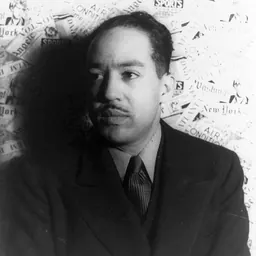
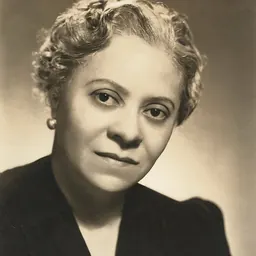
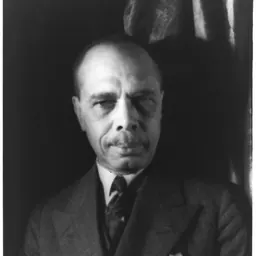
People in Margaret Bonds's life
Named in this biography and alive at the same time





Related people
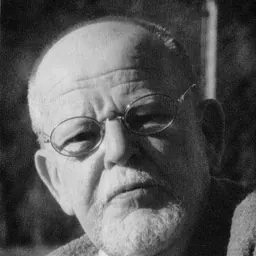
Same field, nearest in time




Contemporaries
People whose lives overlapped Margaret Bonds's



Frequently asked questions
Who was Margaret Bonds?
American composer and pianist (1913–1972)
When was Margaret Bonds born?
Margaret Bonds was born on 3 March 1913 in Chicago.
When did Margaret Bonds die?
Margaret Bonds died on 26 April 1972 in Los Angeles.
What was Margaret Bonds's occupation?
Margaret Bonds was a composer, pianist and jazz musician.
What nationality was Margaret Bonds?
Margaret Bonds was American.
Sources & further reading
Cite this page
APA: Biography.guide. (2026). Margaret Bonds. https://biography.guide/margaret-bonds/
MLA: "Margaret Bonds." Biography.guide, https://biography.guide/margaret-bonds/.
Chicago: "Margaret Bonds." Biography.guide. https://biography.guide/margaret-bonds/.
Data last updated: 2026-09-22 · Spot an error? Report a correction.
Page generated 2026-09-27 05:24 UTC