
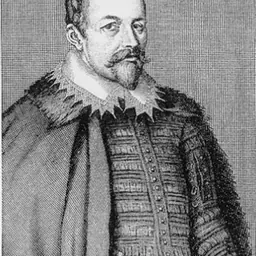
Marcus Friedrich Wendelin
German educator and theologian
About Marcus Friedrich Wendelin
Lived 1584 – 1652 (aged 67–68). Marcus Friedrich Wendelin was a German theologian, classical philologist and hofmeister.
Marcus Friedrich Wendelin (1584–1652) was a German college rector and Reformed theologian. He is known for his pedagogical and religious works published in Latin.
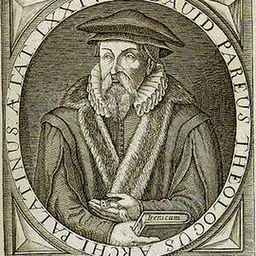
Early life Wendelin was born at Sandhausen, where his father was a pastor. He matriculated in 1604 at the University of Heidelberg, studied under David Pareus, and was strongly influenced by Ramism. He graduated magister in 1607.
Tutor As the tutor to two young noblemen, Wendelin travelled to Geneva. There he encountered Peter von Sebottendorf and his three princely pupils. They were Johann Kasimir of Anhalt-Dessau, his younger brother Friedrich Moritz, and Christian of Anhalt-Bernburg. Through von Sebottendorf he was engaged to travel with the princes. When Friedrich Moritz died at Lyon in 1610, Wendelin accompanied his body to Dessau.
Works Wendelin was a representative figure of Reformed scholasticism, a dogmatic approach in pedagogy and theology shared with Lambert Daneau, Benedict Pictet, Francis Turretin, Gisbertus Voetius and Girolamo Zanchi. It was at odds with the Lutheran approach to Aristotelianism. The Lutheran Johann Gerhard attacked Wendelin in his Collegium Antiwendelinum; as did Johannes Musaeus in his Collegia Disputatoria contra Wendelinum und Becanum. wrote a retrospective Exercitationes X Anti-Wendelinae (1687) against Wendelin's Systema majus theologiae christianae.
Contemplationum Physicarum Sectiones tres (1625, Hanau; 1648, Cambridge, office of Roger Daniel). Counted alchemy, medicine and natural magic as branches of physics. In the second section Cosmologia (1648), Wendelin explained Michael Stifel's date of the end of the world in 1533 in terms of a biblical chronogram. Christianae Theologiae Libri II (1st edition 1634, Hanau; 1639, Amsterdam). Recommended by Richard Holdsworth as clearer for the novice than Calvin's Institutes. Remarks in Wendelin's introduction on Valentin Weigel were later given currency by John Arrowsmith. Institutionum Politicarum Libri Tres (1645) on political science. Philosophia Moralis: Praeceptis Succinctis Methodice comprehensa (1647), a work of moral philosophy. 1654 edition at Harderwijk as Marci Friderici Wendelini Philosophia moralis, præceptis succinctis methodicè comprehensa. Adriaan Heereboord recommended the study of Wedelin's moral philosophy. Admiranda Nili (1648, Cambridge). Also edition of 1669. Logicae Institutiones Tironum adolescentum (1654, Amsterdam) was a Ramist logic text, used at Harvard College. It was a paraphrase and critical expansion of the Dialecticæ Libri Duo of Petrus Ramus, and ran to many further editions.
The Medulla priscae puraeque Latinitatis Latino-Germanicae (1638), sometimes attributed to Andreas Josaeus of Anhalt (1600–1660), had a second edition at the hands of Wendelin in 1647. According to , the attribution to Josaeus, who had contributed to the work, was a slip by Comenius. This work made Wendelin's reputation as a teacher of Latin. It was based on an abridgement of Robert Estienne's Thesaurus linguæ latinæ, to which were added phrases from classical authors. It became a standard work for German Gymnasiums.
Don’t just read it —
keep it.
Full-length biographies made to live with: read them, listen on the way to work, watch them tonight.
- E-book
- Audio
- Video
Instant download · yours to keep · every purchase keeps this site free
Important facts
People in Marcus Friedrich Wendelin's life
Named in this biography and alive at the same time
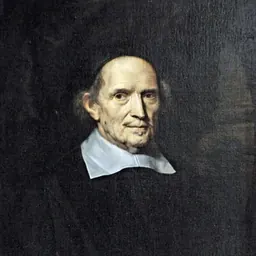
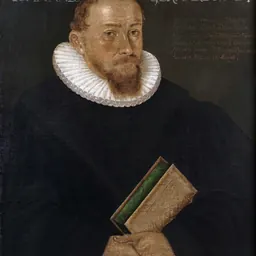
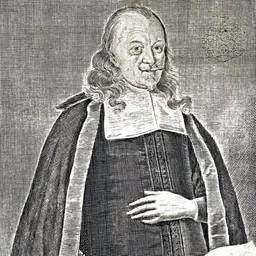
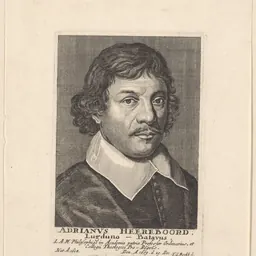


Related people
Same field, nearest in time

Contemporaries
People whose lives overlapped Marcus Friedrich Wendelin's



Frequently asked questions
Who was Marcus Friedrich Wendelin?
German educator and theologian
When was Marcus Friedrich Wendelin born?
Marcus Friedrich Wendelin was born in 1584 in Sandhausen.
When did Marcus Friedrich Wendelin die?
Marcus Friedrich Wendelin died on 7 August 1652 in Zerbst.
What was Marcus Friedrich Wendelin's occupation?
Marcus Friedrich Wendelin was a theologian, classical philologist and hofmeister.
What nationality was Marcus Friedrich Wendelin?
Marcus Friedrich Wendelin was German.
Sources & further reading
· Wikipedia: Marcus Friedrich Wendelin
· DBpedia: Marcus Friedrich Wendelin
Cite this page
APA: Biography.guide. (2026). Marcus Friedrich Wendelin. https://biography.guide/marcus-friedrich-wendelin/
MLA: "Marcus Friedrich Wendelin." Biography.guide, https://biography.guide/marcus-friedrich-wendelin/.
Chicago: "Marcus Friedrich Wendelin." Biography.guide. https://biography.guide/marcus-friedrich-wendelin/.
Data last updated: 2026-09-20 · Spot an error? Report a correction.
Page generated 2026-09-27 05:17 UTC