
About Marcus Eremita
Lived 360 – 430 (aged 69–70). Marcus Eremita was a monk, hermit and theologian.
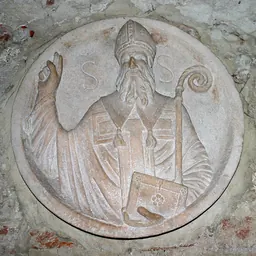
Marcus Eremita, Mark the Ascetic or Marcus the Ascetic was a Christian theologian, saint, and ascetic writer of the fifth century AD.
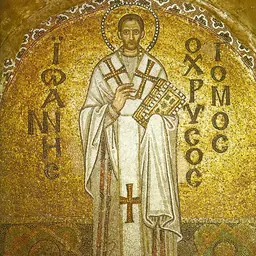
Mark is rather an ascetic than a dogmatic writer. He is content to accept dogmas from the Church; his interest is in the spiritual life as it should be led by monks. He is practical rather than mystic, belongs to the Antiochene School and is said to be a disciple of John Chrysostom.
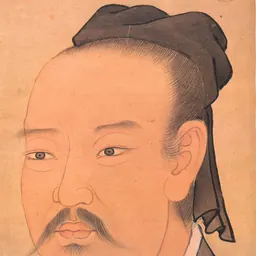
Identification Various theories about his period and works have been advanced. According to J. Kunze, Mark the Hermit was superior of a laura at Ancyra; he then as an old man left his monastery and became a hermit, probably in the desert east of Palestine, near Mar Saba. He was a contemporary of Nestorius and died after 430 but probably before the Council of Chalcedon (451).
Nicephorus Callistus (fourteenth century) says he was a disciple of John Chrysostom ("Hist. Eccl." in Patrologia Graeca, CXLVI, XlV, 30). Cardinal Bellarmine (De Script. eccl. (1631), p. 273) thought that this Mark was the monk who prophesied ten more years of life to the Emperor Leo VI in 900. He is refuted by Tillemont. identifies him with the Egyptian monk mentioned in Palladius, who lived in the fourth century. The discovery and identification of a work by him against Nestorius by P. Kerameus makes his period certain, as defended by Kunze.
Works His works were written in Greek and are preserved in good manuscripts (SC 445, 455). Most were translated to Syriac, and these Syriac writings are also available in manuscripts. His writings were widespread among members of the Church of the East; an example is a commentary that exists on "On the Spiritual Law" (CPG 6090) by Babai the Great . Further Arabic translations were made as well.
Mark's works are traditionally the following:
Of the spiritual law, Concerning those who think to be justified through works (both ascetic treatises for monks); Of penitence; Of baptism; To Nicholas on refraining from anger and lust; Disputation against a scholar (against appearing to civil courts and on celibacy); Consultation of the mind with its own soul (reproaches that he makes Adam, Satan, and other men responsible for his sins instead of himself); On fasting and humility; On Melchisedek (against the belief that Melchisedek was an apparition of the Word of God). Against the Nestorians (a treatise against that Christology arranged without order).
The first nine works are named and described in the "Myrobiblion" and are published in Gallandi's collection. The eighth is now considered spurious.
Excerpts of his writings are also included in the Philokalia.
Don’t just read it —
keep it.
Full-length biographies made to live with: read them, listen on the way to work, watch them tonight.
- E-book
- Audio
- Video
Instant download · yours to keep · every purchase keeps this site free
Important facts
People in Marcus Eremita's life
Named in this biography and alive at the same time

Related people
Same field, nearest in time


Contemporaries
People whose lives overlapped Marcus Eremita's

Frequently asked questions
Who was Marcus Eremita?
Christian theologian, saint, and ascetic writer
When was Marcus Eremita born?
Marcus Eremita was born in 360 in Roman Empire.
When did Marcus Eremita die?
Marcus Eremita died in 430 in Ancyra.
What was Marcus Eremita's occupation?
Marcus Eremita was a monk, hermit and theologian.
Sources & further reading
Cite this page
APA: Biography.guide. (2026). Marcus Eremita. https://biography.guide/marcus-eremita/
MLA: "Marcus Eremita." Biography.guide, https://biography.guide/marcus-eremita/.
Chicago: "Marcus Eremita." Biography.guide. https://biography.guide/marcus-eremita/.
Data last updated: 2026-09-25 · Spot an error? Report a correction.
Page generated 2026-09-27 05:11 UTC