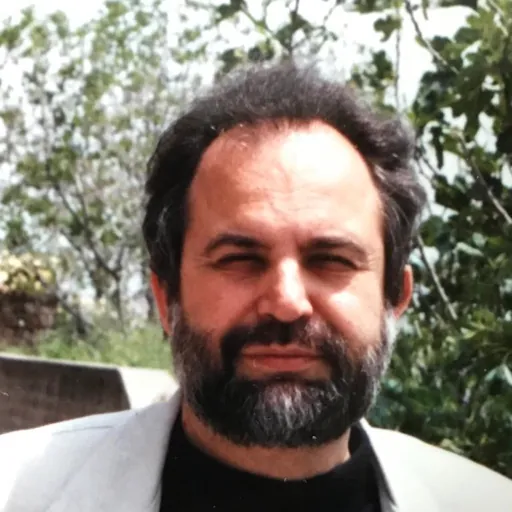
About Marcello Brunelli
Lived 1939 – 2020 (aged 81). Marcello Brunelli was an Italian academic, known for Memory and Physiology.
Marcello Brunelli (14 July 1939 – 25 November 2020) was an Italian neurophysiologist and academic.
He chaired the General Physiology and Neurobiology at the University of Pisa and worked with Giuseppe Moruzzi and Eric Kandel. Together with Kandel, he obtained the first demonstration of the role of the cyclic AMP as a second messenger in the transmission of the nervous impulse.
Biography In 1967, Brunelli graduated with honors in Medicine and Surgery at the University of Pisa. In the same year, he began his research activity at the CNR Institute of Clinical Physiology and from 1969 to 1970 at the Institute of Neurophysiology, also in Pisa. From 1970 to 1974, he was assistant of Human Physiology at the Pisa Physiology Institute. Together with Franco Magni he published researches on the nervous system of the pigeon and the leech and on the hormonal mechanisms of light emission in fireflies.
In the two-year period 1975–76, he visited the United States, where he worked in the laboratories directed by Eric Kandel making a fundamental contribution to the studies on the intracellular mechanisms of nerve signal transduction, which will lead Kandel himself to win the Nobel Prize in Medicine in 2000.
In 1976, he returned to Italy and two years later became Professor of General Physiology at the Faculty of Sciences of the University of Pisa. From 1983 to 1986, Brunelli took the place of Prof. Moruzzi at the head of the CNR Institute of Physiology in Pisa. In the following four years he was director of the Department of Physiology and Biochemistry of the University of Pisa.
Brunelli died in Pisa on 25 November 2020, aged 81, from complications associated with COVID-19.
Research activity
Brunelli began his career as a scientific researcher by investigating the nervous and hormonal mechanisms that control the emission of the luminous signals of Luciola lusitanica and demonstrating their circadian rhythms. The results of these experiments were published in a series of papers on the Archives Italiennes de Biologie from 1968 to 1973. Other studies were on the nervous system of the leech Hirudo medicinalis and visual perception in the common pigeon.
His research activity subsequently focused on the study of the neurobiological mechanisms of memory and non-associative learning in animal models. One of the main contributions of Brunelli was the identification of the cyclic AMP as the second messenger in nerve impulse transduction. – directly into the presynaptic terminal and observed that nerve transmission was facilitated.
quote|This provided the most compelling evidence then available that cyclic AMP is involved in a specific physiological function in the nervous system and gave us an initial understanding of the molecular mechanisms of short-term memory.|Eric R. Kandel The nervous system of this annelid consists of a chain of interconnected ganglia that contain relatively large and easily accessible neurons, lending itself well to electrophysiological recording. This has made it possible to make great progress in understanding the mechanisms of habituation and sensitization. In a series of experimental studies his group identified the role of acetyl-L-carnitine in influencing neuronal gene expression.
Before retiring from academic life, Brunelli directed an interuniversity research group investigating the physiological and medical aspects of the trigeminal-cardiac reflex (TCR) associated with proprioceptive stimulation of the jaw. The TCR is a still poorly known vagal reflex activated by the stimulation of the trigeminal nerve that induces a sustained reduction of heart rate and mean arterial pressure. Brunelli and colleagues observed the activation of the reflex following mandibular stretching in humans. Further experiments on the rat have shown a concurrent vasodilation of pial arterioles.
Don’t just read it —
keep it.
Full-length biographies made to live with: read them, listen on the way to work, watch them tonight.
- E-book
- Audio
- Video
Instant download · yours to keep · every purchase keeps this site free
Important facts
People in Marcello Brunelli's life
Named in this biography and alive at the same time


Related people
Same field, nearest in time




Contemporaries
People whose lives overlapped Marcello Brunelli's




Frequently asked questions
Who was Marcello Brunelli?
Italian neurophysiologist
When was Marcello Brunelli born?
Marcello Brunelli was born on 14 July 1939 in Ancona.
When did Marcello Brunelli die?
Marcello Brunelli died on 25 November 2020 in Pisa.
What was Marcello Brunelli's occupation?
Marcello Brunelli was an academic.
What was Marcello Brunelli known for?
Marcello Brunelli was known for Memory and Physiology.
What nationality was Marcello Brunelli?
Marcello Brunelli was Italian.
Sources & further reading
· Wikipedia: Marcello Brunelli
Cite this page
APA: Biography.guide. (2026). Marcello Brunelli. https://biography.guide/marcello-brunelli/
MLA: "Marcello Brunelli." Biography.guide, https://biography.guide/marcello-brunelli/.
Chicago: "Marcello Brunelli." Biography.guide. https://biography.guide/marcello-brunelli/.
Data last updated: 2026-09-23 · Spot an error? Report a correction.
Portrait: Wikimedia Commons · author & licence
Page generated 2026-09-27 05:07 UTC