
About Marcel von Herrfeldt
Lived 1889 – 1965 (aged 75). Marcel von Herrfeldt was a German and French painter and draftsperson.
Marcel René von Herrfeldt (September 1889, in Boulogne-Billancourt – 1965, in Munich) was a German painter and protagonist of the Munich School. Initially adhering to the movement of Art Nouveau sans phrase, Herrfeldt later integrates elements of New Objectivity. Fusing Art Nouveau and elements of New Objectivity, he develops a style referred to as expressive realism in respective literature.
Biography
Marcel René von Herrfeldt was born in 1889, in Paris of the Fin de Siècle. His parents, Alice Herrfeldt and Luis Ricardo Falero, are both artists and engaged to the bustling art scene of Paris and Europe. Since a very young age, painting is a preoccupation of Herrfeldt. He mainly studies in Munich, guided by Franz von Stuck, Florence and Paris, with an interruption during the First World War. Herrfeldt's paintings are strongly influenced by his teacher Franz von Stuck; in an early phase, he is both influenced by motives and genre, later on, he develops a more individual style, integrating realistic, expressionist elements. The motives Herrfeldt does not only share with other protagonists of the Munich School, but with his father as well. The focus on nude paintings and especially women portrayals is relatively widespread in that art scene.
Although Herrfeldt's biography is not entirely reconstructed, there is an uncontested hallmark in his early career: 1921 he exhibitions his interpretation of the subjection of woman/woman slavery at Glaspalast, at an annual exhibition organized by protagonists of the Munich School, well renowned by that time. His painting is then widely discussed and his work is accessible to a greater audience. This standing is limited to the inter-war period, fostered by the disbandment of the Munich School. Herrfeldt reassesses in 1951, without tying on to his success of the inter-war period. Awarded the Diplôme d`honneur in 1971, Herrfeldts Oeuvre is priced posthum.
The classification of Herrfeldt to a specific genre ist difficult, wrote Max Drost in his analysis on Herrfeldt's work in 1925. Experts primarily differentiate between an early MRH phase of pure Art Nouveau and a later phase of an Expressionist Realistic turn. By contrast, there is continuity regarding his motives of astrology and mythology.
Oeuvre
Inspiration
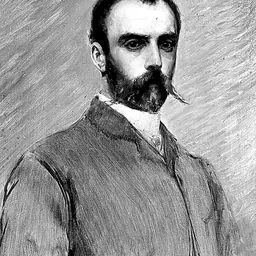
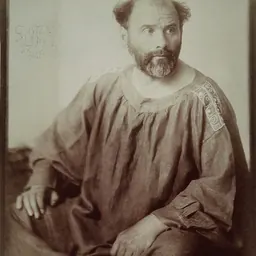
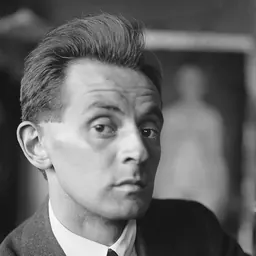
Regarding motives, several influences can be highlighted. One of the most important: His father Luis Ricardo Falero (Im. 2) – a Spanish painter and engineer – who is as well focused on nude-painting, astrology and mythology. The focus on women portrayals and mythological motives Herrfeldt shared with his contemporaries and relative art movements such as the Vienna Secession, with well renowned representatives such as Gustav Klimt and Egon Schiele.
Principal work and Motives Exploring the treasure-chest of antique mythology, his preoccupation with nude painting and women portrayals are accompanied with Max Drost's dictum that Herrfeldt is the herald of women's beauty.
His affinity to antique Mythology is pivotal and explicit in his masterpiece Poseidon, completed in 1960, a phase Herrfeldt himself refers to as his peak. Herrfeldt only dates this piece of art. Herrfeldt's masterpiece is created by a time when the Age of Aquarius is of special interest. Moreover, Herrfeldt not only portrays women, but men as well. His interpretation of Narciss is a typical example. The interpretations of Salome, Judith and the slave women, the latter catching huge attention when exhibited in 1921 in the Glaspalast, are key paintings as well. Further topics are his extensive studies of water, music and dancing scenes. The portrayals of women and focus on power relations and subjection runs like a golden thread through his creations. These portrayals are expressive, idealized and provocative, especially in the context of the 1920s.
Impact
Despite his absence in current debates, Herrfeldt can be related to modern Pinup culture. In addition, the tension of erotic, idealized portrayals and emancipation is not a controversy limited to his epoch, but steadily reappears and recently becomes manifest in the context of the Femen Movement.
Don’t just read it —
keep it.
Full-length biographies made to live with: read them, listen on the way to work, watch them tonight.
- E-book
- Audio
- Video
Instant download · yours to keep · every purchase keeps this site free
Important facts
People in Marcel von Herrfeldt's life
Named in this biography and alive at the same time
Related people
Same field, nearest in time


Contemporaries
People whose lives overlapped Marcel von Herrfeldt's




Frequently asked questions
Who was Marcel von Herrfeldt?
German painter
When was Marcel von Herrfeldt born?
Marcel von Herrfeldt was born on 2 September 1889 in Paris, Boulogne-Billancourt.
When did Marcel von Herrfeldt die?
Marcel von Herrfeldt died on 24 June 1965 in Munich.
What was Marcel von Herrfeldt's occupation?
Marcel von Herrfeldt was a painter and draftsperson.
What nationality was Marcel von Herrfeldt?
Marcel von Herrfeldt was German and French.
Sources & further reading
· Wikipedia: Marcel von Herrfeldt
· DBpedia: Marcel René von Herrfeldt
Cite this page
APA: Biography.guide. (2026). Marcel von Herrfeldt. https://biography.guide/marcel-von-herrfeldt/
MLA: "Marcel von Herrfeldt." Biography.guide, https://biography.guide/marcel-von-herrfeldt/.
Chicago: "Marcel von Herrfeldt." Biography.guide. https://biography.guide/marcel-von-herrfeldt/.
Data last updated: 2026-09-20 · Spot an error? Report a correction.
Page generated 2026-09-27 05:00 UTC