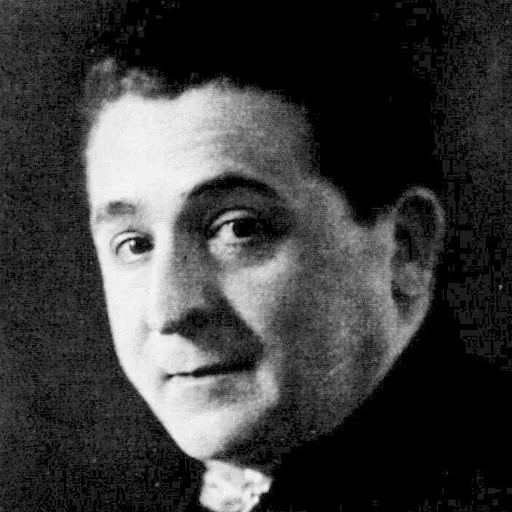
About Marcel Riesz
Lived 1886 – 1969 (aged 82). Marcel Riesz was a Hungarian and Swedish mathematician and university teacher, known for F. and M. Riesz theorem, M. Riesz extension theorem and Riesz function.
Marcel Riesz ( ; 16 November 1886 – 4 September 1969) was a Hungarian mathematician, known for work on summation methods, potential theory, and other parts of analysis, as well as number theory, partial differential equations, and Clifford algebras. He spent most of his career in Lund, Sweden.
Marcel is the younger brother of Frigyes Riesz, who was also an important mathematician and at times they worked together (see F. and M. Riesz theorem).
Biography
Marcel Riesz was born in Győr, Austria-Hungary. He was the younger brother of the mathematician Frigyes Riesz. In 1904, he won the Loránd Eötvös competition.
After ten years of intense work with little rest, he suffered a breakdown. Riesz returned to Lund in 1962. After a long illness, he died there in 1969.
Riesz was elected a member of the Royal Swedish Academy of Sciences in 1936.
His results on summability of trigonometric series include a generalisation of Fejér's theorem to Cesàro means of arbitrary order. He also studied the summability of power and Dirichlet series, and coauthored a book on the latter with G.H. Hardy.
He also introduced the Riesz function Riesz(x), and showed that the Riemann hypothesis is equivalent to the bound as for any
Together with his brother Frigyes Riesz, he proved the F. and M. Riesz theorem, which implies, in particular, that if μ is a complex measure on the unit circle such that
then the variation |μ| of μ and the Lebesgue measure on the circle are mutually absolutely continuous.
Functional-analytic methods
Part of the analytic work of Riesz in the 1920s used methods of functional analysis.
In the early 1920s, he worked on the moment problem, to which he introduced the operator-theoretic approach by proving the Riesz extension theorem (which predated the closely related Hahn–Banach theorem).
Later, he devised an interpolation theorem to show that the Hilbert transform is a bounded operator in Lp The generalisation of the interpolation theorem by his student Olaf Thorin is now known as the Riesz–Thorin theorem.
Riesz also established, independently of Andrey Kolmogorov, what is now called the Kolmogorov–Riesz compactness criterion in Lp: a subset K ⊂Lp(Rn) is precompact if and only if the following three conditions hold: (a) K is bounded;
(b) for every there exists so that
for every
(c) for every there exists so that
for every with |y| < ρ, and every .
Potential theory, PDE, and Clifford algebras
After 1930, the interests of Riesz shifted to potential theory and partial differential equations. He made use of "generalised potentials", generalisations of the Riemann–Liouville integral.
Students Riesz's doctoral students in Stockholm include Harald Cramér and Einar Carl Hille. In Lund, Riesz supervised the theses of Otto Frostman, Lars Gårding, Lars Hörmander, and Olof Thorin.
Publications
Don’t just read it —
keep it.
Full-length biographies made to live with: read them, listen on the way to work, watch them tonight.
- E-book
- Audio
- Video
Instant download · yours to keep · every purchase keeps this site free
Important facts
more
Riesz–Thorin theoremPeople in Marcel Riesz's life
Named in this biography and alive at the same time




Related people
Same field, nearest in time

Contemporaries
People whose lives overlapped Marcel Riesz's



Frequently asked questions
Who was Marcel Riesz?
Hungarian mathematician (1886–1969)
When was Marcel Riesz born?
Marcel Riesz was born on 16 November 1886 in Győr.
When did Marcel Riesz die?
Marcel Riesz died on 4 September 1969 in Lund.
What was Marcel Riesz's occupation?
Marcel Riesz was a mathematician and university teacher.
What was Marcel Riesz known for?
Marcel Riesz was known for F. and M. Riesz theorem, M. Riesz extension theorem, Riesz function, Riesz mean, Riesz potential and Riesz transform.
What nationality was Marcel Riesz?
Marcel Riesz was Hungarian and Swedish.
Sources & further reading
Cite this page
APA: Biography.guide. (2026). Marcel Riesz. https://biography.guide/marcel-riesz/
MLA: "Marcel Riesz." Biography.guide, https://biography.guide/marcel-riesz/.
Chicago: "Marcel Riesz." Biography.guide. https://biography.guide/marcel-riesz/.
Data last updated: 2026-09-23 · Spot an error? Report a correction.
Portrait: Wikimedia Commons · author & licence
Page generated 2026-09-27 05:08 UTC