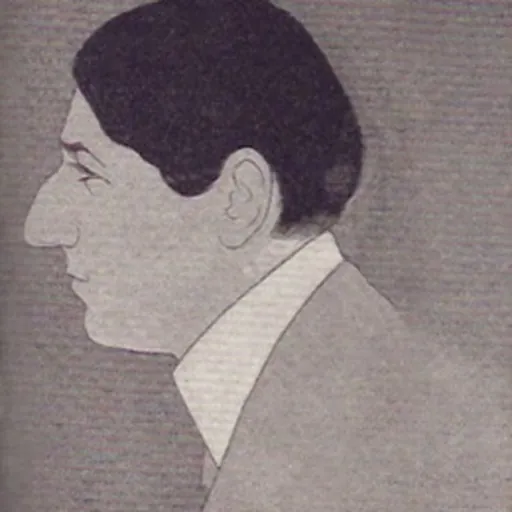
About Marcel Boulestin
Lived 1877 – 1943 (aged 66). Marcel Boulestin was a French chef, non-fiction writer, writer and cook.
Xavier Marcel Boulestin (13 April 1877 – 20 September 1943) was a French chef, restaurateur, and the author of cookery books that popularised French cuisine in the English-speaking world.
Born in Poitiers in France (Poitou region), Boulestin tried a number of occupations before finding his role as a restaurateur. He worked as secretary and ghostwriter to the author "Willy" (Henry Gauthier-Villars) in Paris, and then moved to London, where he made his home and career from 1906 onward. There, he opened an interior design shop, which failed to make enough money. He wrote extensively, and was commissioned to write a simple French cookery book for English readers. It was a huge success, and thereafter his career was in cooking.
The restaurant Boulestin, known as the most expensive in London, opened in 1927. Its fame, and the long series of books and articles that Boulestin wrote, made him a celebrity. His cuisine was wide-ranging, embracing not only the French classics but also dishes familiar to British cooks.
Among those influenced by Boulestin was the English food writer Elizabeth David, who praised Boulestin in her books and adopted many of his precepts.
Life and career
Early years Born in Poitiers, France, Boulestin was raised by his mother and his maternal grandmother in Poitiers. His parents lived apart, and the young Boulestin spent a month each summer with his father in Saint-Aulaye. He was educated in Poitiers, and later in Bordeaux, where he was nominally a law student, but in practice was a full-time concert-goer and member of the musical scene of the city. and published his first book, a dialogue, Le Pacte, for which the humorous writer Willy (Henry Gauthier-Villars), husband of the novelist Colette, wrote a preface. Despite Willy's endorsement, the book was not a success. Willy's novel En Bombe (1904) portrayed his life with Boulestin and his other secretaries, illustrated with 100 posed photos showing Willy himself as Maugis, Marcel Boulestin as Blackspot, another secretary Armory as Kernadeck, Colette as Marcelle, Marcelle as Jeannine, and Colette's dog Toby-Chien. Also, in 1905, Boulestin's French translation of The Happy Hypocrite by Max Beerbohm was published in the Mercure de France, with a caricature of Boulestin by Beerbohm. Boulestin had to convince a sceptical editor that Beerbohm really existed and was not an invention of Boulestin's.
London and interior design Boulestin was an Anglophile from an early age, even in culinary matters. He attempted to convince his family of the virtues of mint sauce with mutton, bought mince pies and marmalade in Paris, and took Colette to afternoon tea. At first he earned his living by writing humorous "Letters from London" for several magazines, among them Akademos, a sumptuous monthly published by Jacques d'Adelswärd-Fersen. For Akademos, Boulestin also wrote a serial novel with a homosexual theme, Les Fréquentations de Maurice, under the pseudonym "Sidney Place". The book had a succès de scandale in France, but was thought too racy for publication in Britain. (An English translation was finally published in 2024 under the title Maurice In London by Lethe Press.) In the same year he collaborated with Francis Toye, on a lightweight novel, The Swing of the Pendulum. Some of his feuilletons from London were published as Tableaux de Londres in a limited edition (1912). He also wrote for Academy, a review edited by Lord Alfred Douglas; translated plays; and wrote articles that appeared in a variety of publications, including Vanity Fair, Gil Blas, and Mercure Musicale. "My stock was small, but modern and first-rate. I had made no concessions. The silks, the velvets, the linens, the knick-knacks and the wallpapers came from Martine, André Groult, and Iribe. I had bought stuffs at Darmstadt, Munich and Vienna; Berlin and Florence supplied me with certain papers, Paris with new and amusing vases, pottery, porcelain, glass, and a few fine pieces of Negro art". Among his clients were the future interior decorator Syrie Maugham, and socialites such as Lady Curzon and Mrs. Hwfa Williams. His firm also attracted the Countess of Drogheda and Princess Lichnowsky, who had been instrumental in the success of the Omega Workshops.
During the First World War Boulestin served in the French army as an interpreter to the British Expeditionary Force. Among his incidental tasks was designing the costumes for the famous army concert party, the "Rouges et Noirs". He sometimes amused himself at the British headquarters by teaching British soldiers how to cook.
After the war he returned to London and reopened his design business at 102 George Street, Portman Square.
During this period Boulestin edited a book of essays and stories, Keepsake, which was illustrated by his friend Jean Émile Laboureur. Around 1923, however, Boulestin was contracted to write a French-cookery book by the director of the British publishing house Heinemann; called Simple French Cooking for English Homes, it was published in June 1923 "and was an immediate success with both the Press and the public". This appealed to the public and such were the sales of his book that it was reprinted six times between 1923 and 1930. In 1927 Boulestin moved to Southampton Street, Covent Garden, opening the eponymous Restaurant Boulestin on the site of the old Sherry's Restaurant.
The culinary reputation of the establishment was high; the writer Edward Laroque Tinker declared in The New York Times that at Boulestin's "one gets the most perfect and récherché dinner to be found in all London". Boulestin's standards were so exacting that despite being reputedly the most expensive restaurant in London, the Restaurant Boulestin did not make a profit, and he was obliged to supplement his earnings by prolific writing of articles and books. Some of these were written in collaboration with Arthur Henry "Robin" Adair, a British food writer who in 1923 became Boulestin's companion, literary partner and translator. In her books, she quoted with approval from several of Boulestin's works, including this, originally from What Shall We Have Today?: "The chief thing to remember is that all these soups … must be made with plain water. When made with the addition of stock they lose all character and cease to be what they were intended to be. The fresh pleasant taste is lost owing to the addition of meat stock, and the value of the soup from an economical point of view is also lost." David herself made the same point in many of her writings. She also drew attention to the wide range of Boulestin's culinary tastes. He was not an unswerving advocate of classic French recipes, and wrote with enthusiasm about curries, Basque pipérade, and Irish stew.
Boulestin was the first regular television chef, broadcasting for the BBC in television's earliest experimental days in 1937–1939. he demonstrated not only French dishes such as Escalope de Veau Choisy, Crêpes d'été, and Rouget Marseillaise, but also deceptively simple food including salads, lamb kebabs, spring vegetables, and picnics.
Last years In the summer of 1939, Boulestin and Adair were taking their customary holiday in a house that Boulestin had built in the Landes. When France was invaded by Germany, Adair was ill, and unable to escape; Boulestin remained with him. Adair was interned as an enemy alien by the Germans, and held first in Bayonne and then nearer Paris. Boulestin moved to Paris to be close to him, and died there after a brief illness, aged 65.
Adair was released at the end of the war and returned to England, becoming the cookery correspondent of the British magazine Harper's Bazaar. He died in 1956. Boulestin's restaurant continued under various managements until 1994.
Legacy Joel Kissin launched a cafe and restaurant in London named after Boulestin and his eponymous Covent Garden restaurant in 2013.
Books Le Pacte, dialogue (1899). Paris: Société libre des gens de lettres. Les Fréquentations de Maurice (Mœurs de Londres) (1912) a serial novel written under the pseudonym Sidney Place. Paris: Dorbon-aîné. Tableaux de Londres (1912). Collection of Boulestin's columns. Paris: Dorbon-aîné. Dans les Flandres Brittaniques (1916). Wartime memoir. Paris: Dorbon-aîné. Aspects Sentimentaux du Front Anglais (1916). Published under the pseudonym Bertie Angle. Paris: Dorbon-aîné. The Atnaeum: A Collection of Atrocities Committed at the Front (1917) Wartime memoir written under the pseudonym Bertie Angle. Privately printed edition of 20 copies. London. New keepsake for the year 1921. Le Nouveau keepsake pour l'année 1921. (ed., 1920). London: Chelsea Book Club. Simple French Cooking for English Homes (1923). London: Heinemann. A Second Helping: or, More Dishes for English Homes (1925). London: Heinemann. The Conduct of the Kitchen: How to Keep a Good Table for Sixteen Shillings a Week (1925). London: Heinemann. Herbs, Salads, and Seasonings (with Jason Hill, 1930). London: Heinemann. What Shall We Have To-Day? 365 Recipes for All the Days of the Year (1931). London: Heinemann. Potatoes: One Hundred & One Ways of Cooking (with A. H. Adair, 1932). London: Heinemann. What Shall We Have to Drink? (1933). London: Heinemann. The Evening Standard Book of Menus (1935). London: Heinemann. Savouries and Hors-d'oeuvre: One Hundred & Twenty-Seven Ways of Preparing (with A. H. Adair, 1932) London: Heinemann. À Londres, Naguère (1930). Paris: Librarie Arthème Fayard. (translated with a new preface by A. H. Adair as Ease and Endurance Home and Van Thal 1948) Eggs: One Hundred & Twenty Ways of Cooking (with A. H. Adair, 1932) London: Heinemann. Having Crossed the Channel (1934). London: Heinemann. Myself, My Two Countries ... (1936). London: Cassell. The Finer Cooking, or, Dishes for Parties (1937). London: Cassell. Paris-Londres aux environs de 1900; souvenirs inédits (1945). Paris: Librarie Arthème Fayard.
Don’t just read it —
keep it.
Full-length biographies made to live with: read them, listen on the way to work, watch them tonight.
- E-book
- Audio
- Video
Instant download · yours to keep · every purchase keeps this site free
Important facts
People in Marcel Boulestin's life
Named in this biography and alive at the same time






Related people
Same field, nearest in time



Contemporaries
People whose lives overlapped Marcel Boulestin's


Frequently asked questions
Who was Marcel Boulestin?
French chef
When was Marcel Boulestin born?
Marcel Boulestin was born on 13 April 1877 in Poitiers.
When did Marcel Boulestin die?
Marcel Boulestin died on 20 September 1943 in 16th arrondissement of Paris.
What was Marcel Boulestin's occupation?
Marcel Boulestin was a chef, non-fiction writer, writer and cook.
What nationality was Marcel Boulestin?
Marcel Boulestin was French.
Sources & further reading
Cite this page
APA: Biography.guide. (2026). Marcel Boulestin. https://biography.guide/marcel-boulestin/
MLA: "Marcel Boulestin." Biography.guide, https://biography.guide/marcel-boulestin/.
Chicago: "Marcel Boulestin." Biography.guide. https://biography.guide/marcel-boulestin/.
Data last updated: 2026-09-23 · Spot an error? Report a correction.
Portrait: Wikimedia Commons · author & licence
Page generated 2026-09-27 05:05 UTC