
About Marbrianus de Orto
Lived 1460 – 1529 (aged 68–69). Marbrianus de Orto was a composer.
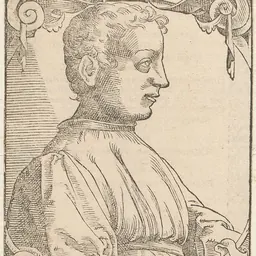
Marbrianus de Orto (Dujardin; also Marbriano, Marbrianus; – January or February 1529) was a Flemish composer of the Renaissance (Franco-Flemish school). He was a contemporary, close associate, and possible friend of Josquin des Prez, and was one of the first composers to write a completely canonic setting of the Ordinary of the Mass.
Life The illegitimate child of a priest, Orto was probably born in Tournai, and spent the early part of his life there. While his original surname was Dujardin, he used "de Orto" (the Italian translation of Dujardin) throughout his life. In June 1482, in the household of Ferry de Clugny, Cardinal-Bishop of Tournai (who died 7 October 1483), he went to Rome, where he became a singer in the papal chapel; he may have become an accomplished composer around this time, since his Missa ad fugam seems to have been written in response to the similar composition by Josquin des Prez, tentatively dated to the early 1480s, and Orto's mass was copied for the Capella Sistina between 1487 and 1490.
The Church of St. Gertrude in Nivelles, where Orto worked from the mid 1490s until his death in 1529, and where he is buried.
While he served in the Sistine Chapel Choir until at least 1499, during the papacies of Innocent VIII and Alexander VI, he began to acquire other posts and benefices. He was particularly popular with Innocent, who awarded him benefices and allowed him to rise in the hierarchy in spite of his illegitimacy. During this time he and Josquin worked closely together, even seeking similar positions at Cambrai in their mutual homeland. One of the things he may have done in collaboration with Josquin was a revision of a cycle of hymns by Guillaume Dufay, composed around 1430, which had fallen out of use. At some time in the early 1490s Orto acquired the post of dean at the Collegiate Church of St. Gertrude of Nivelles, present-day Belgium; he was to remain closely associated with this institution for the rest of his life. It is not known exactly when he moved there, but he left Nivelles in late 1504 in order to join the choir of Philip the Handsome, la Grande Chapelle, a distinguished musical body which included Pierre de La Rue, and which went to Spain in 1506.
Orto joined the choir at a very high level, becoming premier chapelain in short order—by 30 November 1505—indicating the high level of respect as both composer and singer he had attained. After Philip's death in September 1506 the choir was kept on by Juana of Castile, "Juana the Mad", and Orto was one of the singers who left shortly after, between October and December 1506, leaving the duties of premier chapelain to Pierre de La Rue. During this time and for the next three years Juana traveled with her singers, each night singing a requiem to her husband's corpse which went with them in its coffin, in a bizarre journey through Castile until Juana's father Ferdinand finally imprisoned her in the fortress at Tordesillas.
Back in the Low Countries, Orto remained in the employ of the Habsburgs, from at least 1509 until 1517, during which time he shared the duties of premier chapelain with Anthoine de Berghes. Sometime during this period he was likely the teacher of Arnold von Bruck, who was a choirboy. No certain documentation of Orto's activities during 1507 and 1508 is known.
Petrucci published five of de Orto's masses in this collection. All are cantus firmus masses, and include a Missa L'homme armé, based on the famous tune, probably composed in the early to mid 1480s. The same title was used to describe the canonic "Missa Sine nomine" in a later print by Antico.
De Orto's motets also usually use cantus firmus technique. The Salve regis mater sanctissima, though anonymous in its only surviving source, is probably by de Orto and was composed for the accession of Alexander VI in 1492.
Some of the chansons are akin to the typical French style of the early 16th century—quick, light, and imitative; others are more in line with the Burgundian style of the formes fixes. De Orto also wrote an early setting of Dido's lament, Dulces exuviae, from the Aeneid (iv.651–4), containing extensive chromatic writing.
Don’t just read it —
keep it.
Full-length biographies made to live with: read them, listen on the way to work, watch them tonight.
- E-book
- Audio
- Video
Instant download · yours to keep · every purchase keeps this site free
Important facts
People in Marbrianus de Orto's life
Named in this biography and alive at the same time


Related people
Same field, nearest in time


Contemporaries
People whose lives overlapped Marbrianus de Orto's


Frequently asked questions
Who was Marbrianus de Orto?
Franco-Flemish composer
When was Marbrianus de Orto born?
Marbrianus de Orto was born in 1460 in Tournai.
When did Marbrianus de Orto die?
Marbrianus de Orto died in 1529 in Nivelles.
What was Marbrianus de Orto's occupation?
Marbrianus de Orto was a composer.
Sources & further reading
· Wikipedia: Marbrianus de Orto
Cite this page
APA: Biography.guide. (2026). Marbrianus de Orto. https://biography.guide/marbrianus-de-orto/
MLA: "Marbrianus de Orto." Biography.guide, https://biography.guide/marbrianus-de-orto/.
Chicago: "Marbrianus de Orto." Biography.guide. https://biography.guide/marbrianus-de-orto/.
Data last updated: 2026-09-20 · Spot an error? Report a correction.
Page generated 2026-09-27 05:14 UTC