
About Manuel Ramos Otero
Lived 1948 – 1990 (aged 42). Manuel Ramos Otero was an American poet.
Manuel Ramos Otero (July 20, 1948 – October 7, 1990) was a Puerto Rican writer. He is widely considered to be the most important openly gay twentieth-century Puerto Rican writer who wrote in Spanish, and his work was often controversial due to its sexual and political content. Ramos Otero died in San Juan, Puerto Rico, from complications of AIDS.
Life Jesús Manuel Ramos Otero was born in Manatí, Puerto Rico, and spent his childhood in his home town, living in the second location of the old building of the Puerto Rican Casino of Manatí. He began his studies at the Colegio La Inmaculada in Manatí. His family then moved to San Juan when he was seven years old. He later attended the University High School, better known as UHS (1960–1965) and went on to receive a B.A. in Social Sciences (with a major in sociology and a minor in political sciences) from the University of Puerto Rico, Río Piedras Campus, graduating in 1969. In 1979 he received an M.A. in literature from New York University. While living in New York City, he worked as a social researcher, and later as a professor at diverse universities including Rutgers University, LaGuardia Community College, York College, and Lehman College. He also established a small publishing house, El Libro Viaje. He organized conferences and gatherings of his Puerto Rican writer friends in the United States such as Giannina Braschi and Luis Rafael Sanchez. He is best remembered as a poet and the author of short stories, but he also wrote a novel and several essays on literary criticism.
In 1990, Otero returned to Puerto Rico to live out his final days. He died on October 7 of that year of complications from HIV/AIDS. His posthumously-published work, Invitación a polvo, which Otero defined as “completely untranslatable,” directly addresses topics around the AIDS crisis. It was then adapted to an off-Broadway show in 2002 and staged by the Hostos Center for the Arts and Culture.
One of Ramos Otero's most interesting stories is "La última plena que bailó Luberza" (Luberza's Last Plena Dance), which he published in 1975 in the literary journal Zona de carga y descarga alongside a story by Rosario Ferré ("Cuando las mujeres quieren a los hombres"). Ramos Otero's and Ferré's stories were based on the life of Isabel Luberza Oppenheimer (better known as Isabel la Negra), a famous madam who ran a brothel in the city of Ponce from the 1930s to the 1960s. Ramos Otero's story was later included in his book El cuento de la Mujer del Mar (The Story of the Woman of the Sea).
In his work, Ramos Otero openly defends gay viewpoints and feminist positions. For him, homosexuality represented an outsider status; he did not advocate for full integration, but rather explored the situation of marginal subjects. He also discussed his HIV status and the prejudice and discrimination faced by people affected by AIDS. Most of his production has not been translated and is only available in Spanish.
Works
Essays "De la colonización a la culonización." Cupey 8, no. 1-2 (1991): 63-79. "La ética de la marginación en la poesía de Luis Cernuda." Cupey 5, no. 1-2 (1988): 16-29. "Ficción e historia: Texto y pretexto de la autobiografía." El mundo (Puerto Rico Ilustrado) [San Juan, P.R.] 14 de octubre de 1990: 20-23.
Narrative Concierto de metal para un recuerdo y otras orgías de soledad. San Juan: Editorial Cultural, 1971. La novelabingo. New York: Editorial El Libro Viaje, 1976. El cuento de la Mujer del Mar. Río Piedras: Ediciones Huracán, 1979. Página en blanco y staccato. 2nda ed. Madrid: Editorial Playor, 1988 . Cuentos de buena tinta. San Juan: Instituto de Cultura Puertorriqueña, 1992.
Poetry Invitación al polvo. Madrid: Editorial Plaza Mayor, 1991. El libro de la muerte. Río Piedras: Editorial Cultural; Maplewood, N.J.: Waterfront Press, 1985.
Collected works Cuentos (casi) completos. Edited by Arnaldo Cruz-Malavé. Havana, Cuba: Fondo Editorial Casa de las Américas, 2019. Cuentos "completos." Edited by Arnaldo Cruz-Malavé. San Juan, Puerto Rico: Editorial del Instituto de Cultura Puertorriqueña and Ediciones Callejón, 2023. Tálamos y tumbas: prosa y verso. Guadalajara, Jalisco, Mexico: Universidad de Guadalajara, 1998.
Critical reception Numerous literary scholars have written about Ramos Otero, including Arnaldo Cruz-Malavé, Jossianna Arroyo, Juan G. Gelpí, and José Quiroga. Rubén Ríos Ávila has compared Ramos Otero's experiences in New York to those of the exiled Cuban writer Reinaldo Arenas. Lawrence La Fountain-Stokes has written about Ramos Otero in the context of the Puerto Rican queer diaspora, comparing him to other artists such as Luz María Umpierre, Frances Negrón-Muntaner, Nemir Matos-Cintrón, and Erika Lopez.
Don’t just read it —
keep it.
Full-length biographies made to live with: read them, listen on the way to work, watch them tonight.
- E-book
- Audio
- Video
Instant download · yours to keep · every purchase keeps this site free
Important facts
People in Manuel Ramos Otero's life
Named in this biography and alive at the same time


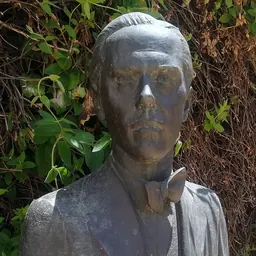

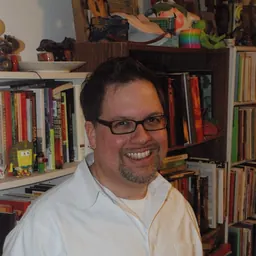



Related people
Same field, nearest in time

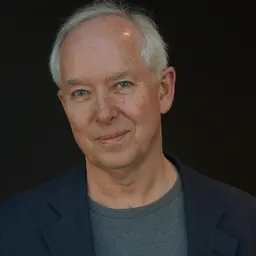
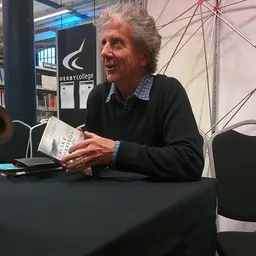
Contemporaries
People whose lives overlapped Manuel Ramos Otero's


Frequently asked questions
Who was Manuel Ramos Otero?
Puerto Rican poet (1948-1990)
When was Manuel Ramos Otero born?
Manuel Ramos Otero was born on 20 July 1948 in Manatí.
When did Manuel Ramos Otero die?
Manuel Ramos Otero died on 7 October 1990 in San Juan.
What was Manuel Ramos Otero's occupation?
Manuel Ramos Otero was a poet.
What nationality was Manuel Ramos Otero?
Manuel Ramos Otero was American.
Sources & further reading
· Wikipedia: Manuel Ramos Otero
Cite this page
APA: Biography.guide. (2026). Manuel Ramos Otero. https://biography.guide/manuel-ramos-otero/
MLA: "Manuel Ramos Otero." Biography.guide, https://biography.guide/manuel-ramos-otero/.
Chicago: "Manuel Ramos Otero." Biography.guide. https://biography.guide/manuel-ramos-otero/.
Data last updated: 2026-09-20 · Spot an error? Report a correction.
Page generated 2026-09-27 05:00 UTC