
About Manuel Raimundo Querino
Lived 1851 – 1923 (aged 71). Manuel Raimundo Querino was a Brazilian writer, artist and abolitionism.
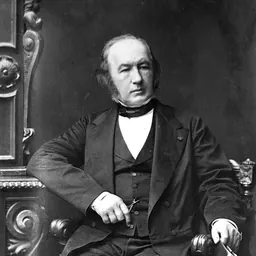
Manuel Raimundo Querino (July 28, 1851 - February 14, 1923) was a prominent Afro-Brazilian artist and intellectual. Querino's pioneering ethnographic works focused on the contributions of Africans to Brazilian history and culture. Assessing his contributions, the historian E. Bradford Burns observes, "Querino was the first black to write Brazilian history, a task to which he brought a much-needed perspective."
Early life Querino was born in Santo Amaro, Bahia in 1851. In 1855, it is believed that both his parents (possibly foster parents) died during the cholera epidemic. Left an orphan at the age of four, he was sent to Salvador, where he was raised by a guardian, Manuel Correia Garcia, a journalist and professor at the Normal School, who founded the Instituto Histórico da Bahia in 1856. He became a pupil of the Spanish artist Miguel Navarro Cañizares, who founded the Escola de Belas Artes. Querino graduated from the Academia in geometric design and taught at the Liceu and at the Colégio de Órfãos de São Joaquim, the orphanage where he had been taken as a child. He produced two textbooks on geometric design.
Manuel Querino was active in politics as a labor leader, city councillor and abolitionist, publishing and editing a newspaper entitled A Provincia, which favoured the abolition of slavery, and joining the Bahian Abolition Society.
He later co-founded the Partido Operário (Workers' Party) and the Liga Operária Baiana (Bahian Workers' League). He also published and edited a short-lived newspaper entitled O Trabalho (Labor) that advocated professional education for the formerly enslaved people emancipated following Abolition in 1888.
Querino was a founder and charter member of the Geographical and Historical Institute of Bahia (Instituto Geográfico e Histórico da Bahia) in 1894. According to Burns, his research brought some consideration of Afro-Brazilian perspectives and sources to Brazilian history. Querino completed oral history interviews to gather information from Black Bahians. He also used his contacts with Salvador's white elite to advocate for practitioners of Afro-Brazilian religions like Candomblé.
Querino engaged in intellectual debates against the racist and elitist science of his time, spearheaded by pathologist Raimundo Nina Rodrigues.
He was also the first scholar to publish biographies of Bahian artists - considered the Brazilian Vasari - and pioneered food studies by producing a book on Bahian cuisine that was published after his death with the help of his son Paulo Querino and his friend J. Teixeira Barros.
In popular culture The famous Bahian writer Jorge Amado drew on his story as an inspiration for creating his character Pedro Archanjo, the central figure of his 1969 novel Tenda dos Milagres (Tent of Miracles).
Quotations from his works
"Bahia reaches superiority, excellence, and primacy in the culinary art of the country as the African element, with its exquisite seasoning of exotic fertilizers, altered profoundly the Portuguese delicacies, which resulted in a completely national product, tasty, pleasant to the palate yet demanding, which surpasses the righteous fame of Bahian cuisine." (QUERINO, 1922, p. 23)
"Brazil possesses two real treasures: the fertility of its soil and the skills of its mixed-race people." (Querino 1918: The Black Settler as a Factor of Brazilian Civilization) Jorge Amado used these words as an epigraph in his novel Tent of Miracles.
Works Desenho linear das classes elementares (Linear drawing of the elementary classes), 1903 Elementos de desenho geometrico (Elements of geometric drawing), 1911 Artistas baianos (Bahian artists), Rio de Janeiro, 1909 As artes na Bahia (The arts in Bahia), Salvador, 1909 Bailes pastoris (Pastoral dances), Salvador, 1914 A raça africana e seus costumes na Bahia (The African race and its customs in Bahia), In: Anais do Congresso Brasileiro V of Geography, Salvador, 1916 A Bahia de Outrora (Olden-day Bahia), Salvador 1916 O colono preto como fator da civilização brasileira (The Black Settler as a Factor in Brazilian Civilization), 1918 A arte culinária na Bahia (Culinary Arts in Bahia) 1928 - highlights the African contribution to Bahian cuisine
Don’t just read it —
keep it.
Full-length biographies made to live with: read them, listen on the way to work, watch them tonight.
- E-book
- Audio
- Video
Instant download · yours to keep · every purchase keeps this site free
Important facts
People in Manuel Raimundo Querino's life
Named in this biography and alive at the same time

Related people
Same field, nearest in time

Contemporaries
People whose lives overlapped Manuel Raimundo Querino's



Frequently asked questions
Who was Manuel Raimundo Querino?
Brazilian writer
When was Manuel Raimundo Querino born?
Manuel Raimundo Querino was born on 28 July 1851 in Santo Amaro.
When did Manuel Raimundo Querino die?
Manuel Raimundo Querino died on 14 February 1923 in Salvador.
What was Manuel Raimundo Querino's occupation?
Manuel Raimundo Querino was a writer, artist and abolitionism.
What nationality was Manuel Raimundo Querino?
Manuel Raimundo Querino was Brazilian.
Sources & further reading
· Wikipedia: Manuel Raimundo Querino
· DBpedia: Manuel Raimundo Querino
Cite this page
APA: Biography.guide. (2026). Manuel Raimundo Querino. https://biography.guide/manuel-raimundo-querino/
MLA: "Manuel Raimundo Querino." Biography.guide, https://biography.guide/manuel-raimundo-querino/.
Chicago: "Manuel Raimundo Querino." Biography.guide. https://biography.guide/manuel-raimundo-querino/.
Data last updated: 2026-09-24 · Spot an error? Report a correction.
Page generated 2026-09-27 05:02 UTC