
About Manuel Noriega
Lived 1934 – 2017 (aged 83). Manuel Noriega was a Panamanian politician, military personnel, drug lord and military engineer.
National Guard career Noriega graduated from Chorrillos in 1962 with a specialization in engineering. He returned to Panama and joined the Panama National Guard. Posted to Colón, he was commissioned as a second lieutenant in September 1962. His commanding officer in Colón was Omar Torrijos, then a major in the National Guard. Torrijos became a patron and mentor to Noriega. In a 1962 incident Torrijos helped Noriega avoid legal trouble after a prostitute accused Noriega of beating and raping her. Soon after, Noriega's drinking and violence obliged Torrijos to confine him to his quarters for a month. Despite Noriega's problems, Torrijos maintained their relationship, ensuring they were always in the same command; he also brought Díaz Herrera into the same unit. Díaz Herrera and Noriega became both friends and rivals for Torrijos's favor.
In 1964 Noriega had been posted to the province of Chiriquí, where Torrijos and Díaz Herrera were stationed. At the time, Arnulfo Arias, a native of that province, was preparing to contest the 1968 Panamanian Presidential election. Arias was a member of the National Revolutionary Party that represented the Panameñista movement. The sitting president, Roberto Chiari, belonged to the Liberal Party, which ordered Torrijos to harass Arias's party members and weaken his election bid. Torrijos passed this task on to Noriega, whose men arrested a number of people. Several prisoners said that they had been tortured; others stated they had been raped in prison. The mistreatment of Arias' supporters sparked public outrage, and led to Noriega being suspended for ten days, an item of information that was picked up by the U.S. intelligence services. In 1966, Noriega was again involved in a violent incident, allegedly raping a 13-year-old girl and beating her brother. After this, Torrijos transferred Noriega to a remote posting.
As a second lieutenant in 1966, Noriega spent many months taking courses at the School of the Americas. The school was located at the United States Army's Fort Gulick in the Panama Canal Zone. Journalist John Dinges has suggested that Torrijos sent Noriega to the school to help him "shape up" and live up to Torrijos's expectations. Despite performing poorly in his classes, he was promoted to the rank of first lieutenant in 1966, and Torrijos found him a job as an intelligence officer in the "North Zone" of the National Guard. Shortly afterward, he returned to the School of the Americas for more training. At the school, Noriega participated in courses on infantry operations, counterintelligence, intelligence, and jungle warfare. He also took a course in psychological operations at Fort Bragg in North Carolina.
Noriega's job required him to penetrate and disrupt the trade unions that had formed in the United Fruit Company's workforce, and he proved adept at this work. His new superior officer Boris Martínez was a fervent anti-communist, and enforced strict discipline on Noriega. Reports have suggested that he continued to pass intelligence to the U.S. during this period, about the plantation workers' activities. In 1967 the administration of U.S. President Lyndon B. Johnson concluded that Noriega would be a valuable asset, as he was a "rising star" in the Panamanian military. In February 1969, Torrijos's men seized Martínez and exiled him to Miami giving Torrijos control of the country.
At the end of 1969, Torrijos went to Mexico on holiday. A coup was launched in his absence, in which Noriega's loyalty allowed Torrijos to hang on to power, greatly enhancing Torrijos's image. No formal criminal investigations were begun, and no indictment was brought: according to Dinges, this was due to the potential diplomatic consequences. The Central Intelligence Agency (CIA) placed him on its payroll in 1971, while he held his position as head of Panamanian intelligence; he had previously been paid by U.S. intelligence services on a case-by-case basis. Regular payments to him were stopped under the Carter administration, before being resumed and later stopped again under the administration of Ronald Reagan. The CIA valued him as an asset because he was willing to provide information about the Cuban government and later about the Sandinista government in Nicaragua. The CIA did not report this incident to either the National Security Agency or the U.S. Justice Department. Dinges said that he could find no one willing to confirm persistent reports that he received a $200,000 per year stipend from the CIA.
Prior to and during Noriega's trial, Noriega's lead attorney Frank A. Rubino claimed that Noriega had received $11 million in payments from the CIA. In January 1991, federal prosecutors filed a financial report indicating that Noriega had received a total of $322,000 from the United States Army and the CIA over a 31-year period from 1955 to 1986. In June 1988, Tokyo gave its official backing to the Panamanian military government.
Drug and weapons operations Panama's and Noriega's involvement in drug-trafficking grew considerably over the early 1980s, peaking in 1984. Intensifying conflicts in Colombia, El Salvador, Guatemala, and Nicaragua had led to the creation of covert transportation networks that Noriega used to transport drugs to the U.S., particularly cocaine. During this period, Colombia's Medellín Cartel was also seeking allies. Noriega became intimately involved with their drug trafficking and money-laundering operations, and received considerable sums as protection money, bribes, or shares of profits. In June 1986, investigative journalist Seymour Hersh recorded a U.S. White House official as saying that reducing Noriega's activities could greatly reduce international drug trafficking.
Hersh reported unnamed U.S. officials as saying that Noriega had amassed a personal fortune in European banks as a result of his illegal activities, as well as owning two homes in Panama and one in France.
Murder of Spadafora and aftermath Hugo Spadafora was a physician and political activist who had first clashed with Noriega when they were both members of Torrijos's government. Though an ally of Torrijos, he and Noriega had been personal enemies for a long time. Despite not being a member of the opposition, he became a vocal critic of Noriega after returning to Panama from Guatemala in 1981. Spadafora amassed evidence of corruption within the government by using his position as an ally of Torrijos to question Noriega's allies, including Rodriguez and Carlton. This included a lengthy conversation with Carlton in mid-1985 after his drug operations had collapsed due to conflicts over a missing shipment, and he had received negative publicity in the Panamanian press. In September 1985 he accused Noriega of having connections to drug trafficking and announced his intent to expose him. The drug trafficking charges threatened Noriega's support among his own constituency of middle class individuals who had benefited under his and Torrijos's government.
According to writers R. M. Koster and Guillermo Sánchez, on an occasion when Spadafora was traveling by bus from Costa Rica to Panama, witnesses saw him being detained by the PDF after crossing the border. His decapitated body was later found wrapped in a United States Postal Service mail bag showing signs of brutal torture. Noriega was widely believed to be responsible for the murder, and according to Koster and Sánchez, the U.S. had intelligence implicating Noriega. On the day of Spadafora's arrest, the U.S. National Security Agency monitored a telephone conversation between Noriega and Luis Córdoba, the military commander in Chiriquí province where Spadafora was arrested. During the conversation Córdoba told Noriega, "We have the rabid dog." Noriega responded, "And what does one do with a dog that has rabies?"
Spadafora's murder badly damaged Noriega's image, both within and outside Panama, Barletta was highly regarded in the Reagan administration, and his removal brought a downturn in the relations between the U.S. and Noriega. After Spadafora's murder the U.S. began to view Noriega as a liability rather than an asset, despite his ongoing support for U.S. interventions elsewhere. The indictment accused him of "turning Panama into a shipping platform for South American cocaine that was destined for the U.S., and allowing drug proceeds to be hidden in Panamanian banks". The Alianza Democrática de Oposición Cívica (Democratic Alliance of Civic Opposition), an opposition coalition, nominated Guillermo Endara, a member of Arias' Panameñista Party, and two other prominent oppositionists, Ricardo Arias Calderón and Guillermo Ford, as vice-presidential candidates. Anticipating fraud, the opposition tracked ballot counts at local precincts on the day of the election (local ballot counts were done in public). As an exit poll made it clear that the opposition slate was winning by a wide margin, reports of missing tally sheets and seizures of ballot boxes by the PDF soon emerged. In the afternoon of the day after the election, the Catholic bishops conference announced that a quick count of public tallies at polling centers showed the opposition slate winning 3–1, a larger margin than it had claimed in 1984. In contrast, official tallies the day after that, however, had Duque winning by a 2–1 margin.
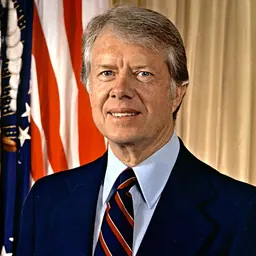
Rather than publish the results, Noriega voided the election, claiming that "foreign interference" had tainted the results. Former U.S. President Jimmy Carter, present in Panama as an observer, denounced Noriega, saying the election had been "stolen", as did Archbishop of Panama Marcos G. McGrath. Noriega had initially planned to declare Duque the winner regardless of the actual result, but Duque knew he had been badly defeated and refused to go along. The next day, Endara, Arias Calderón, and Ford rolled through the old part of the capital in a triumphant motorcade, only to be intercepted by a detachment of Noriega's paramilitary Dignity Battalions. Arias Calderón was protected by a couple of troops, but Endara and Ford were badly beaten. Images of Ford running to safety with his guayabera shirt covered in blood were broadcast around the world. When the 1984–1989 presidential term expired, Noriega named a longtime associate, Francisco Rodríguez, acting president. The U.S. recognized Endara as the new president. Noriega's decision to void the election results led to another coup attempt against him in October 1989. A number of Noriega's junior officers rose up against him, led by Lieutenant Colonel Moisés Giroldi Vera, but the rebellion was easily crushed by the members of the PDF loyal to Noriega. After this attempt, he declared himself the "maximum leader" of the country. The rebels were captured and taken to a military base outside Panama City, where they were tortured and then executed.
U.S. invasion of Panama
Genesis In March 1988, the U.S. government entered into negotiations with Noriega seeking his resignation. Panama was represented at those negotiations by Rómulo Escobar Bethancourt. Negotiations collapsed after several months of lengthy and inconclusive talks; according to Dinges, Noriega had no intentions of ever resigning. On December 15, 1989, the PRD-dominated legislature spoke of "a state of war" between the United States and Panama. It also declared Noriega "chief executive officer" of the government, formalizing a state of affairs that had existed for six years. The U.S. government stated that Noriega's forces were harassing U.S. troops and civilians. Three incidents in particular occurred very near the time of the invasion, and were mentioned by Bush as a reason for the invasion. In a December 16 incident, four U.S. personnel were stopped at a roadblock outside PDF headquarters in the El Chorrillo neighborhood of Panama City. The United States Department of Defense said that the servicemen were traveling unarmed in a private vehicle, and that they attempted to flee the scene only after their vehicle was surrounded by a crowd of civilians and PDF troops. First Lieutenant Robert Paz of the United States Marine Corps was shot and killed in the incident. An American couple who witnessed the incident was also arrested and harassed by the PDF.
Invasion The U.S. launched its invasion of Panama on December 20, 1989. Although the killing of the Marine was the ostensible reason for the invasion, the operation had been planned for months before his death. Casualties among the Panamanian forces were much higher; between 300 and 845.
On December 29, the United Nations General Assembly voted, 75–20 with 40 abstentions, to condemn the invasion as a "flagrant violation of international law". According to a CBS poll, 92% of Panamanian adults supported the U.S. incursion, and 76% wished that U.S. forces had invaded in October during the coup. Activist Barbara Trent disputed this finding, saying in a 1992 Academy Award-winning documentary The Panama Deception that the Panamanian surveys were completed in wealthy, English-speaking neighborhoods in Panama City, among Panamanians most likely to support U.S. actions. Human Rights Watch described the reaction of the civilian population to the invasion as "generally sympathetic".
Capture Noriega being escorted onto a U.S. Air Force aircraft by agents from the U.S. Drug Enforcement Administration (DEA) on January 3, 1990
Noriega received several warnings about the invasion from individuals within his government; though he initially disbelieved them, they grew more frequent as the invasion drew near, eventually convincing Noriega to go on the run. Noriega used a number of subterfuges, including lookalikes and playbacks of his recorded voice, to confuse U.S. surveillance as to his whereabouts. During his flight, Noriega reportedly took shelter with several supportive politicians, including Balbina Herrera, the mayor of San Miguelito. The last two days of his flight were spent partly with his ally Jorge Krupnick, an arms dealer also wanted by the U.S. Kempe reported that Noriega considered seeking sanctuary in the Cuban or Nicaraguan embassies, but both buildings were surrounded by U.S. troops. On the fifth day of the invasion, Noriega and four others took sanctuary in the Apostolic Nunciature, the Holy See's embassy in Panama. Having threatened to flee to the countryside and lead guerrilla warfare if not given refuge, he instead turned over the majority of his weapons, and requested sanctuary from Archbishop José Sebastián Laboa, the papal nuncio.
Prevented by treaty from invading the Holy See's embassy, U.S. soldiers from Delta Force and part of Operation Nifty Package erected a perimeter around the Nunciature. Attempts to dislodge Noriega from within included gunning vehicle engines, turning a nearby field into a landing pad for helicopters, and playing rock music at loud volumes (a Van Halen cassette tape was provided by Special Forces Sergeant John Bishop). After ten days, Noriega surrendered on January 3, 1990. On July 10, 1992, Noriega was sentenced to 40 years in prison.
In pre-trial proceedings, the government stated that Noriega had received $322,000 from the U.S. Army and the CIA. One of the witnesses in the trial was Carlton, who had previously flown shipments of drugs for Noriega. Information about Noriega's connections to the CIA, including his alleged contact with Bush, were kept out of the trial. After the trial, Noriega appealed this exclusionary ruling by the judge to the Eleventh Circuit Court of Appeals. The court ruled in the government's favor, saying that the "potential probative value of this material [...] was relatively marginal". Noriega was incarcerated in the Federal Correctional Institution, Miami. Under Article 85 of the Third Geneva Convention, Noriega was considered a prisoner of war, despite his conviction for acts committed prior to his capture by the "detaining power" (the U.S.). This status meant that he had his own prison cell, furnished with electronics and exercise equipment. His cell was nicknamed "the presidential suite". While Noriega was in prison, he was visited regularly over two years by two evangelical Christian ministers, Clift Brannon and Rudy Hernandez. Noriega, nominally a Roman Catholic, was reported to have undergone a conversion to evangelical Christianity in May 1990, and was baptized in October 1992, while still in prison. Noriega's prison sentence was reduced from 40 to 30 years by the judge, then to 17 years for good behavior. His U.S. sentence thus ended on September 9, 2007, though his incarceration ended up being extended while extradition requests by other countries were being adjudicated.
Prosecution in Panama Noriega was tried in absentia in Panama for crimes committed during his rule. In October 1993 Noriega and two others were convicted of the murder of Spadafora by the court of the Third Judicial District, and sentenced to 20 years in prison. Panama's Supreme Court confirmed the sentence on December 20, 1995.
In August 2007, a U.S. federal judge approved the French government's request to extradite Noriega to France after his release. Noriega appealed his extradition because he claimed France would not honor his legal status as a prisoner of war. Though Noriega had been scheduled to be released in 2007, he remained incarcerated while his appeal was pending in court. Two days after the refusal, the District Court for the Southern District of Florida in Miami lifted the stay that was blocking Noriega's extradition. Later that month Noriega's attorney stated that he would travel to France and try to arrange a deal with the French government.
Noriega was extradited to France on April 26, 2010. Noriega's lawyers claimed the La Santé Prison, at which he was held, was unfit for a man of his age and rank; the French government refused to grant him prisoner of war status, which he had maintained in the United States. The prosecutor in the case had sought a ten-year prison term. After Noriega was imprisoned in France, Panama asked the French government to extradite Noriega so he could face trial for human rights violations in Panama. The French government had previously stated that extradition would not happen before the case in France had run its course. On September 23, 2011, a French court ordered a conditional release for Noriega to be extradited to Panama on October 1, 2011. Noriega was extradited to Panama on December 11, 2011, and incarcerated at El Renacer prison to serve the sentences, totalling 60 years, that he had accumulated in absentia for crimes committed during his rule. It was announced on March 21, 2012, that Noriega had been diagnosed with a brain tumor, which was later revealed to have been benign. On March 7, 2017, he suffered a brain hemorrhage during surgery which left him in critical condition in the intensive care unit of Hospital Santo Tomás. Noriega died on May 29, 2017, at the age of 83. Panamanian President Juan Carlos Varela announced Noriega's death shortly before midnight, writing, "The death of Manuel A. Noriega closes a chapter in our history; his daughters and his relatives deserve to bury him in peace." Noriega was cremated.
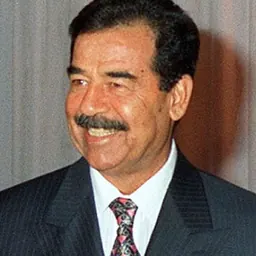
Image and legacy Noriega's authoritarian rule of Panama has been described as a dictatorship, while Noriega himself has been referred to as a "strongman". A 2017 obituary from the BBC stated that Noriega "was an opportunist who used his close relationship with the United States to boost his own power in Panama and to cover up the illegal activities for which he was eventually convicted". Dinges writes that though Noriega's regime saw a number of murders and crimes, they were similar in scale to those that occurred at the same time under the authoritarian governments of Guatemala, Chile, Argentina, and El Salvador; these governments never saw the level of condemnation from the U.S. that Noriega's did. Others likened him to former Iraqi president Saddam Hussein. Like Saddam, Noriega enjoyed brief U.S. support until he turned into an enemy. He detested the name, and it would later be the subject of a lawsuit.
His capture received renewed media attention when on the exact same day, 36 years later, Venezuelan president Nicolás Maduro was abducted by the same U.S. government agency under similar reasoning.
In popular culture British actor Bob Hoskins portrayed Manuel Noriega in the biographical 2000 American television movie Noriega: God's Favorite. Noriega was also depicted in the 2012 video game Call of Duty: Black Ops II. In July 2014, he filed a lawsuit against the game company Activision for depicting him and using his name without his permission. Noriega, who filed the suit while in prison for murder, claimed he was portrayed as "a kidnapper, murderer and enemy of the state". On October 28, 2014, the case against Activision was dismissed in California by Judge William H. Fahey.
Honours National honours
Foreign honours
Don’t just read it —
keep it.
Full-length biographies made to live with: read them, listen on the way to work, watch them tonight.
- E-book
- Audio
- Video
Instant download · yours to keep · every purchase keeps this site free
Important facts
People in Manuel Noriega's life
Named in this biography and alive at the same time





Related people
Same field, nearest in time




Contemporaries
People whose lives overlapped Manuel Noriega's






Frequently asked questions
Who was Manuel Noriega?
Panamanian head of state (1934-2017)
When was Manuel Noriega born?
Manuel Noriega was born on 11 February 1934 in Panama City.
When did Manuel Noriega die?
Manuel Noriega died on 29 May 2017 in Hospital Santo Tomas.
What was Manuel Noriega's occupation?
Manuel Noriega was a politician, military personnel, drug lord and military engineer.
What nationality was Manuel Noriega?
Manuel Noriega was Panamanian.
Sources & further reading
Cite this page
APA: Biography.guide. (2026). Manuel Noriega. https://biography.guide/manuel-noriega/
MLA: "Manuel Noriega." Biography.guide, https://biography.guide/manuel-noriega/.
Chicago: "Manuel Noriega." Biography.guide. https://biography.guide/manuel-noriega/.
Data last updated: 2026-09-26 · Spot an error? Report a correction.
Page generated 2026-09-27 05:13 UTC