
About Manuel Lisa
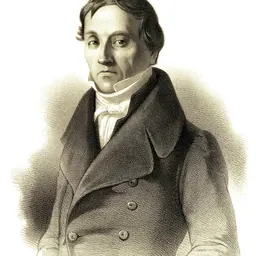
Lived 1772 – 1820 (aged 47). Manuel Lisa was an American and Spanish explorer, businessperson and indian agent, known for Lakota people, Missouri Fur Company and Omaha.
Early life Little is known of the early life of Manuel Lisa, but he is believed to have been born in 1772 in New Orleans, then part of Spanish Louisiana. It was ceded to Spain by France after the British victory in the Seven Years' War, when the British gained Florida in exchange with Spain for French lands west of the Mississippi River. His father, Christoval de Lisa, was born in Murcia, Spain, while his mother, Maria Ignacia Rodriguez, was born to a colonial family in St. Augustine, Florida.
By 1789, Manuel Lisa and his brother Joaquin were trading on the Mississippi River in New Madrid, Missouri; the next recorded mention of Manuel Lisa was again in New Madrid, after he had returned from trading along the Wabash River. Only traders were accepted for marriages to high-status women, such as the daughters of chiefs, as the chiefs saw such marriages as a way to increase their own power. As the Omaha had a patrilineal system, the children of Lisa and Mitane were considered "white" as their father was "white". The tribe protected them, but unless such mixed-race children were officially adopted by a man of the tribe, they were not considered Omaha and had no real place in a gens (clan), the basic kinship unit.
Polly Chew Lisa died in 1817 in St. Louis while Manuel Lisa was away on an expedition. After his return the following year, on August 5, 1818, Lisa married the widow Mary Hempstead Keeny, a sister of his friend, the attorney Edward Hempstead. As a widow, she had migrated with her parents and siblings from Connecticut to join four brothers already in Missouri.
In 1819 Lisa took his new wife Mary with him for his next expedition and winter at Fort Lisa, Nebraska. He tried to gain custody of his children with Mitane, who let him take Rosalie back to St. Louis the next year for education at a Catholic school, but refused to let him have Christopher.
Land and purchases of enslaved people in the Louisiana Territory In 1799, Manuel Lisa requested a land grant; according to his letter to the Spanish governor, Manuel wanted it "upon one of the banks of the River Missouri, in a place where may be found some small creek emptying into the said river, in order to facilitate the raising of cattle, and, with time, to be able to make shipments of salted and dried meat to the capital." After being awarded the grant, Manuel Lisa and his wife relocated to St. Louis, where they purchased a home on Second Street near the Mississippi River. In the late 1790s and early 1800s, Lisa purchased numerous enslaved people.
Early trade expeditions Lisa likely moved to St. Louis to enter the fur trade, the major part of the regional economy. By 1802, he had obtained a trade monopoly from French officials (the territory had traded hands again) with the Osage Nation. (The monopoly had formerly been held by Auguste Chouteau, a French colonist and first settler of St. Louis).
Having been stymied by the government and the Chouteau family, Lisa began organizing a trade expedition to the upper Missouri River region. moved up the Missouri until they reached the mouth of the Yellowstone River. After ascending the Yellowstone some , Lisa established a trading post on November 21 at the mouth of the Bighorn River in present-day Montana.
Creation of the Missouri Fur Company Upon his return to St. Louis in August 1808, Lisa established the Missouri Fur Company (sometimes referred to as the St. Louis Missouri Fur Company), a joint venture with Jean Pierre Chouteau, Pierre Chouteau, Jr., William Clark, Andrew Henry, Francois Marie Benoit, and other prominent St. Louis fur traders. Jean Pierre Chouteau had also come from New Orleans, so the two men had ties to its French and Spanish Creole community. The company was created as a temporary trust by its founders, designed to either expire or reorganize after three years.
Directing the large force of men, Lisa built the first Fort Lisa (also called Fort Manuel) near what is now Bismarck, North Dakota. It was near a Gros Ventres village between the mouth of the Little Missouri and the Knife rivers. After the new fort was constructed, Lisa returned to St. Louis in October 1809.
When the Missouri Fur Company was reorganized during the winter of 1811–1812, Lisa became more prominent among its leadership. That year he built a brick home in St. Louis as a measure of his success. (Earlier he had built a stone warehouse for his fur company, which stood until the late 1930s, when it was demolished for other development. )
In May 1812, Lisa went upriver to Fort Lisa, trading there until his return to St. Louis on June 1, 1813.
On this journey he established a new fort further downriver, also called Fort Lisa, in what is now the North Omaha area of Omaha, Nebraska. whom he organized to send war parties against tribes allied with the British.
Later, the U.S. government recognized Lisa, calling his efforts as a "great service in preventing British influence" in the northern area. After the war's conclusion in 1815, Lisa renewed his yearly trade expeditions to the area, staying each winter at Fort Lisa, Nebraska. He eventually had two children with Mitain: Rosalie and Christopher.
Later life After the war, Lisa's reputation in St. Louis improved as a result of his success in the fur trade and having aided the Americans. In 1815, he invited 43 Native American chiefs and headmen from various tribes living between the Mississippi and Missouri to the city to strengthen their alliance with the Americans, and entertained them for about three weeks. He conducted them to Portage des Sioux to meet with the commissioners William Clark, Edwards and Auguste Chouteau to sign treaties of friendship. About two years later, he hosted another 24 chiefs from the Pawnee, Missouri and Sioux before another treaty signing.
In St. Louis, Lisa was considered an ally of the landed elite. He became more affiliated with leading American members of St. Louis, including Edward Hempstead, a land claims attorney, and Thomas Hart Benton, editor of the St. Louis Enquirer. In the fall of 1817, while the trader was on an expedition up the Missouri, his first wife Polly Lisa died. After his return from that year's expedition, on August 5, 1818, Lisa married the widow Mary Hempstead Keeny (a sister of Edward Hempstead). As a measure of Lisa's social standing, Pierre Chouteau was a witness at his second wedding.
After living a year in St. Louis, Lisa took Mary with him for the winter of 1819–1820 to Fort Lisa in Nebraska (Mary Lisa reportedly became the first woman of European descent to travel so far up the Missouri River). When he and Mary arrived, Lisa sent his second wife Mitain away from the fort.
By the time of his 1819 expedition, Lisa had developed strong relationships with the Omaha, Ponca, Yankton and Teton Sioux, Mandan and Arikara peoples. He was instrumental in extending the "commercial outreach of St. Louis" to the Yellowstone and Bighorn rivers and to tribes previously more under British influence. By 1829 the Missouri Fur Company had invested capital of about $10,000, highest among the local firms.
Although Lisa returned to St. Louis in good health in April 1820, he soon became ill. The unidentified illness caused his death at Sulphur Springs (now within the city of St. Louis) on August 12, 1820. He was buried at Bellefontaine Cemetery at the Hempstead family plot. Although his will provided for $2000 for each of his children upon reaching adulthood (including those by Mitain ), there is no evidence that they received any money. The historian Chittenden believed Lisa left few assets to his estate.
After his death, Joshua Pilcher led the Missouri Fur Company to do business under various names until about 1830. By 1830, John Jacob Astor had gained a monopoly with his American Fur Company. As the fur trade had been declining overall with changes in taste, Pilcher dissolved the Missouri Fur Company.
Establishments Manuel Lisa was responsible for constructing at least seven forts as trading posts in the American West. They included: Fort Lisa in present-day Omaha, Nebraska (1812–1820) Fort Mandan in present-day North Dakota (1810–1812) Fort Raymond in present-day Montana (1807–1810) Fort Henry at 3 Forks near present-day Three Forks, Montana (1810) Fort Henry on the Snake River tributary called Henry's Fork in Montana (1810–1813) Cedar Island in the present-day Lake Francis Case in South Dakota (1810-?) Fort Manuel in the present-day Lake Oahe in South Dakota (1810-?)
Don’t just read it —
keep it.
Full-length biographies made to live with: read them, listen on the way to work, watch them tonight.
- E-book
- Audio
- Video
Instant download · yours to keep · every purchase keeps this site free
Important facts
People in Manuel Lisa's life
Named in this biography and alive at the same time
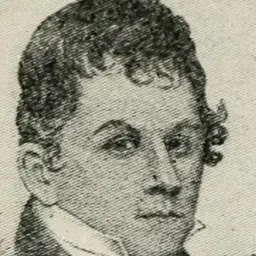
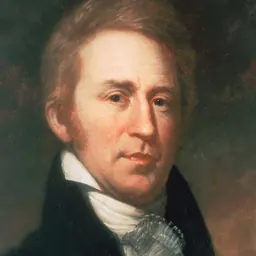



Related people
Same field, nearest in time


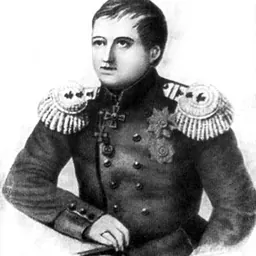
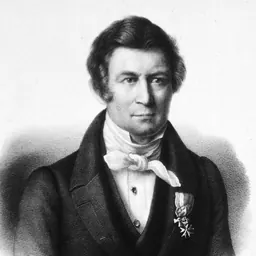
Contemporaries
People whose lives overlapped Manuel Lisa's




Frequently asked questions
Who was Manuel Lisa?
American fur trader (1772–1820)
When was Manuel Lisa born?
Manuel Lisa was born on 8 September 1772 in New Orleans.
When did Manuel Lisa die?
Manuel Lisa died on 12 August 1820 in St. Louis.
What was Manuel Lisa's occupation?
Manuel Lisa was an explorer, businessperson and indian agent.
What was Manuel Lisa known for?
Manuel Lisa was known for Lakota people, Missouri Fur Company, Omaha, Ponca and War of 1812.
What nationality was Manuel Lisa?
Manuel Lisa was American and Spanish.
Sources & further reading
Cite this page
APA: Biography.guide. (2026). Manuel Lisa. https://biography.guide/manuel-lisa/
MLA: "Manuel Lisa." Biography.guide, https://biography.guide/manuel-lisa/.
Chicago: "Manuel Lisa." Biography.guide. https://biography.guide/manuel-lisa/.
Data last updated: 2026-09-24 · Spot an error? Report a correction.
Page generated 2026-09-27 05:04 UTC