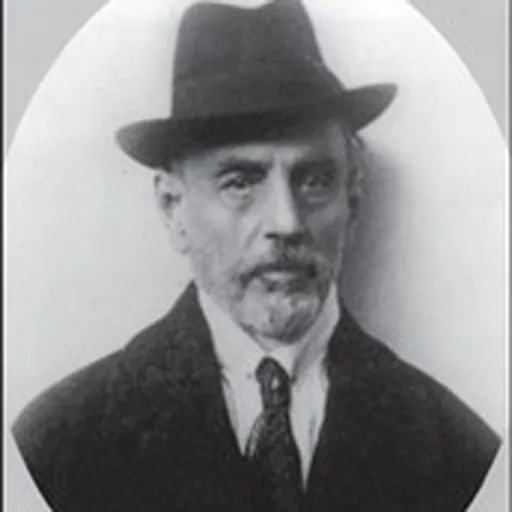
Manuel Ernesto da Conceição
Brazilian coffee farmer and promoter
About Manuel Ernesto da Conceição
Lived 1850 – 1923 (aged 72–73). Manuel Ernesto da Conceição was a Brazilian.
Manuel Ernesto da Conceição (Piracicaba, São Paulo, 1850 - before 1935) was a Brazilian coffee farmer awarded the title of Count of Serra Negra by the Holy See.
He became actively involved in the propaganda and promotion of Paulistan coffee in Europe, spending a large fortune on the dissemination of this Brazilian product, highlighting the large coffee roasting establishment he installed in the center of Paris, the "Café São Paulo", with several branches in the provinces. In 1909, he was awarded the commendation of Chevalier du Mérite Agricole by the French government, in reward for his services to the dissemination of Brazilian coffee.
Genealogy He was the son of Francisco José da Conceição, Baron of Serra Negra, and Gertrudes Eufrosina da Rocha; paternal grandson of Antônio José da Conceição and Rita Morato de Carvalho; and maternal grandson of Captain Manuel da Rocha Garcia and Ana Joaquina do Amaral Rocha.
He married Maria Justina de Sousa Resende in 1893, daughter of Pedro Ribeiro de Sousa Resende (Baron of Valença) and Justina Emerich, leaving descendants.
Paulista coffee advertisement in Europe
In 1900, when he noticed that a crisis was beginning to develop in the coffee industry due to overproduction, he had the idea to launch a campaign to advertise Brazilian coffee in Europe, inviting to his Victória Farm the Salerno painter Antonio Ferrigno, known as 'the coffee painter' because he portrayed the farms of the proud owners. He commissioned from the painter a total of twelve canvases depicting the coffee plantations and the life and customs of the Paulistan countryside, in an unprecedented project to create works of art intended to serve as advertising for the Brazilian product. The paintings were shown at the 1900 Universal Exposition in Paris, and later in several European capitals, in exhibitions to promote coffee from São Paulo. This contributed to the fact that in the coffee exhibitions held in Europe, the coffee of the Count of Serra Negra won the highest prizes. With the return of Conceição to Brazil, Ferrigno's paintings also returned, some of which remain in the family today.
In 1902, he opened a shop in Paris, later called "Café São Paulo", which was considered the most important of those opened in Europe to trade and spread Brazilian coffee. The café was located at the faubourg de Montmartre, n. 43. From there, thousands of kilos of coffee left daily to be distributed in the capital and other provinces.
In April 1908, he had an artistic pavilion built at the International Food and Hygiene Exhibition, held in the Tuileries Gardens, where products related to Brazil were exhibited, especially coffee and mate, which included free distribution of these beverages. The count was awarded a gold medal by the Exhibition jury. Victória Farm, of the Counts of Serra Negra, painted by Antonio Ferrigno. In September 1909, the Parisian illustrated magazine La Vie Heureuse, in its number nine, reporting on the Nancy Exhibition, had high praise for the section of the "Café São Paulo" set up by Conceição, in an article illustrated with the portraits of the Count and Countess of Serra Nova, as well as a view of the coffee plantations of one of the farms he owned in Botucatu.
These campaigns would only end with the First World War, in 1914, when the coffee in the port of Le Havre was requisitioned by the French government, forcing the family to return to Brazil shortly thereafter. The losses of this campaign were enormous, shattering the family fortune, but the Count had no regrets, as he believed that intelligent propaganda abroad would save Brazil from the coffee crisis. To this end, he advised the establishment of good coffee roasting houses and establishments selling coffee in cups, and that foreigners be taught to drink pure coffee, without mixtures of chicory and other roasted flours. At that time, among Europeans, it was customary to use the powder that had already been used, the "marco", by adding only a small amount of fresh coffee. For the count, all these subterfuges resulted in overproduction, which could be combated if everyone drank pure coffee.
At the end of the 19th century, he acquired the farm Villa Victória, in Botucatu, today known as 'Fazenda do Conde de Serra Negra' ("Count of Serra Negra's Farm"), with an area of 1,093 bushels, containing 60,000 coffee trees, twenty-four bushels of sugarcane, two thousand eucalyptus trees, one hundred brick and tile-roofed settlers' houses, a main house, an orchard, self-sustained electricity, coffee, and rice processing machinery, sugarcane grinding mill, and other improvements.
By 1910, Manuel Ernesto da Conceição has 300,000 coffee trees on his farm in Villa Victoria. The same amount was recorded in 1935, the year he died, and the property was owned by the Countess of Serra Negra and her children. After the count's death, half of the farm was left to his widow, and the other half was divided among his seven children, who sold their shares to several people, thus dividing the farm. Most of it, after passing through several owners, belongs today to the São Manuel Factory.
Around the turn of the century, he bought the Barão do Rio Pardo Palace, on Alameda Ribeiro da Silva, São Paulo, which he later rented to set up a boys' boarding school, Colégio Sílvio Almeida. This boarding school operated from 1908 to 1913, when it became home to the 4th Hunters Battalion.
The avenue Conde de Serra Negra, in Botucatu, is so named in his honor. Around 1940, there were also in Botucatu the soccer clubs Serra Negra F. C. and Grupo Escolar Conde de Serra Negra.
Works
Valorisation du café du Brésil, Imp. F. Payen et N. Chatelain, 1907, 13 pages Producção, commercio e defesa do café, Imp. P. Jouet, 1907, 12 pages
Don’t just read it —
keep it.
Full-length biographies made to live with: read them, listen on the way to work, watch them tonight.
- E-book
- Audio
- Video
Instant download · yours to keep · every purchase keeps this site free
Important facts
People in Manuel Ernesto da Conceição's life
Named in this biography and alive at the same time

Contemporaries
People whose lives overlapped Manuel Ernesto da Conceição's


Frequently asked questions
Who was Manuel Ernesto da Conceição?
Brazilian coffee farmer and promoter
When was Manuel Ernesto da Conceição born?
Manuel Ernesto da Conceição was born in 1850 in Piracicaba.
When did Manuel Ernesto da Conceição die?
Manuel Ernesto da Conceição died on 14 March 1923.
What nationality was Manuel Ernesto da Conceição?
Manuel Ernesto da Conceição was Brazilian.
Sources & further reading
· Wikipedia: Manuel Ernesto da Conceição
· DBpedia: Manuel Ernesto da Conceição, Count of Serra Negra
Cite this page
APA: Biography.guide. (2026). Manuel Ernesto da Conceição. https://biography.guide/manuel-ernesto-da-conceicao/
MLA: "Manuel Ernesto da Conceição." Biography.guide, https://biography.guide/manuel-ernesto-da-conceicao/.
Chicago: "Manuel Ernesto da Conceição." Biography.guide. https://biography.guide/manuel-ernesto-da-conceicao/.
Data last updated: 2026-09-23 · Spot an error? Report a correction.
Portrait: Wikimedia Commons · author & licence
Page generated 2026-09-27 05:05 UTC