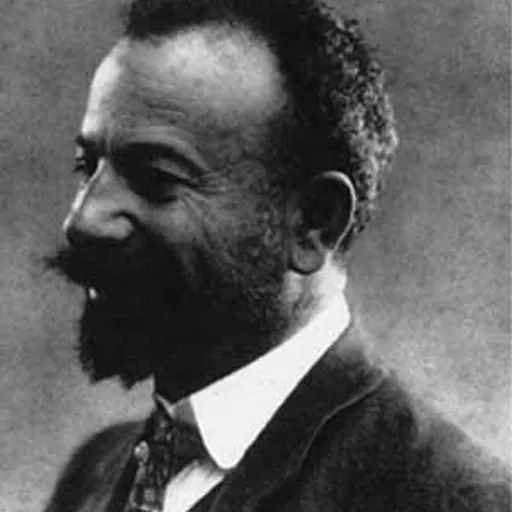
About Antonio Ferrigno
Lived 1863 – 1940 (aged 76). Antonio Ferrigno was an Italian painter and screenwriter.
Antonio Ferrigno (22 December 1863 – 12 December 1940) was an Italian painter best known for his landscapes and genre scenes created during a stay in Brazil.
Biography He was born in Maiori. Initially self-taught, his first art lessons were taken in the studios of Giacomo Di Chirico. He later was granted a scholarship to attend the Accademia di Belle Arti di Napoli, where he studied with Stanislao Lista and Teofilo Patini, graduating in 1885. This was followed by private studies with Domenico Morelli, during which he felt drawn to landscape painting.
He began exhibiting in 1882, and soon attracted many notable customers, including the Filangieri family, the Banco di Napoli and, in 1890, King Umberto I, who purchased his painting "March Sun" for the Museo di Capodimonte.
In 1893, he moved to Brazil, where he joined his friend Rosalbino Santoro in São Paulo. He remained there for twelve years and became known as the "painter of coffee", because he specialized in painting landscapes of the plantations, commissioned by wealthy farmers. A major showing of his coffee-related paintings was a great success at the Louisiana Purchase Exposition of 1904.
He held his final exhibition in Brazil in 1905, and returned to Italy, where he settled in Salerno and became a drawing teacher at the technical school in 1913. Two years later, he auctioned off many of his works to benefit the victims of an earthquake in Abruzzo. His paintings continued to display the natural colors that his palette had acquired in Brazil. These are especially prominent in a series of paintings depicting the Villa Rufolo that he created in the 1920s. Together with Gaetano Capone, Luigi Paolillo and Pietro Scoppetta, he was part of what became known as the "Scuola di Maiori" or, simply, the "Costaioli". He was a regular exhibitor at the Salon des indépendants in Paris. His last notable exhibition was for the "Sindacato provinciale fascista di belle arti", which took place in Positano in 1937. He died in 1940 in Salerno.
A major retrospective of his work was held in 2005 at the Pinacoteca do Estado de São Paulo, on the centenary of his departure.
Selected paintings
Don’t just read it —
keep it.
Full-length biographies made to live with: read them, listen on the way to work, watch them tonight.
- E-book
- Audio
- Video
Instant download · yours to keep · every purchase keeps this site free
Important facts
People in Antonio Ferrigno's life
Named in this biography and alive at the same time





Related people
Same field, nearest in time
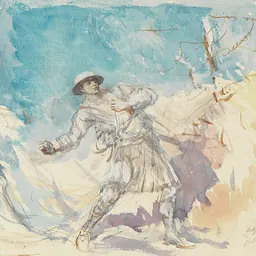
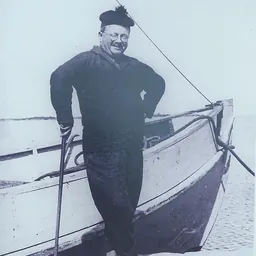

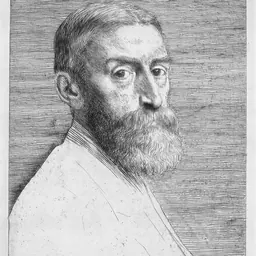
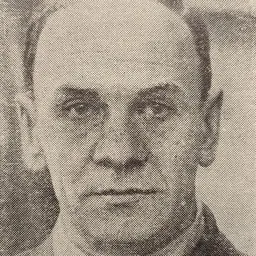
Contemporaries
People whose lives overlapped Antonio Ferrigno's




Frequently asked questions
Who was Antonio Ferrigno?
Italian painter (1863-1940)
When was Antonio Ferrigno born?
Antonio Ferrigno was born on 22 December 1863 in Maiori.
When did Antonio Ferrigno die?
Antonio Ferrigno died on 12 December 1940 in Salerno.
What was Antonio Ferrigno's occupation?
Antonio Ferrigno was a painter and screenwriter.
What nationality was Antonio Ferrigno?
Antonio Ferrigno was Italian.
Sources & further reading
Cite this page
APA: Biography.guide. (2026). Antonio Ferrigno. https://biography.guide/antonio-ferrigno/
MLA: "Antonio Ferrigno." Biography.guide, https://biography.guide/antonio-ferrigno/.
Chicago: "Antonio Ferrigno." Biography.guide. https://biography.guide/antonio-ferrigno/.
Data last updated: 2026-09-22 · Spot an error? Report a correction.
Portrait: Wikimedia Commons · author & licence
Page generated 2026-09-27 05:04 UTC