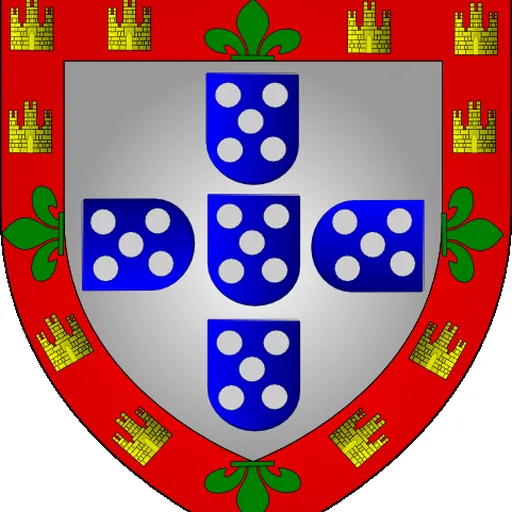
Manuel António of Portugal
Dutch-Portuguese nobleman
About Manuel António of Portugal
Lived 1600 – 1666 (aged 66). Manuel António of Portugal was a Portuguese.
Manuel António of Portugal (24 February 1600 – 27 October 1666) was a Portuguese nobleman.
Youth He was born in Delft, the son of Manuel of Portugal and Countess Emilia of Nassau, who was a daughter of William the Silent. Manuel António's father, Manuel of Portugal, was an illegitimate son of the Portuguese pretender António, Prior of Crato.
Initially Manuel António was raised by his mother as a Calvinist. However, in 1612, his father sent him together with his brother Louis William to their uncle Christoph in France, where he received a Catholic education. Already in 1613, his uncle, the Stadtholder Maurice of Orange, promoted him as captain, because of the income associated with this position and not with the aim to take over a military command.
From 1619 – 1623 he was governor of the Principality of Orange for his uncle Maurice. Apparently in this respect it was relevant that he attended Catholic church services and that the majority of the population of the Principality of Orange was Catholic. The vice governor Valckenburg was in charge of official functions. He lived a lavish life, spend more money than was available and had to be ordered back early by his uncle in 1623. He continued to receive the corresponding pay of 6,000 Guilder until the next Stadtholder, Frederick Henry who ruled from 1625, cancelled the payments.
This career was short-lived. On 15 July 1628 he joined — in presence of Isabella Clara Eugenia and all of her court — the Carmelites and took the religious name Felix a Santa Isabella. He joined the Carmelite monastery in Brussels where he was ordained. From 1628 to 1633 he was a priest but fled from the monastery back to Holland where on 15 January 1634 in Delft he converted again to Calvinism.
In 1638 he assumed the title Prince of Portugal and on 12 June 1638 he re-joined the service of the States-General as Rittmeister with the cuirassiers. But apparently this was only done under compulsion of captivity, as he escaped again, returned to Holland and converted again on 4 April 1643 to the Protestant faith. Debts weighed heavily on Manuel António and included child support of 300 fl. per year for his illegitimate son William (b. 1646) whose mother was one Dina Borremans.
Late career In 1645 he became Hauptmann of a Dutch company infantry and was soon promoted to Oberst. In 1656 he became governor of Steenwijk and Commandant of Elburg.
He died on 27 October 1666 in Schagen and was entombed in Delft.
Don’t just read it —
keep it.
Full-length biographies made to live with: read them, listen on the way to work, watch them tonight.
- E-book
- Audio
- Video
Instant download · yours to keep · every purchase keeps this site free
Important facts
Family & relationships
Contemporaries
People whose lives overlapped Manuel António of Portugal's






Frequently asked questions
Who was Manuel António of Portugal?
Dutch-Portuguese nobleman
When was Manuel António of Portugal born?
Manuel António of Portugal was born on 24 February 1600 in Delft.
When did Manuel António of Portugal die?
Manuel António of Portugal died on 27 October 1666 in Schagen.
What nationality was Manuel António of Portugal?
Manuel António of Portugal was Portuguese.
Sources & further reading
· Wikipedia: Manuel António of Portugal
· DBpedia: Manuel António of Portugal
Cite this page
APA: Biography.guide. (2026). Manuel António of Portugal. https://biography.guide/manuel-antonio-of-portugal/
MLA: "Manuel António of Portugal." Biography.guide, https://biography.guide/manuel-antonio-of-portugal/.
Chicago: "Manuel António of Portugal." Biography.guide. https://biography.guide/manuel-antonio-of-portugal/.
Data last updated: 2026-09-23 · Spot an error? Report a correction.
Portrait: Wikimedia Commons · author & licence
Page generated 2026-09-27 05:05 UTC