
About Mangguli
Lived 1672 – 1736 (aged 63–64). Mangguli was a Chinese politician.
Mangguli (; 1672–1736) was a Qing official of the Irgen Gioro clan of Yehe and assigned to the Manchu Bordered Yellow Banner. He served in a number of high-ranking positions, including Deputy Ministers of War, Rites, Justice, and the Court of Colonial Affairs, Governor of Gansu, and Acting Minister of Works. He was also noted for his accomplishments as a skillful painter.
Biography
Mangguli's great-grandfather Fulata joined the Manchu Khanate during the Hong Taiji era, and was originally assigned to the Mongol Plain Blue Banner. His grandfather Manggitu distinguished himself in the wars preceding the Qing conquest of China and reached to the position of Deputy Commander of the Manchu Plain Blue Banner, receiving the hereditary rank of Third-Class Light Chariot Commandant (輕車都尉). Mangguli began his career as a bithe-si (imperial secretarial clerk) in the Court of Colonial Affairs and later served as Assistant to the Deputy Minister of the Court and as an inspector general. He was highly skilled in painting and was commissioned to paint a portrait of the Kangxi Emperor. In 1723, he was transferred to the Manchu Bordered Yellow Banner and a separate banner company (niru) was established for members of his clan, where he served as the first commander.
He subsequently served as Commissioner of the Changlu Salt Administration, Minister of the Court of Judicial Review, and Deputy Minister of War, while continuing to supervise salt affairs. During discussions on upgrading Tianjin from a military post (衛) to a prefectural-level administrative area, Mangguli proposed reorganizing it as a directly administered sub-prefecture and incorporating Wuqing, Jinghai, and Qingxian into its jurisdiction. He also submitted opinions regarding the reform of incorporating the poll tax into the land tax, and his recommendations were adopted by the court. In 1726, the court sent the Inspector Gucong to inspect the salt administration with Mangguli being responsible for overall supervision. Shortly afterward, he was transferred to the Minister of Rites and ordered, together with Gu Cong, to oversee the construction of naval barracks in Tianjin. Because the project remained unfinished for an extended period, the Yongzheng Emperor reprimanded him, transferred him to the Board of Justice, and recalled him to Beijing.
Citation
Don’t just read it —
keep it.
Full-length biographies made to live with: read them, listen on the way to work, watch them tonight.
- E-book
- Audio
- Video
Instant download · yours to keep · every purchase keeps this site free
Important facts
People in Mangguli's life
Named in this biography and alive at the same time

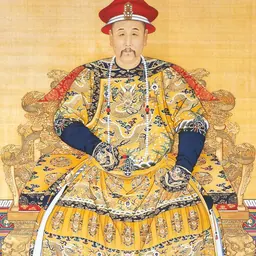
Related people
Same field, nearest in time



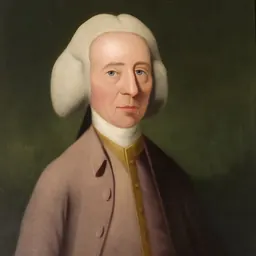

Contemporaries
People whose lives overlapped Mangguli's


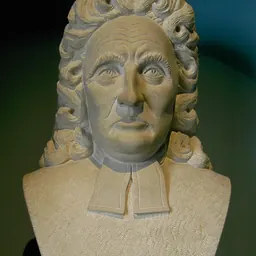


Frequently asked questions
Who was Mangguli?
Qing dynasty politician (1672–1736)
When was Mangguli born?
Mangguli was born in 1672.
When did Mangguli die?
Mangguli died in 1736.
What was Mangguli's occupation?
Mangguli was a politician.
What nationality was Mangguli?
Mangguli was Chinese.
Sources & further reading
Cite this page
APA: Biography.guide. (2026). Mangguli. https://biography.guide/mangguli/
MLA: "Mangguli." Biography.guide, https://biography.guide/mangguli/.
Chicago: "Mangguli." Biography.guide. https://biography.guide/mangguli/.
Data last updated: 2026-09-20 · Spot an error? Report a correction.
Page generated 2026-09-27 05:04 UTC