
About Malik Ishaq
Lived 1959 – 2015 (aged 55–56). Malik Ishaq was a Pakistani politician and military leader.
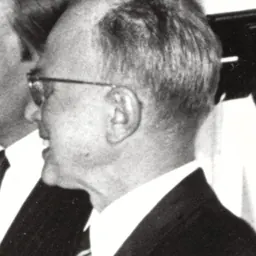
Malik Ishaq (; 1959 – 29 July 2015) was a Pakistani militant globally designated terrorist, and leader and co-founder of the Lashkar-e-Jhangvi (LeJ) terrorist organization.
Formerly a member of anti-Shia militant group Sipah-e-Sahaba, Ishaq co-founded the LeJ in 1996. Under Ishaq's leadership, the LeJ claimed responsibility for several mass-casualty attacks largely targeting Pakistan's Shia and Barelvi population, including multiple bombings that killed over 200 Hazara Shias in Quetta in 2013. He was also accused of masterminding the attack on the Sri Lankan cricket team in Lahore in 2009, and the Ashura bombings in Afghanistan in 2011.
Malik was killed, along with his two sons and deputy Ghulam Rasool Shah, in a police encounter on 29 July 2015, the circumstances of which are disputed. Punjab Home Minister Shuja Khanzada was assassinated in Attock a month later, in an attack claimed by LeJ as retaliation. Ishaq was described by various news agencies as Pakistan's most feared terror kingpin.
He was sanctioned as a Specially Designated Global Terrorist under the Specially Designated Nationals and Blocked Persons List by the United States Department of the Treasury's Office of Foreign Assets Control.
Early life Malik Ishaq was born to a poor family in Rahim Yar Khan District of Punjab, Pakistan. His father was a cloth merchant. Educated until sixth class, Ishaq spent three years working at his father's shop until 1984, when he began working as a cigarette vendor according to police records.
Sipah-e-Sahaba member Ishaq came under the influence of Haq Nawaz Jhangvi, the founder of anti-Shia militant group Sipah-e-Sahaba Pakistan (SSP), in the 1980s. The SSP claimed to be countering the Iranian Revolution and the Pakistan-based pro-Iranian Shia activist group Tehreek Nifaz-e-Fiqh Jafariya Pakistan. Ishaq became an active participant in the SSP's activities, and was jailed for the first time for acts of hate speech during Muharram in 1989.
Lashkar-e-Jhangvi co-founder and leader In 1996, Ishaq, along with Riaz Basra and Akram Lahori, co-founded LeJ, a violent splinter group of the original SSP. He confessed his involvement in the killing of 102 Shias to an Urdu newspaper in October 1997, before being rearrested. Ishaq was charged with more than 100 murders and 45 criminal cases, including masterminding the attack on the Sri Lankan cricket team in Lahore in 2009. amid speculation of a deal and growing ties with the Pakistan Muslim League (N), the ruling party in Punjab. He was showered with rose petals by supporters, and received by Tahir Ashrafi and SSP president Ahmad Ludhianvi.
The province's Law Minister Rana Sanaullah denied there was any deal behind Ishaq's release, but said extremist leaders were free to join politics if they eschewed violence. Sanaullah said of the occasion, "We are in touch with those who have become, or want to become, useful citizens." Soon after his release, The Associated Press reported Ishaq again making public speeches against the Shia community and threatening his opponents on 4 September 2011, saying "We know how to kill and how to die." The second bomb took place near the Blue Mosque in the northern city of Mazar-e-Sharif, where four people were killed. Ishaq's LeJ claimed responsibility. Afghanistan President Hamid Karzai said he would discuss the matter with Pakistan.
Quetta bombings
Ishaq was rearrested after the LeJ claimed responsibility for multiple bombings that killed over 200 Hazara Shias in Quetta in January and February, 2013. Taken together, the bombings were the deadliest attack against any minority in the history of Pakistan.
Death and aftermath Malik Ishaq was killed in Muzaffargarh, Punjab, in a police encounter with the Counter Terrorism Department of the Punjab Police on the morning of 29 July 2015, along with his two sons, Usman and Haq Nawaz. Also killed among Ishaq's entourage were 11 others, including his deputy and purported LeJ second-in-command Syed Ghulam Rasool Shah, as well as Shah's two sons. This was disputed by local and international news agencies including The Economist, which stated, "The police have barely bothered to pretend the incident was anything other than a mass extra-judicial killing." The LeJ claimed responsibility for the attack, confirming it was for Ishaq's killing in July.
Don’t just read it —
keep it.
Full-length biographies made to live with: read them, listen on the way to work, watch them tonight.
- E-book
- Audio
- Video
Instant download · yours to keep · every purchase keeps this site free
Important facts
People in Malik Ishaq's life
Named in this biography and alive at the same time

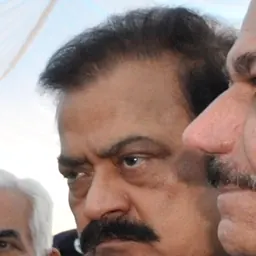


Related people
Same field, nearest in time




Contemporaries
People whose lives overlapped Malik Ishaq's

Frequently asked questions
Who was Malik Ishaq?
Pakistani militant leader
When was Malik Ishaq born?
Malik Ishaq was born in 1959 in Rahim Yar Khan.
When did Malik Ishaq die?
Malik Ishaq died on 29 July 2015.
What was Malik Ishaq's occupation?
Malik Ishaq was a politician and military leader.
What nationality was Malik Ishaq?
Malik Ishaq was Pakistani.
Sources & further reading
Cite this page
APA: Biography.guide. (2026). Malik Ishaq. https://biography.guide/malik-ishaq/
MLA: "Malik Ishaq." Biography.guide, https://biography.guide/malik-ishaq/.
Chicago: "Malik Ishaq." Biography.guide. https://biography.guide/malik-ishaq/.
Data last updated: 2026-09-25 · Spot an error? Report a correction.
Page generated 2026-09-27 05:12 UTC