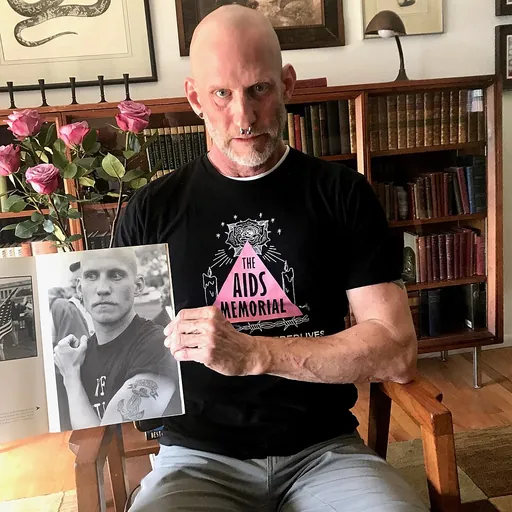
Malcom Gregory Scott
American writer, activist, and AIDS survivor (born 1962)
About Malcom Gregory Scott
Born 1962. Malcom Gregory Scott is an American writer and screenwriter.
Malcom Gregory Scott (born January 26, 1962) also known as Greg Scott, is an American writer, activist, and AIDS survivor. In 1987, the United States Navy (USN) discharged him for homosexuality, after which Scott worked to overturn the Department of Defense (DoD) directive prohibiting the military service of lesbian and gay Americans. Upon his discharge, Scott also learned he had tested positive for the human immunodeficiency virus (HIV), the virus that causes acquired immunodeficiency syndrome (AIDS). He was active in the Washington, D.C., chapters of ACT UP (AIDS Coalition to Unleash Power) and Queer Nation. Scott was an advocate for legal access to medical marijuana, a critic of early HIV prevention education strategies, and a proponent for expanded academic research to support the public policy goals of queer communities. American journalist Michelangelo Signorile once called Scott "the proudest queer in America." Scott worked as a writer for Fox Television's America's Most Wanted, and his writing has appeared in several newspapers and magazines. Scott nearly died of Stage IV AIDS in 1995 and credited marijuana with his survival until effective anti-retroviral therapies became available.
Early years, Navy discharge, and television
Scott's family is from the Southern United States, and he grew up in Oxford, Mississippi, where he attended the Episcopal Church. In high school, Scott associated with theater students from the University of Mississippi, visited gay bars in nearby Memphis, Tennessee, and was sexually active with other men. While Scott was being discharged for homosexuality, he learned he had tested positive for the human immunodeficiency virus (HIV), the virus that causes AIDS. From July 1989 until March 1991, he was credited as the program's chief writer. Scott would later defend the use of the word "queer" against local critics and question whether "gay" was an appropriate label for a plague-stricken, politically embattled community.
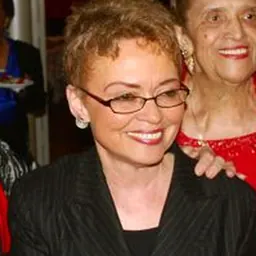
To protest the District of Columbia's sodomy law in December, 1991, Scott and fellow Queer Nation member Stephen Smith, along with two other same-sex couples, turned themselves in to the Third District Headquarters of the Metropolitan Police for violating the statute. The action was held in conjunction with a demonstration at the office of D.C. Council member Wilhelmina Rolark (D-Ward 8), who had obstructed previous repeal efforts in the Judiciary Committee she chaired. Scott was among a group of eleven activists who confronted Rolark at a meeting of the Judiciary Committee on February 20, 1992, prompting anger from council member Hilda Mason (Statehood-At-Large) who shouted, "Get out of my face. Your issue cannot be discussed because it's not on the agenda." Scott shouted back, "We're never going to leave you alone until you move that bill."
On January 22, 1992, during a week of demonstrations marking the nineteenth anniversary of the Roe v. Wade Supreme Court decision legalizing abortion, D.C. Metropolitan Police arrested Scott and seven other members of Queer Nation outside the Shrine of the Immaculate Conception at Catholic University during a Queer Nation protest of Cardinal John O'Connor's "Mass for the Unborn". Queer Nation organized the action to protest the anti-abortion and anti-gay teachings of O'Connor and the Roman Catholic Church.
After undercover officers from the District of Columbia Metropolitan Police Department's Narcotics and Special Investigations Division raided the Follies, an adult theater frequented by gay men, on February 9, 1992, and arrested fourteen patrons on charges of sodomy and other sex-related offenses, Scott asserted that the complaints about reportedly unprotected sex that triggered the raid should have instead led to a visit from a public health worker. Scott subsequently wrote a newspaper column urging diverse queer communities to find "common ground" in their opposition to the sodomy law and rallying them to protest the raids at a demonstration in front of the theater the following Sunday, one week after the raids. More than a hundred protesters attended the demonstration, which began with a rally outside the Follies, where Scott was among the speakers, to decry the city's enforcement of the sodomy law against consenting adults. The peaceful protesters, escorted by a police cruiser, then marched fifteen blocks to the Metropolitan Police Department's headquarters on Indiana Avenue, where they demanded the resignation of District Police Chief Isaac Fulwood.
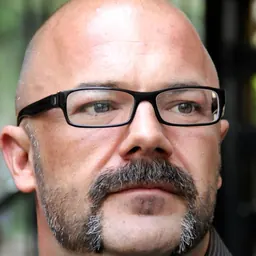
After author Andrew Sullivan criticized ACT UP as "brash and pushy" and condemned the use of outing as a political tactic, Scott responded by calling Sullivan "the gay antichrist" and defended outing as the queer movement's "most powerful weapon." Sullivan said Scott threw a drink at him in a D.C. nightclub and followed him around calling him a collaborator.
Fighting to lift the military's ban on homosexuals
In November, 1991, Scott appeared at a news briefing, held as part of the National Gay and Lesbian Task Force's (NGLTF) Creating Change Conference, to predict that the Department of Defense (DOD) would soon be pressured to change its policy stating homosexuality to be incompatible with military service. The peaceful demonstration, dubbed "Operation Queer Storm," began with a rally at the Lyndon Baines Johnson Memorial Grove, where Scott and other veterans addressed the crowd, and ended at the Pentagon, where a handful of activists tried but failed to get arrested by pushing through the police line at the top of the Pentagon steps. After presidential candidate Bill Clinton pledged to reverse the Department of Defense' policy on lesbian and gay service members, Scott worked with videographer Tim McCarthy to develop a campaign aimed at getting lesbian and gay voters to the polls.
In April 1993, Scott attended that year's March on Washington for Lesbian, Gay and Bi Equal Rights and Liberation, brandishing a tattoo commemorating his discharge for homosexuality, and distributed a broadsheet called "Homos in the Military: The Queer Truth." He was among twenty current and former lesbian and gay service members to address a rally of two hundred demonstrators outside the Pentagon calling on the military to reverse its policy on homosexuality. Years later, Scott would argue that the policy was an offense to "our victory over the closet" and posit that the movement's "exaggerated appreciation for privacy" may have contributed to the outcome. The Military Reading Project sought to test the new policy's promised leniency on possessing and reading homosexual material, previously a sufficient justification to initiate an investigation into a service member's sexuality.
Scott was also among the founding directors of the Institute for Gay and Lesbian Strategic Studies (IGLSS), a public policy think tank that sought to better inform public policy debates like the one that ended in the DADT compromise. The endeavor, originating in a meeting held at the 1993 Creating Change Conference, attempted to bring together academic scholars and LGBTQ activists in one organization as never before. After IGLSS joined efforts with economist Lee Badgett in 1994,
AIDS activism in Washington, D.C.
Scott was an early critic of conventional HIV prevention education strategies, especially the emphasis on condom use. Scott lamented publicly that he himself may have infected someone and that prevention campaigns and the sexual culture placed most of the responsibility on those who were not yet infected rather than on those who already carried HIV. By 1995, he was arguing for harm reductive approaches with prevention messages that were differentiated for HIV-positive and HIV-negative audiences. Scott admitted to participating in gay bathhouse culture Along with other prevention activists targeted by Kirp, Scott subsequently defended himself in the same publication.
On December 7, 1991, Scott was arrested along with six other members of ACT UP/DC after attempting a "take-over" of the office of District of Columbia Mayor Sharon Pratt Kelly to protest what activists described as her failure to staff twenty federally-funded positions in the local Office of AIDS Activities (OAA).
In September 1992, when United States Assistant Secretary for Health James O. Mason closed the compassionate medical cannabis use program after a surge in applications from people with AIDS, Scott decried the action, and rallied protesters to an ACT UP demonstration to demand expanded access to marijuana for people with AIDS. About three dozen people participated in the protest, blowing whistles, beating drums, and holding a "die-in" outside the Department of Health and Human Services.
Illness and recovery
Scott became an adult in the early years of the AIDS epidemic, and by 1994, his weight had fallen from one hundred and seventy-five pounds to only one hundred and thirty pounds. Scott also had Kaposi's sarcoma, a viral tumor appearing as skin lesions that was then considered "the scarlet letter of AIDS". The lesions disfigured Scott's eyes, Scott admitted to smoking cannabis illegally to battle these side effects and to combat AIDS wasting syndrome.
Scott's doctor, Douglas Ward, remembered his condition during the winter of 1995. "He was a walking skeleton," Ward said. "I didn't expect him to live another couple months."
Scott survived until the spring of 1996 when protease inhibitors became available to him, after which he enjoyed a "miracle" recovery, regaining fifty pounds. A month later, Scott appeared at a press conference announcing an effort by the Coalition Advocating Medical Marijuana (CAMM) to put a medical marijuana initiative on the 1998 ballot by gathering four hundred and thirty-five thousand registered voters' signatures. CAMM was not allowed to participate in the panels or stage its own session and was forced to hold its press conference in the hotel parking lot. Later that day, after speaking out of turn, Scott was forcibly removed from the meeting, arrested, and taken to jail. Scott said "I was being very obnoxious. They treated us with derision from the moment we arrived." Scott served as a regional spokesperson for Floridians for Medical Rights, the political action committee responsible for collecting those petition signatures.
While in Florida, Scott also worked for changes at the national and international levels. When the report was published in March 1999, Scott's testimony was among several patient case studies included to support the report's conclusion that "there are some limited circumstances in which we recommend smoking marijuana for medical uses."
In Fort Lauderdale, Scott also volunteered for other community organizations, serving on the board of directors and as spokesperson for Pride South Florida, which hosted an annual film festival as well as the annual LGBTQ parade and festival, the Stonewall National Library and Archives, and the People With AIDS Coalition (PWAC) of Broward County, of which Scott also served as president for one year. As president of PWAC, Scott called out President George W. Bush for not increasing Ryan White CARE Act funding to meet increasing costs, criticized Florida Governor Jeb Bush for prioritizing education as the state's top challenge while Florida ranked third among states in AIDS cases, and accused the state legislature of "abandoning" the six thousand sickest Floridians with AIDS when they voted for deep budget cuts for AIDS programs. Scott also criticized Florida for making money from tourism but spending none on prevention of HIV, which Scott and others said was becoming the state's "greatest export", spoke out about the dangers of Nonoxynol-9, criticized the Family Medical Leave Act as elitist and of limited use to many people with AIDS because same-sex families were not legally recognized, advocated for inmates to receive a thirty-day supply of HIV medications upon release from the Broward County Jail, and wrangled with the regional HIV Planning Council over what the PWAC deemed "exclusionary language" in its statements of priorities.
In 2002, Scott relocated to Northern California, saying he wanted to retire from activism somewhere that sodomy and medical marijuana were already legal.
Don’t just read it —
keep it.
Full-length biographies made to live with: read them, listen on the way to work, watch them tonight.
- E-book
- Audio
- Video
Instant download · yours to keep · every purchase keeps this site free
Important facts
People in Malcom Gregory Scott's life
Named in this biography and alive at the same time






Related people
Same field, nearest in time

Contemporaries
People whose lives overlapped Malcom Gregory Scott's



Frequently asked questions
Who is Malcom Gregory Scott?
American writer, activist, and AIDS survivor (born 1962)
When was Malcom Gregory Scott born?
Malcom Gregory Scott was born on 26 January 1962 in Little Rock.
What is Malcom Gregory Scott's occupation?
Malcom Gregory Scott is a writer and screenwriter.
What nationality is Malcom Gregory Scott?
Malcom Gregory Scott is American.
Sources & further reading
· Wikipedia: Malcom Gregory Scott
· DBpedia: Malcom Gregory Scott
Cite this page
APA: Biography.guide. (2026). Malcom Gregory Scott. https://biography.guide/malcom-gregory-scott/
MLA: "Malcom Gregory Scott." Biography.guide, https://biography.guide/malcom-gregory-scott/.
Chicago: "Malcom Gregory Scott." Biography.guide. https://biography.guide/malcom-gregory-scott/.
Data last updated: 2026-09-22 · Spot an error? Report a correction.
Portrait: Wikimedia Commons · author & licence
Page generated 2026-09-27 05:00 UTC