
Malcolm Allison
English footballer and manager
About Malcolm Allison
Lived 1927 – 2010 (aged 83). Malcolm Allison was a British association football player and association football coach.
Malcolm Alexander Allison (5 September 1927 – 14 October 2010) was an English football player and manager. Nicknamed "Big Mal", he was one of English football's most flamboyant and intriguing characters because of his panache, fedora and cigar, controversies off the pitch and outspoken nature.
Allison's managerial potential become apparent while in his youth at West Ham United, where he became a reliable defender and acted as a mentor to the younger players including future England World Cup winning captain Bobby Moore. His playing career was cut short in 1958 when he had to have a lung removed because of tuberculosis.
As a coach, he is remembered for assisting manager Joe Mercer in the transformation of the team he supported as a young boy – Manchester City. After Mercer left, he managed the club on two occasions whilst offering his managerial services for a third time in 1989. He also managed several other English clubs including Crystal Palace and Middlesbrough, as well as three in Portugal and the Kuwait national team.
Early life The son of an electrical engineer, Allison was born in Dartford in September 1927. He was educated at secondary modern schools rather than grammar school after deliberately failing the 11-plus exam so he could play football, not rugby.
A promising career as a centre-half was ended prematurely by a bout of tuberculosis as he fell ill after a game against Sheffield United on 16 September 1957 and had a lung removed in hospital. This turned out to be his last senior game for West Ham, and although he battled on in their reserve team he struggled with the inability to achieve full fitness. For a period he left football altogether, and worked first as a car salesman, then as a professional gambler and nightclub owner. He came back to football to play a final season for non-league Romford in 1963. He played briefly for Toronto City FC in May and June 1964 as the team's player-coach.
Managerial career Allison's first taste of coaching was at West Ham, where – under Ted Fenton – he took charge of coaching sessions and acted as mentor to a young Bobby Moore and was a leading figure in the establishment of the academy principles at the club. After gaining further experience of coaching at Cambridge University, Allison moved into management at non-league Bath City. He replaced the veteran Bob Hewson, who had retired. One of his first moves was to double the number of training sessions. The players, who held full-time jobs outside football, were required to train four times every week. Allison's first season as a manager was a moderate success; he led the club to a third-place finish in the league, and to a third round F.A.Cup tie with First Division Bolton Wanderers. City were leading 1–0 at Twerton Park until a late equaliser from the penalty spot. They lost the replay 3–0.
At the end of the English season Allison accepted an offer to coach in North America over the summer, with Toronto City.
Manchester City Joe Mercer was named Manchester City manager in July 1965. As ill health had hindered him in his previous job as manager of Aston Villa, Mercer sought a younger, energetic man to be his assistant. He offered the position to Allison, whom he knew from coaching courses at Lilleshall. Allison was due to meet Raich Carter to discuss a position at Middlesbrough, but Mercer was able to arrange a meeting the day before, and persuaded Allison to accept his offer.
The Mercer–Allison era is believed to be the strongest in Manchester City's history before the 2010s. They were surprise winners of the First Division in 1967–68 against the odds, with some at a long 200–1 for City to win the league at the start of the season. In the following seasons they won the 1969 FA Cup, the 1970 League Cup and Cup Winners' Cup, with a team including Colin Bell, Mike Summerbee and Francis Lee. Allison turned down an offer to manage Juventus on the understanding that Mercer would move aside and let him become full-time Manchester City manager – however, Mercer steadfastly refused to stand down. Their relationship disintegrated and eventually Allison won the power struggle – Mercer was sidelined and quit to take over at Coventry City in the summer of 1972. Allison was left in sole charge at City, but the team struggled and in March 1973 he resigned.
Crystal Palace On 31 March 1973, Allison was appointed manager of Crystal Palace. His salary was £13,000 a year, on a five-year contract . The club had struggled in the top flight throughout the 1972–73 season and he replaced Bert Head. Despite his arrival Palace were relegated, losing five out of their last seven games.
Allison immediately instigated a huge stylistic shift both on and off the field, raising Palace's profile with his charismatic media appearances, replacing the club's rather homely nickname 'The Glaziers' with 'The Eagles', and ending the 68-year association with claret-and-blue kits. Palace's highly recognisable red-and-blue striped home kit was introduced, and later, the all-white strip with red and blue sash, changes which still reflect in the character of the club today.
The following season, 1973–74, was even more disastrous because of a second successive relegation.
However 1975–76 ended up the most successful season for Allison at Selhurst Park as he spurred Palace on to an FA Cup semi-final appearance, Allison later admitted on his first meeting with chairman Swales: "I looked at him, saw the comb-over, the England blazer and the suede shoes and thought 'this isn't going to work'". Allison left a year later in 1980 with City struggling in the league. He later got involved in a verbal scrap with his successor and fellow maverick manager, John Bond.
Overseas Allison also managed overseas, in Turkey with Galatasaray (1976–1977), and in Portugal with Sporting. With the Lisbon club he won the league championship and the Portuguese Cup in 1981–1982. That would be the last Championship title won by Sporting until the 1999–2000 season, which meant that Allison is fondly remembered by Sporting fans.
Personality Allison was remembered as one of the most exuberant characters in football. During his time as assistant to Joe Mercer at Manchester City, his reputation for unpredictability was well known. When Mercer was stopped by police in his car for erratic driving in the early hours of the morning after leaving a club function at Maine Road, upon winding down his window Mercer quipped to the police officers: "OK chaps, what's Malcolm done now?"
Allison's outspoken nature and womanising were of great interest to tabloid newspapers and it was reputed that he had relationships with Christine Keeler of the Profumo scandal, singer Dorothy Squires and two Miss UKs. In 1976, Allison received a Football Association disrepute charge after a News of the World photograph appeared showing him in the Crystal Palace players' bath with porn star Fiona Richmond whom he had invited to a training session. Then Crystal Palace player, Terry Venables later said of the incident, "I was in the bath with all the players and we heard the whisper that she was coming down the corridor. So far, so good. We all leapt out and hid, because we knew there'd be photos and that wouldn't go down too well. Malcolm and Fiona dropped everything and got in the bath."
After football In 1995, Allison was featured in a The Cook Report episode on unpaid child maintenance, where it was found that he paid his ex wife Sally only six months wages for child support in over a decade. In 2001 it was revealed by his son that Allison was suffering from alcoholism and in 2009 that he had developed dementia.
In January 2007, Crystal Palace fans organised a tribute to Allison, which they named 'Fedora Day'. Fans set up a campaign on www.cpfc.org, an unofficial forum dedicated to the club, to mark the 31st anniversary of the famous FA Cup run which Allison masterminded. The date chosen was that of the game against Preston North End in the 4th Round of the FA Cup on 27 January 2007. Fans sporting Allison's favoured Fedoras smoked cigars and drank champagne while cheering on their side. This generated major national press coverage. Crystal Palace – managed by Peter Taylor, a star of the 1976 side – were unable to match their predecessors and were knocked out of the cup 2–0.
Allison died in a nursing home on 14 October 2010 at the age of 83. He had six children. Around 300 people gathered to pay their respects and a round of applause from the assembled crowd greeted the arrival of the cars. A sky-blue Manchester City scarf was draped over his coffin next to an ice bucket containing a bottle of Moet et Chandon champagne.
Quotes "A lot of hard work went into this defeat." "You're not a real manager unless you've been sacked." "We'll terrify the cowards of Europe" – Allison following Manchester City's European Cup qualification in 1968.
Managerial statistics
Honours
Player West Ham United Football League Second Division: 1957–58
Coach Manchester City (as assistant) Football League First Division: 1967–68 Football League Second Division: 1965–66 FA Cup: 1969 League Cup: 1970 Charity Shield: 1968; runner-up: 1969 European Cup Winners' Cup: 1970
Manchester City Charity Shield: 1972
Sporting CP Primeira Liga: 1981–82 Cup of Portugal: 1981–82
Don’t just read it —
keep it.
Full-length biographies made to live with: read them, listen on the way to work, watch them tonight.
- E-book
- Audio
- Video
Instant download · yours to keep · every purchase keeps this site free
Important facts
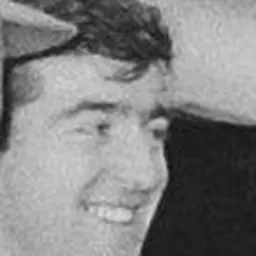
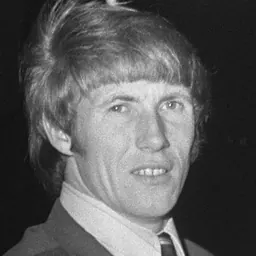
People in Malcolm Allison's life
Named in this biography and alive at the same time






Related people
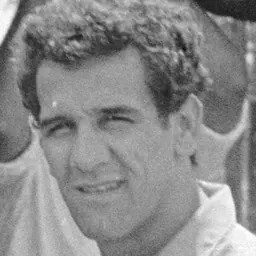
Same field, nearest in time





Contemporaries
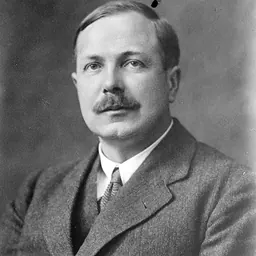
People whose lives overlapped Malcolm Allison's


Frequently asked questions
Who was Malcolm Allison?
English footballer and manager (1927-2010)
When was Malcolm Allison born?
Malcolm Allison was born on 5 September 1927 in Dartford.
When did Malcolm Allison die?
Malcolm Allison died on 14 October 2010 in Trafford.
What was Malcolm Allison's occupation?
Malcolm Allison was an association football player and association football coach.
What nationality was Malcolm Allison?
Malcolm Allison was British.
Sources & further reading
Cite this page
APA: Biography.guide. (2026). Malcolm Allison. https://biography.guide/malcolm-allison/
MLA: "Malcolm Allison." Biography.guide, https://biography.guide/malcolm-allison/.
Chicago: "Malcolm Allison." Biography.guide. https://biography.guide/malcolm-allison/.
Data last updated: 2026-09-26 · Spot an error? Report a correction.
Page generated 2026-09-27 05:15 UTC