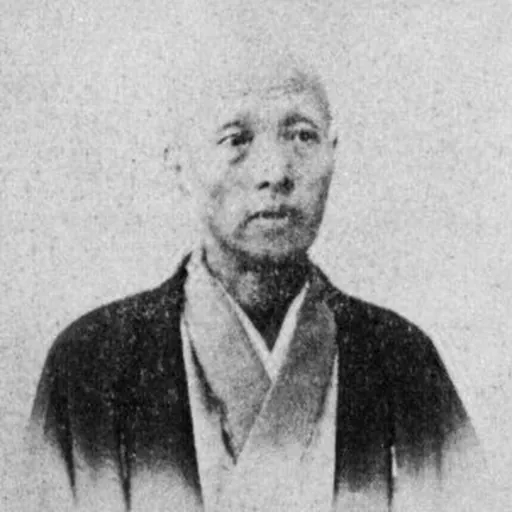
About Makuzu Kozan
Lived 1842 – 1916 (aged 73–74). Makuzu Kozan was a Japanese businessperson, ceramicist and potter.
Miyagawa Kōzan I (宮川香山) (1842–1916) was a Japanese ceramist. He was appointed artist to the Japanese Imperial household and was one of the major potters of the Meiji Era. From 1876 to 1913, Kōzan won prizes at 51 exhibitions, including the World's Fair and the National Industrial Exhibition. His name was originally Miyagawa Toranosuke. Outside Japan he is also known as Makuzu Kōzan.
Early life Miyagawa came from a long line of potters based in Kyoto: his father Miyagawa Chōzō (宮川長造, 1797–1860), known as Makuzu Chōzō (真葛長造), had studied with Aoki Mokubei (青木木米, 1767–1833). After Aoki's death, he set up at Makuzugahara, in the Gion district of Kyoto. The title Makuzu was given by Yasui no Miya, a Shingon monk; the artistic name Kōzan by Kachō no Miya of Chion-in. Both the givers of the names were monzeki (prince-abbots) connected to the Imperial family.
Miyagawa Toranosuke was the fourth son of the family. As Makuzu Kōzan, he took over the family business in 1860, at the age of 18. He had studied with a local bunjinga artist, the future Taigadō IV of the Ike no Taiga line, from age nine. Initially he made tea utensils, as his father had. By the late 1860s he had invitations to move elsewhere. One, from Komatsu Tatewaki, came to nothing; another, to work at the Igi family kiln near Bizen, was from Igi Tadazumi, as head of the family, and he accepted in 1867. It was at Mushiage, located in what is now Oku-chō, part of Setouchi. Kōzan worked there for two years, on blue-and-white wares.
Yokohama years
Jar and Cover, between 1910 and 1915. The rope and cloth covering the jar are all expressed in porcelain. Kōzan's period in Bizen had coincided with the political changes of the Meiji Restoration. In 1870 he set up a workshop in Yokohama, newly opened as a treaty port. He moved to the Kantō at the invitation of Umeda Hannosuke, a Tokyo merchant who was interested in exporting Satsuma ware. The deal involved Suzuki Yasubei, brother-in-law to Umeda, on the business side, and Suzuki helped finance the kiln. After a serious fire in 1876, Kōzan rebuilt out of his own pocket, freeing himself from the partnership. After a few years, Suzuki was bankrupted, and Kōzan then sold what he manufactured on his own account.
At this time Yokohama still resembled the fishing village it had been, and there was no ceramic or even craft tradition. Suzuki found for Kōzan a site (about 0.3 ha) in Nishiōta (present-day Kanoedai in the central ward of Yokohama). The kiln built there took the name Ōta. The Kantō was also poor in suitable clay, and initially Kōzan had to prospect widely for his materials. Bringing four apprentices from Kyoto, Kōzan by 1872 had overcome the initial problems, and expanded his workshop with a large recruitment of local men and women. This was the period at which modern Satsuma ware was distressed for export as antique, and Pollard considers that, up to 1876 at least, there was truth in the allegation of Frank Brinkley that the Makuzu workshop participated in the fraudulent trade. Johannes Justus Rein visited the business in the mid-1870s.
The Meiji Restoration had brought about a collapse of the old regulation and financing of kilns. Kōzan was at the forefront of the successor policy of industrial development, which included crafts, called shokusan kōgyō. He exhibited at the Centennial Exposition of 1876, in Philadelphia, a wide range of ceramic wares, including high relief vessels presaging later work. Makuzu Kōzan IV (Miyagawa Tomonosuke, 1884–1959) did continue the business, with difficulty, after World War II.
After Kōzan had left Kyoto, the Makuzu business there was continued by Zen-ō Jihei Kōsai (1846–1922), an employee of Chōzō. He took the name Miyagawa Kōsai, and maintained the traditional line of tea utensils. The family was still active at the end of the 20th century.
The largest collector of Kōzan's works is Tetsundo Tanabe, who owns hundreds of works. In 2016, the Suntory Museum of Art held the largest exhibition of works by Kōzan, almost exclusively for works owned by Tanabe. Hirosi Yamamoto, a collector living in Yokohama, runs the Makuzu ware Museum, displaying some of his collection and publishing some photo books of Makuzu ware.
More than eighty of Kōzan's works are today in the Khalili Collection of Japanese Art. Some were included in the 1999 Splendours of Meiji: Treasures of Imperial Japan exhibition in the United States.
Don’t just read it —
keep it.
Full-length biographies made to live with: read them, listen on the way to work, watch them tonight.
- E-book
- Audio
- Video
Instant download · yours to keep · every purchase keeps this site free
Important facts
People in Makuzu Kozan's life
Named in this biography and alive at the same time

Related people
Same field, nearest in time



Contemporaries
People whose lives overlapped Makuzu Kozan's
Frequently asked questions
Who was Makuzu Kozan?
Japanese artist (1842–1916)
When was Makuzu Kozan born?
Makuzu Kozan was born in 1842 in Kyoto Prefecture.
When did Makuzu Kozan die?
Makuzu Kozan died in 1916.
What was Makuzu Kozan's occupation?
Makuzu Kozan was a businessperson, ceramicist and potter.
What nationality was Makuzu Kozan?
Makuzu Kozan was Japanese.
Sources & further reading
Cite this page
APA: Biography.guide. (2026). Makuzu Kozan. https://biography.guide/makuzu-kozan/
MLA: "Makuzu Kozan." Biography.guide, https://biography.guide/makuzu-kozan/.
Chicago: "Makuzu Kozan." Biography.guide. https://biography.guide/makuzu-kozan/.
Data last updated: 2026-09-23 · Spot an error? Report a correction.
Portrait: Wikimedia Commons · author & licence
Page generated 2026-09-27 05:05 UTC