
Májuska Puskás
Hungarian noble lady and second spouse of the Khedive Abbas II of Egypt
About Májuska Puskás
Lived 1877 – 1968 (aged 91). Májuska Puskás was a Hungarian and Austrian painter, pianist, translator and writer.
Javidan Hanim, also known as Djavidan (; born May Torok von Szendro; June 15, 1877– August 5, 1968), was a Hungarian noble, and Khediva consort of Egypt from 1910 to 1913 as the second wife of Khedive Abbas II of Egypt.
Early life Javidan Hanim was born May Torok von Szendro in Philadelphia, Pennsylvania, United States, on 15 June 1877. Her father was Count József Torok von Szendro, former head of Ung county. Her mother was Countess Sofie Vetter von der Lilie, who after their divorce in 1881 married Hungarian inventor Tivadar Puskás, a close collaborator of Thomas Edison in 1882 in Westminster, Middlesex, England. She had an elder brother Count Josef Torok von Szendro (1873 – 98). in the presence of the Grand Mufti. For some unknown reason or perhaps due to her parents' liberal temperament, she had never been baptized. Since neither sheikh or ulama accepted to tutor a member of the opposite sex, her teacher of the Quran was the famous Swiss Islamist, Hess von Wyss.
In Egypt, she took part in civic affairs. As a member of the Red Cross she brought solace to victims of the first Balkan War of 1912. By order of the khedive, the wounded, mostly from Kavala near Macedonia, were allowed to recuperate in the Ras El Tin Palace, its halls and long corridors having been transformed into a temporary hospital. The khedival entourage meanwhile stayed at Montaza Palace, his favourite residence. He had personally masterminded its development supervising the construction of its Viennese style salamlik, planning its deepwater harbor and the planting of its pine forests. When at Montaza, she and Abbas Hilmi traveled to Ras El Tin by special train with the khedive personally in control of the small locomotive.
Re-settled at No. 49 Schlueterstr Berlin-Charlottenburg, she gave piano concerts, wrote short plays for the radio and authored several works including Back to Paradise, The Great Seven, Soul And Body and Gulzar. During World War II, she took refuge in Vienna and immediately after the Germans surrendered, moved to Innsbruck where she worked as an interpreter for the French Military Government in July 1945. When the former khedive died in Geneva in December 1944, which coincided with the 30th anniversary of his overthrow, her pension was discontinued. Postwar times were hard and by 1950 she was financially broke. Desperate for money she succumbed to the machinations of devious press agents on the make. She then went to Paris.
Refusing to leave enticing spotlights, Javidan made it back to the media once more, this time as a supplicant for an entry visa to the United Kingdom. Her motive was a visa enabling her to travel to London to take a screen test for the film Queen For A Day produced by Alfred Golding of Eureka Holdings. She then settled down in Graz, nicknamed Pensionopolis for its high incidence of retirees. In her twilight years she took to painting and shortly before passing way, exhibited her latest art works entitled Visions On The Nile.
Death Javidan died in Graz on 5 August 1968, aged 91. She was buried at the cemetery of St. Leonhard with only a few Muslim students from the nearby university in attendance, with only the words "Djanan Djavidan" on the gravestone.
Ancestry
Don’t just read it —
keep it.
Full-length biographies made to live with: read them, listen on the way to work, watch them tonight.
- E-book
- Audio
- Video
Instant download · yours to keep · every purchase keeps this site free
Important facts
People in Májuska Puskás's life
Named in this biography and alive at the same time
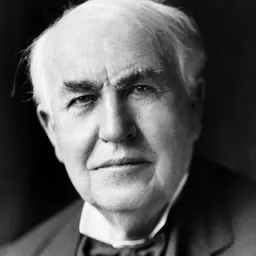

Related people
Same field, nearest in time


Contemporaries
People whose lives overlapped Májuska Puskás's




Frequently asked questions
Who was Májuska Puskás?
Hungarian noble lady and second spouse of the Khedive Abbas II of Egypt (1877-1968)
When was Májuska Puskás born?
Májuska Puskás was born on 15 June 1877 in Philadelphia.
When did Májuska Puskás die?
Májuska Puskás died on 5 August 1968 in Graz.
What was Májuska Puskás's occupation?
Májuska Puskás was a painter, pianist, translator and writer.
What nationality was Májuska Puskás?
Májuska Puskás was Hungarian and Austrian.
Sources & further reading
Cite this page
APA: Biography.guide. (2026). Májuska Puskás. https://biography.guide/majuska-puskas/
MLA: "Májuska Puskás." Biography.guide, https://biography.guide/majuska-puskas/.
Chicago: "Májuska Puskás." Biography.guide. https://biography.guide/majuska-puskas/.
Data last updated: 2026-09-20 · Spot an error? Report a correction.
Page generated 2026-09-27 05:25 UTC