
About Máirtín Ó Cadhain
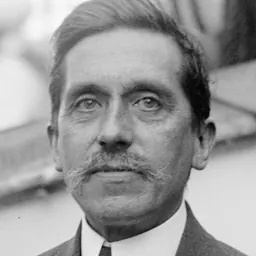
Lived 1906 – 1970 (aged 63–64). Máirtín Ó Cadhain was an Irish writer, literary critic, university teacher, prose writer, translator and poet.
Máirtín Ó Cadhain (; 4 January 1906 – 18 October 1970) was one of the most prominent Irish language writers of the twentieth century. Perhaps best known for his 1949 novel , ÓCadhain played a key role in reintroducing literary modernism into modern literature in Irish, where it had been dormant since the 1916 execution of Patrick Pearse. Politically, ÓCadhain was an Irish republican and anti-clerical Marxist, who promoted (the "Re-Conquest of Ireland"), (meaning both decolonization and re-Gaelicisation). ÓCadhain was also a member of the post-Civil War Irish Republican Army and was interned by the Irish Army in the Curragh Camp with Brendan Behan and many other IRA members during the Emergency.
Literary career Born in Connemara, he became a schoolteacher but was dismissed due to his Irish Republican Army (IRA) membership. In the 1930s, he served as an IRA recruiting officer, enlisting fellow writer Brendan Behan. During this period, he also participated in the land campaign of native speakers, which led to the establishment of the Ráth Cairn neo-Gaeltacht in County Meath. Subsequently, he was arrested and interned during the Emergency (the second world war period in Ireland) on the Curragh Camp in County Kildare, due to his continued involvement in the IRA.
Ó Cadhain's politics were Irish republicanism mixed with Marxism and radical politics, and then tempered with a rhetorical anti-clericalism. In his writings, however, concerning the revival of the Irish language, ÓCadhain was very practical about the Catholic Church in Ireland but demanded commitment to the language revival from Roman Catholic priests. It was his view that, as the Church was there anyway, it would be better if the clergy were more willing to address their faithful in the Irish language.
As a writer, ÓCadhain is acknowledged to be a major part of the revival of modernist literature in the Irish, where it had been largely dormant since the execution of Patrick Pearse in 1916. ÓCadhain created a literary language for his writing out of the and dialects of Connacht Irish, but he was often accused of an unnecessarily dialectal usage in grammar and orthography even in contexts where a realistic depiction of the Connemara vernacular wasn't called for. He was also happy to experiment with borrowings from other dialects, Classical Irish and even Scottish Gaelic. Consequently, much of what ÓCadhain wrote is, like the poetry of fellow linguistic experimentalist Liam S. Gógan, reputedly very hard to understand for a non-native speaker.
Memorial to Ó Cadhain at Dublin Airport: "The best literary tool I got from my folks is the language - a homely, earthy, polished language that may at times start me dancing and at times start me weeping, sometimes despite myself"
He was a prolific writer of short stories. His collections of short stories include , , , , and . He also wrote three novels, of which only was published during his lifetime. The other two, and Barbed Wire, appeared in print only recently. He translated Charles Kickham's novel Sally Kavanagh into Irish as . He also wrote several political or linguo-political pamphlets. His political views can most easily be discerned in a small book about the development of Irish nationalism and radicalism since Theobald Wolfe Tone, ; and in the beginning of the sixties, he wrote – partly in Irish, partly in English – a comprehensive survey of the social status and actual use of the language in the west of Ireland, published as – Destined to Pass. In August 1969, he delivered a speech (published as ) in which he spoke of the role Irish speakers should take in '', or the 'reconquest of Ireland' as James Connolly first coined the term.
He and Diarmaid ÓSúilleabháin were considered the two most innovative Irish language authors to emerge in the 1960s. ÓCadhain had frequent difficulties getting his work edited, but unpublished writings have appeared at least every two years since the publication of in the mid-nineties.
In 1956, aged 50 years of age, he was appointed as a lecturer in the Department of Irish in Trinity College Dublin despite not having a degree or other typical academic credentials. He was appointed associate professor of Irish and Head of department fourteen years later in 1969. In 1970 he was appointed as Chair (full professor) and was made a fellow of the university before his death that same year.
A lecture hall in Trinity College Dublin is named after ÓCadhain. There is also a bronze bust of him in the Irish department of the university.
Political activity
Ó Cadhain's interest in Irish republicanism grew after he started reading , a republican newspaper with strong links to the Irish Republican Army that publishes articles in both English and Irish. While living in Camus, County Galway (an Irish-speaking Gaeltacht village) he resided with Seosamh Mac Mathúna, who had been a member of the IRA since 1918. His time with Mac Mathúna further brought him down the path of republicanism and eventually, Mac Mathúna brought ÓCadhain into the IRA.
In 1932, ÓCadhain along with MacMathúna and Críostóir Mac Aonghusa (a local teacher, activist and county councillor) founded (The Gaeltacht Association), a pressure group to lobby on behalf of those living in Ireland's Gaeltacht areas. He formed a similar group in 1936 called (the Gaeltacht People). One of the successes of these groups was the establishment of the Ráth Chairn Gaeltacht, in which a new Irish-speaking community was created in County Meath. ÓCadhain had argued the only way by which Irish language speakers could thrive was if efforts to promote the language were coupled with giving Irish speakers good land to work, so as to give them an opportunity at economic success as well.
Following his time in the Curragh, ÓCadhain pulled back from politics to focus on his writing. For a long period he became bitter about Irish republicanism, but by the 1960s once again identified with its outlook. At the onset of the Troubles in Northern Ireland, he welcomed resistance to British rule as well as the idea of an armed struggle, and once again stated his Marxist outlook on the situation; "capitalism must go as well as the Border".
During the 1960s, he once again threw himself into campaigning on behalf of the Irish language, this time with the group ("Courage"). The group resisted efforts by reform groups to no longer make it compulsory for a student to pass an Irish examination to receive a Leaving Certificate, as well as a requirement that those seeking employment in the public sector needed to be able to speak Irish. used civil disobedience tactics influenced by Saunders Lewis, the Welsh language advocate and founder of Plaid Cymru.
Ó Cadhain was a key figure in the 1969 civil rights movement.
Personal life
He died on 18 October 1970 in Dublin and was buried in Mount Jerome Cemetery.
Works Novels . Sáirséal agus Dill, Baile Átha Cliath, 1949/1965. Translated as The Dirty Dust. Yale Margellos, New Haven 2015; translated as Graveyard Clay. Yale Margellos, New Haven, 2016. . Sáirséal agus Dill, 1970. Translated as The Dregs Of The Day, Yale Margellos, New Haven, 2019. . Coiscéim. Baile Átha Cliath, 1995. Barbed Wire. Edited by Cathal Ó hÁinle. Coiscéim, Baile Átha Cliath, 2002.
Short stories and collections . Sáirséal agus Dill, Baile Átha Cliath, 1970/1981. . Oifig an tSoláthair, Baile Átha Cliath, 1975. . Sáirséal agus Dill, Baile Átha Cliath, 1977. The Road to Brightcity. Poolbeg Press, Dublin, 1981. . Sáirséal Ó Marcaigh, Baile Átha Cliath, 1986. . An Gúm, Baile Átha Cliath, 1991. . Sáirséal – Ó Marcaigh, Baile Átha Cliath, 2004. / Two Stories. Arlen House, Galway, 2007. / The Key. Dalkey Archive Press, Dublin, 2015.
Journalism and miscellaneous writings . Edited by Seán Ó Laighin. Clódhanna Teoranta, Baile Átha Cliath, 1990. . (articles published in the Irish Times 1953–56. Edited by Aindrias Ó Cathasaigh.) Coiscéim, Baile Átha Cliath, 1998. in Comhar (i.e. Máirtín Ó Cadhain's essays published in the monthly magazine Comhar). Edited by Liam Prút. Comhar Teoranta, Baile Átha Cliath, 1999. . Coiscéim, Baile Átha Cliath, 1999. – Destined to Pass. Edited by Seán Ó Laighin. Coiscéim, Baile Átha Cliath, 2002. . (lexicographical work written and compiled between 1937 and 1946) An Gúm, Baile Átha Cliath, 2021.
Don’t just read it —
keep it.
Full-length biographies made to live with: read them, listen on the way to work, watch them tonight.
- E-book
- Audio
- Video
Instant download · yours to keep · every purchase keeps this site free
Important facts
more
D. Ó Gallchobhair, M.Ó.CPeople in Máirtín Ó Cadhain's life
Named in this biography and alive at the same time
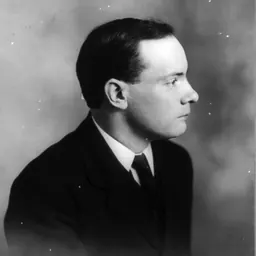
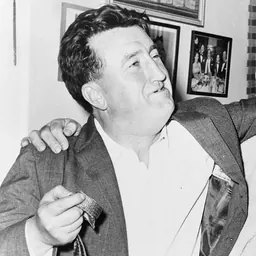


Related people
Same field, nearest in time




Contemporaries
People whose lives overlapped Máirtín Ó Cadhain's

Frequently asked questions
Who was Máirtín Ó Cadhain?
Irish writer (1906–1970)
When was Máirtín Ó Cadhain born?
Máirtín Ó Cadhain was born in 1906 in An Spidéal.
When did Máirtín Ó Cadhain die?
Máirtín Ó Cadhain died on 18 October 1970 in Dublin, Mater Misericordiae University Hospital.
What was Máirtín Ó Cadhain's occupation?
Máirtín Ó Cadhain was a writer, literary critic, university teacher, prose writer, translator and poet.
What nationality was Máirtín Ó Cadhain?
Máirtín Ó Cadhain was Irish.
Sources & further reading
· Wikipedia: Máirtín Ó Cadhain
Cite this page
APA: Biography.guide. (2026). Máirtín Ó Cadhain. https://biography.guide/mairtin-o-cadhain/
MLA: "Máirtín Ó Cadhain." Biography.guide, https://biography.guide/mairtin-o-cadhain/.
Chicago: "Máirtín Ó Cadhain." Biography.guide. https://biography.guide/mairtin-o-cadhain/.
Data last updated: 2026-09-20 · Spot an error? Report a correction.
Page generated 2026-09-27 05:21 UTC