
Mahmud Tarzi
Afghan politician, secular activist and journalist
About Mahmud Tarzi
Lived 1865 – 1933 (aged 68). Mahmud Tarzi was an Afghan poet, historian, journalist, politician, writer and diplomat.
Mahmud Tarzi (, Dari: محمود بیگ طرزی; August 23, 1865 – November 22, 1933) was an Afghan politician and intellectual.
Early years Tarzi was born August 23, 1865, in Ghazni, Afghanistan. An ethnic Pashtun, his father was Ghulam Muhammad Tarzi, leader of the Mohammadzai royal house of Kandahar and a poet. His mother, Sultanat Begum belonged to Popalzai tribe, and was the fourth wife of his father. In 1881, shortly after Emir Abdur Rahman Khan came to power, Mahmud's father and the rest of the Tarzi family were expelled from Afghanistan. They first travelled to Karachi, Sindh, where they lived from January 1882 to March 1885. They then moved to the Ottoman Empire.
Tarzi began to explore the Middle East. He made a pilgrimage to Mecca, visited Paris, and toured the eastern Mediterranean. He also encountered Jamal ad-Din al-Afghani in Constantinople.
A year after Abdur Rahman Khan's death in 1901, Habibullah Khan invited the Tarzi family back to Afghanistan. Tarzi received a post in the government. There he began to introduce Western ideas in Afghanistan. Tarzi's daughter, Soraya Tarzi, married King Amanullah Khan and become Queen of Afghanistan. It played an important role in the development of an Afghan modernist movement, serving as a forum for a small, enlightened group of young Afghans, who provided the ethical justification and basic tenets of Afghan nationalism and modernism under of the very first political party, Party of the Afghan Youth, ideologically secularist, monarchist and state nationalist with a right-of centre political direction, in opposition to the later Constitutional Party, a second political party whose ideologically liberal democratic, reformist, progressive with a constitutional monarchist and left-wing nationalist direction maintaining a strong anticlerical secularist state and within centrist politics. Tarzi also published Seraj-al-Atfal (Children's Lamp), the first Afghan publication aimed at a juvenile audience.
Politics
Like most other Afghan leaders, Tarzi was an Afghan nationalist who held many government positions in his life. He was a reform-minded individual amongst his extended family members whom ruled Afghanistan at the beginning of the 20th century and not unlike his father Sardar Ghulam Muhammad Khan Tarzi. After King Amanullah ascended the throne, Tarzi became Afghan Foreign Minister in 1919. Shortly thereafter, the Third Anglo-Afghan War began. After the national independence from the British in 1919, Tarzi established Afghan Embassies in London, Paris, and other capitals of the world. Tarzi would also go on to play a large role in the declaration of Afghanistan's independence. From 1922 to 1924, he served as Ambassador in Paris, France. He was then again placed as Foreign Minister from 1924 to 1927. Throughout his tenure in Afghanistan, Tarzi was a high government official during the reigns of King Habibullah and his son King Amanullah Khan.
Afghanistan's 1919 Independence
Tarzi effectively guided the second movement of the young constitutionalists called Mashroota Khwah. This led to reviving the first suppressed movement of the constitutionalists in Afghanistan.
Afghan Peace Conferences During the Third Anglo-Afghan War in 1919, when Tarzi served as Foreign Minister, British India bombarded Kabul and Jalalabad. Over a ton of munitions hit Jalalabad in a single day. Tarzi was appointed head of the Afghan Delegation at the peace conferences at Mussoorie in 1920 and Kabul in 1921. The British, who had dealt with Tarzi before, attempted to reduce his position. After four months the talks collapsed because of the Durand Line. Sir Henry Dobbs led the British delegation to Kabul in January, 1921 – Mahmud Tarzi headed the Afghan group. After 11 months of discussions, the British and Afghans signed a peace treaty normalizing their relations. Although Afghanistan was the winner of the conference – as the British accepted Afghanistan's independence – Tarzi's diplomacy was shown as the British sent a message afterwards to Tarzi, giving their good will toward all tribes.
Death Tarzi died on November 22, 1933, at the age of 68 in Istanbul, Turkey.
Don’t just read it —
keep it.
Full-length biographies made to live with: read them, listen on the way to work, watch them tonight.
- E-book
- Audio
- Video
Instant download · yours to keep · every purchase keeps this site free
Important facts
People in Mahmud Tarzi's life
Named in this biography and alive at the same time
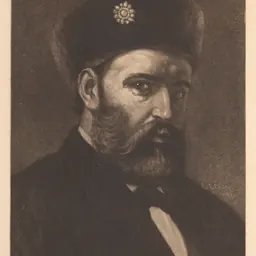
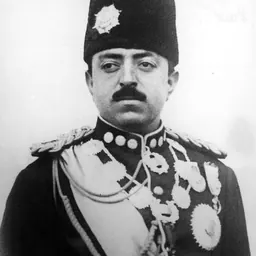

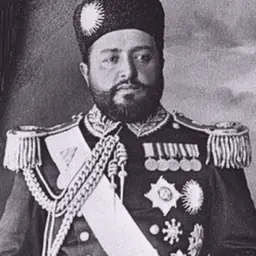


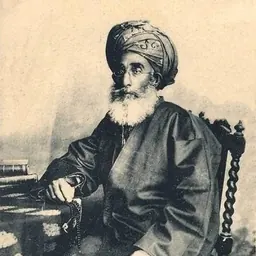
Related people
Same field, nearest in time
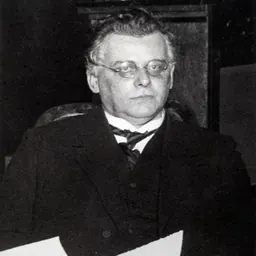
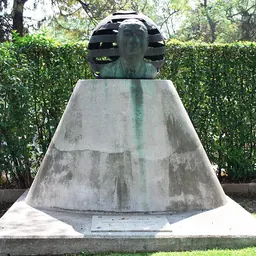
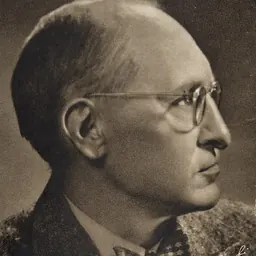
Contemporaries
People whose lives overlapped Mahmud Tarzi's
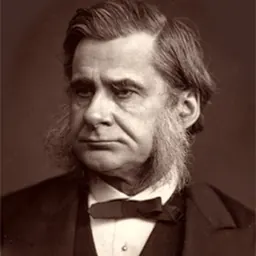


Frequently asked questions
Who was Mahmud Tarzi?
Afghan politician, secular activist and journalist (1865–1933)
When was Mahmud Tarzi born?
Mahmud Tarzi was born on 23 August 1865 in Ghazni.
When did Mahmud Tarzi die?
Mahmud Tarzi died on 22 November 1933 in Istanbul.
What was Mahmud Tarzi's occupation?
Mahmud Tarzi was a poet, historian, journalist, politician, writer and diplomat.
What nationality was Mahmud Tarzi?
Mahmud Tarzi was Afghan.
Sources & further reading
Cite this page
APA: Biography.guide. (2026). Mahmud Tarzi. https://biography.guide/mahmud-tarzi/
MLA: "Mahmud Tarzi." Biography.guide, https://biography.guide/mahmud-tarzi/.
Chicago: "Mahmud Tarzi." Biography.guide. https://biography.guide/mahmud-tarzi/.
Data last updated: 2026-09-20 · Spot an error? Report a correction.
Page generated 2026-09-27 05:29 UTC