
About Mahmud Hussain
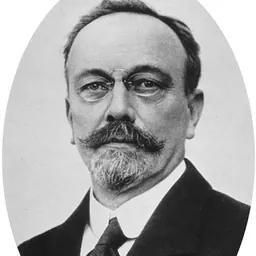
Lived 1907 – 1975 (aged 67). Mahmud Hussain was a Pakistani historian, politician and jurist.
Mahmud Husain Khan (15 July 1907 – 10 April 1975) was a Pakistani historian, educationist, and politician, known for his role in the Pakistan Movement, and for pioneering the study of social sciences. He served as Minister for Kashmir Affairs from 1951 to 1953 and Minister for Education in 1953, as well as minister of state in Pakistan's first cabinet under Prime Minister Liaquat Ali Khan.
As a member of the country's first Constituent Assembly, Husain served on Muhammad Ali Jinnah's parliamentary committee for fundamental rights and minorities. He refused to rejoin the cabinet when Governor-General Ghulam Muhammad dismissed the Nazimuddin ministry. He played a key role in authoring the draft Constitution of 1954 and attempting to curtail the governor-general's powers, A proponent of greater rights for East Bengal and later East Pakistan, now Bangladesh, Husain emerged as a vocal but unsuccessful critic of West Pakistan's policies towards its eastern wing. The youngest of seven sons, he was the brother of Dr Zakir Husain, the third President of India, and scholar and historian Yusuf Husain. He was also the father of television compere Anwar Husain, uncle of academic Masud Husain Khan, and the father-in-law of General Rahimuddin Khan, the Governor of Balochistan. Mahmud Husain's family were ethnic Afridi Pashtuns whose roots were in Kohat and Tirah, Khyber Pakhtunkhwa. His ancestor Husain Khan migrated from Kohat to Qaimganj in 1715.
Member of the Constituent Assembly He was elected Member of the first Constituent Assembly of Pakistan from East Bengal on the platform of Muslim League, and also elected Secretary of the Muslim League's Parliamentary Group. He was included by Prime Minister Liaquat Ali Khan in the Basic Principles Committee, the main parliamentary group charged with drafting the underlying principles of the Constitution of Pakistan. He also served on the committee of minorities and fundamental rights.
Liaquat ministry Husain was appointed both Deputy Minister for Defense and Foreign Affairs in the cabinet of Prime Minister Liaquat in 1949, before becoming State Minister for State and Frontier Regions a year later. He was appointed chairman of the five-member Balochistan Reforms Committee by Liaquat on 4 October 1950; the committee submitted its report to the assembly after extensive tours of the province. It proposed provincial autonomy and raising Balochistan to the status of Governor's province, the introduction of adult franchise and local bodies, and greater provincial autonomy. Termed a 'remarkable document', it was opposed by the centre. Following the assassination of Liaquat Ali Khan, Khawaja Nazimuddin assumed the post of prime minister.
Nazimuddin ministry In the Nazimuddin ministry, Husain served as Minister for Kashmir Affairs from 26 November 1951, and was handed the additional portfolio of Minister for Education on 4 February 1953.
On 24 October, three days before parliament was to promulgate the new Constitution, Ghulam Muhammad dissolved the Constituent Assembly. Mahmud Husain formally retired from politics afterward.
Academic career After the independence of Pakistan in 1947, Husain, inspired by the old Jamia Millia Islamia, New Delhi, India, played a key role in establishing an educational society, Majlis-i-Taleem-i-Milli Pakistan, in 1948, which served as the parent body of the Jamia Millia Educational Complex located in Malir, Karachi. In 1947, he was one of the pioneers in establishing Department of International Relations in University of Dhaka, the first IR department in any South Asian Universities. Later in the early 1950s, many educational institutions were built at this Malir educational complex. Husain also laid the foundation of the Library Association in 1957 and served as its president for fifteen years.
Husain taught as visiting professor at his alma mater Heidelberg University (1963–64), Columbia University (1964–65) and University of Pennsylvania (1965–66). He died while serving as vice-chancellor on 10 April 1975.
Works Husain was fluent in Urdu, English, German, and Persian, writing primarily in the Urdu language. His Urdu translations are Mahida-i-Imrani (1935) from Jean-Jacques Rousseau's Social Contract, and Badshah (1947), a translation of Machiavelli's The Prince. His other books include The Quest for an Empire (1937), and Fatah-i-Mujahideen (1950), an Urdu translation of Zainul Abideen Shustri's Persian treatise on Tipu Sultan. Mahmud Husain Library: On 12 April 1976, a year after his death, the Karachi University Syndicate renamed the Karachi University Library as the Dr. Mahmud Husain Library by unanimous resolution.
Don’t just read it —
keep it.
Full-length biographies made to live with: read them, listen on the way to work, watch them tonight.
- E-book
- Audio
- Video
Instant download · yours to keep · every purchase keeps this site free
Important facts
People in Mahmud Hussain's life
Named in this biography and alive at the same time






Related people
Same field, nearest in time

Contemporaries
People whose lives overlapped Mahmud Hussain's



Frequently asked questions
Who was Mahmud Hussain?
Pakistani academic and politician
When was Mahmud Hussain born?
Mahmud Hussain was born on 5 July 1907 in Kaimganj.
When did Mahmud Hussain die?
Mahmud Hussain died on 12 April 1975 in Karachi.
What was Mahmud Hussain's occupation?
Mahmud Hussain was a historian, politician and jurist.
What nationality was Mahmud Hussain?
Mahmud Hussain was Pakistani.
Sources & further reading
Cite this page
APA: Biography.guide. (2026). Mahmud Hussain. https://biography.guide/mahmud-hussain/
MLA: "Mahmud Hussain." Biography.guide, https://biography.guide/mahmud-hussain/.
Chicago: "Mahmud Hussain." Biography.guide. https://biography.guide/mahmud-hussain/.
Data last updated: 2026-09-25 · Spot an error? Report a correction.
Page generated 2026-09-27 05:12 UTC