
Mahmud al-Kashgari
Turkic scholar and lexicographer
About Mahmud al-Kashgari
Lived 1029 – 1101 (aged 71–72). Mahmud al-Kashgari was a lexicographer, geographer, dialectologist and linguist.
Mahmud ibn Husayn ibn Muhammad al-Kashgari was an 11th-century Kara-Khanid scholar and lexicographer of the Turkic languages from Kashgar.
His father, Husayn, was the mayor of Barsgan, a town in the southeastern part of the lake of Issyk-Kul (nowadays village of Barskoon in Northern Kyrgyzstan's Issyk-Kul Region) and related to the ruling dynasty of Kara-Khanid Khanate. Around 1057 C.E., Mahmud al-Kashgari became a political refugee, before settling down in Baghdad.
Work
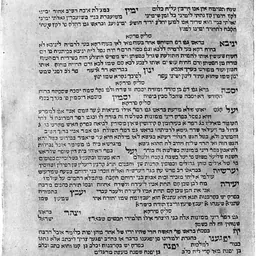
Al-Kashgari studied the Turkic languages of his time and in Baghdad, he compiled the first comprehensive dictionary of Turkic languages, the (English: "Compendium of the languages of the Turks") in 1072–74. It was intended for use by the Abbasid Caliphate, the new Arab allies of the Turks. Mahmud Kashgari's comprehensive dictionary, later edited by the Turkish historian, Ali Amiri, contains specimens of old Turkic poetry in the typical form of quatrains (Persio-Arabic , rubā'iyāt; ), representing all the principal genres: epic, pastoral, didactic, lyric and elegiac. His book also included the first known map of the areas inhabited by Turkic peoples. This map is housed at the National Library in Istanbul.
Dīwān Lughāt al-Turk also contains linguistic data about multiple Turkic dialects that may have been gathered from merchants and others involved in trade along routes that travelled through Transoxiana. The origin of the compiled information is not known. Scholars believe it is likely that Kashgari would have gathered most of the content about Oguz-Turkmen from Oguz tribes in Khorasan since he himself was a student in Seljuk Baghdad, but it is possible that some of this material could have come from early Turkmen. Other scholars believe that the compendium was based on the Turkiyya language of the Chigil tribe in the Kara-Khanid confederation. However, scholars have not yet come to a settled conclusion.
Al-Kashgari advocated monolingualism and the linguistic purism of the Turkic languages and held a belief in the superiority of nomadic people (the Turkic tribes had traditionally been nomads) over urban populations. Most of his Turkic-speaking contemporaries were bilingual in New Persian, which was then the urban and literary language of Central Asia.
Even so, Kashgari praised the dialect spoken by the bilingual Uyghurs as "pure" and "most correct" on par with those of Turkic monolinguals.
Al-Kashgari cautioned against the assimilation of the nomadic way of life into a sedentary culture. He recorded a Turkic proverb that warned, “Just as the effectiveness of a warrior is diminished when his sword begins to rust, so too does the flesh of a Turk begin to rot when he assumes the lifestyle of an Iranian.”
Death Some researchers think that Mahmud al-Kashgari died in 1102 at the age of 97 in Upal, a small city southwest of Kashgar and was buried there. There is now a mausoleum erected on his gravesite. But some modern authors reject this assertion, saying that the date of his death is just unknown.
Legacy He is claimed by Uyghur, Kyrgyz and Uzbek nationalists as part of their respective ethnic groups.
An oriental study university, situated in the capital city of Bishkek in post-Soviet Kyrgyzstan, was named after Makhmud Kashghari, in the 1990s.
UNESCO declared 2008 the Year of Mahmud al-Kashgari.
Don’t just read it —
keep it.
Full-length biographies made to live with: read them, listen on the way to work, watch them tonight.
- E-book
- Audio
- Video
Instant download · yours to keep · every purchase keeps this site free
Important facts
People in Mahmud al-Kashgari's life
Named in this biography and alive at the same time

Related people
Same field, nearest in time




Contemporaries
People whose lives overlapped Mahmud al-Kashgari's




Frequently asked questions
Who was Mahmud al-Kashgari?
Turkic scholar and lexicographer
When was Mahmud al-Kashgari born?
Mahmud al-Kashgari was born in 1029 in Kashgar.
When did Mahmud al-Kashgari die?
Mahmud al-Kashgari died in 1101 in Upal.
What was Mahmud al-Kashgari's occupation?
Mahmud al-Kashgari was a lexicographer, geographer, dialectologist and linguist.
What nationality was Mahmud al-Kashgari?
Mahmud al-Kashgari's recorded nationality: Kara-Khanid Khanate.
Sources & further reading
· Wikipedia: Mahmud al-Kashgari
Cite this page
APA: Biography.guide. (2026). Mahmud al-Kashgari. https://biography.guide/mahmud-al-kashgari/
MLA: "Mahmud al-Kashgari." Biography.guide, https://biography.guide/mahmud-al-kashgari/.
Chicago: "Mahmud al-Kashgari." Biography.guide. https://biography.guide/mahmud-al-kashgari/.
Data last updated: 2026-09-20 · Spot an error? Report a correction.
Page generated 2026-09-27 05:29 UTC