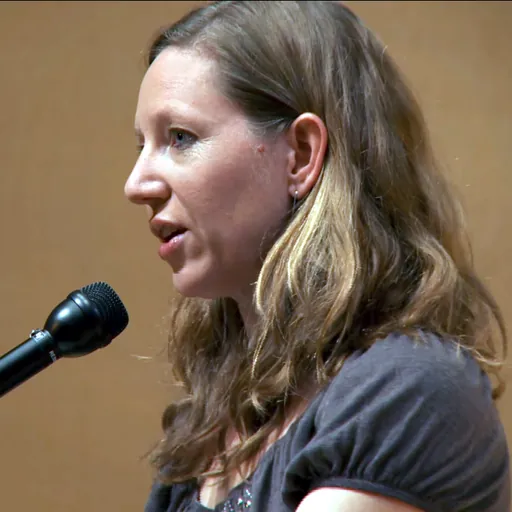
About Maggie Nelson
Born 1973. Maggie Nelson is an American poet, writer, essayist, university teacher, art critic and literary critic.
Maggie Nelson (born 1973) is an American writer. She has been described as a genre-busting writer defying classification, working in autobiography, art criticism, theory, feminism, queerness, sexual violence, the history of the avant-garde, aesthetic theory, philosophy, scholarship, and poetry. Nelson received a 2016 MacArthur Fellowship, and several other major awards in the years before that. She is best known for her work of autotheory, The Argonauts.
Life and career Nelson was born in 1973, the second daughter of Bruce and Barbara Nelson. She grew up in Marin County, California. Her parents divorced when she was eight. In 1984, Nelson's father died of a heart attack. She left New York in 2005 to take a teaching job at the California Institute of the Arts. Matthew Barney, Carolee Schneemann, A. L. Steiner, Kara Walker, and Rachel Harrison.
Nelson has taught about writing, critical theory, art, aesthetics, and literature, at the graduate writing program of The New School, Wesleyan University, Pratt Institute, and California Institute of the Arts. , she was a professor of English at the University of Southern California.
Nelson is married to the artist Harry Dodge, who is fluidly gendered. and was a New York Times best-seller. It is a work of autotheory, offering thinking about desire, identity, family-making, and the limitations and possibilities of love and language. In it, Nelson documents the changes in her body throughout pregnancy with her son, Iggy, and that of her spouse Harry Dodge's body after commencing testosterone and undergoing chest reconstruction ("top surgery"). and was named a New York Times Notable Book of the Year. It covers a wide range of topics, including Sylvia Plath's poetry, Francis Bacon's paintings, the Saw franchise, and Yoko Ono's performance art, and offers a model of how one might balance strong ethical convictions with equally strong appreciation for work that tests the limits of taste, taboo, and permissibility.
Bluets (2009) is a book of prose in numbered segments that deals with pain, pleasure, heartbreak, and the consolations of philosophy, all through the lens of the color blue. It quickly became a cult classic, and was named one of the 10 best books of the past 20 years by Bookforum.
Women, the New York School, and Other True Abstractions (2007) is a scholarly book about gender and abstract expressionism from the 1950s through the 1980s. It focuses on the work of painter Joan Mitchell and poets Barbara Guest, John Ashbery, James Schuyler, Frank O'Hara, Bernadette Mayer, Alice Notley, and Eileen Myles. In 2008 it received the Susanne M. Glasscock Award for Interdisciplinary Scholarship.
Jane: A Murder (2005) and The Red Parts: Autobiography of a Trial (2007) contend with the 1969 murder of Nelson's aunt Jane near Ann Arbor, Michigan. Jane: A Murder explores the incident via a collage of poetry, prose, dream-accounts, and documentary sources, including local and national newspapers, related "true crime" books, and fragments from Jane's diaries. Part elegy, part memoir, detective story, part meditation on sexual violence, and part conversation between the living and the dead, Jane is widely recognized as having expanded the notion of what poetry can do—what kind of stories it can tell, and how it can tell them. It was a finalist for the PEN / Martha Albrand Award for the Art of the Memoir.
The Red Parts picks up where Jane left off, recounting the trial of a new suspect in Jane's murder 36 years after the fact. It is a coming-of-age story, a documentary account of a trial, and an interrogation of the American obsession with violence and missing white women and the nature of grief, justice, and empathy.
In On Freedom (2021), Nelson returned to criticism, responding to the American right's claim to the concept of "freedom," while the left has turned increasingly toward "a discourse about when and how certain transgressions in art should be 'called out' and 'held accountable,' with the twist that now the so-called left is often cast—rightly or wrongly—in the repressive, punitive position". Through the lenses of art, drugs, sex, and climate, Nelson makes a case for the liberal claim to freedom.
Nelson's collections of poetry include Something Bright, Then Holes (2007), The Latest Winter (2003), and Shiner (2001).
Awards and honors 2007 Arts Writers grant from Creative Capital and Andy Warhol Foundation for the Visual Arts. 2010 Guggenheim Fellowship in Nonfiction. 2011 National Endowment for the Arts Fellowship for Poetry. 2012 Creative Capital Literature Fellowship 2015 New York Times Notable Book, The Argonauts. 2015 National Book Critics Circle Award (Criticism), winner for Argonauts. 2016 MacArthur Fellowship, writer.
Don’t just read it —
keep it.
Full-length biographies made to live with: read them, listen on the way to work, watch them tonight.
- E-book
- Audio
- Video
Instant download · yours to keep · every purchase keeps this site free
Important facts
Family & relationships
People in Maggie Nelson's life
Named in this biography and alive at the same time

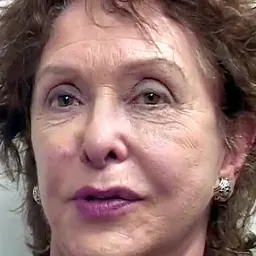
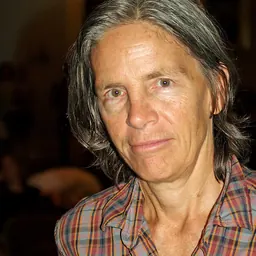
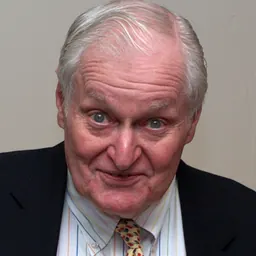

Related people
Same field, nearest in time

Contemporaries
People whose lives overlapped Maggie Nelson's


Frequently asked questions
Who is Maggie Nelson?
American writer
When was Maggie Nelson born?
Maggie Nelson was born in 1973 in San Francisco.
What is Maggie Nelson's occupation?
Maggie Nelson is a poet, writer, essayist, university teacher, art critic and literary critic.
What nationality is Maggie Nelson?
Maggie Nelson is American.
Sources & further reading
Cite this page
APA: Biography.guide. (2026). Maggie Nelson. https://biography.guide/maggie-nelson/
MLA: "Maggie Nelson." Biography.guide, https://biography.guide/maggie-nelson/.
Chicago: "Maggie Nelson." Biography.guide. https://biography.guide/maggie-nelson/.
Data last updated: 2026-09-23 · Spot an error? Report a correction.
Portrait: Wikimedia Commons · author & licence
Page generated 2026-09-27 05:05 UTC