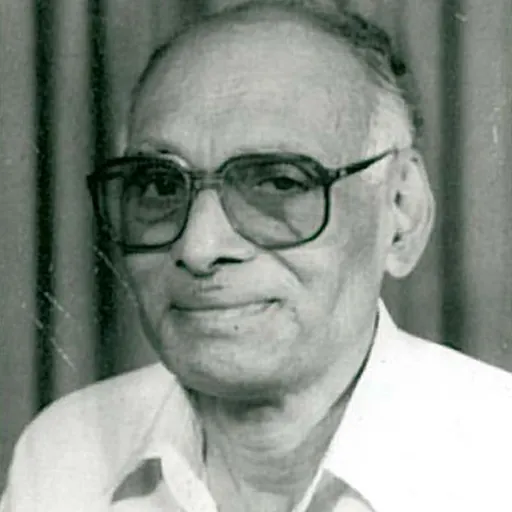
About Madiraju Ranga Rao
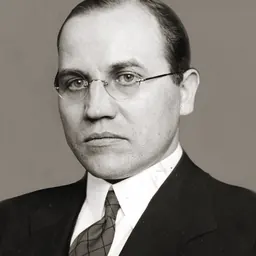
Lived 1935 – 2025 (aged 90). Madiraju Ranga Rao was an Indian poet, literary critic and scholar.
Madiraju Ranga Rao (8 June 1935 – 21 June 2025) was an Indian Telugu poet, scholar, and academic. He is best known as the foremost proponent of Swecchaa Kavitvamu (స్వేచ్ఛా కవిత్వము), or "Free Verse Poetry", in modern Telugu literature. Over the course of his career he published approximately 160 collections of free-verse poetry and more than 20 books of literary criticism, alongside scholarship spanning classical Telugu literature, Indian poetics, and Sanskrit literature.
About Prof. Madiraju Ranga Rao was an accomplished scholar of Telugu and Sanskrit who earned his doctorate from Osmania University and rose to the positions of Senior Professor and Dean during his teaching career. He was widely regarded for his gentle temperament, humility, and unwavering commitment to scholarship.
He championed Swecchaa Kavitvamu (free verse poetry), believing it was better suited to a democratic society than traditional metrical verse. For decades he published one free-verse poetry collection per month, producing approximately 160 poetry collections and over 20 books of literary criticism. His poetic style has been compared to the metaphysical poetry of John Donne — emphasising conceptual depth over narrative incident, with each line functioning as a philosophical definition. He approached his literary work as a spiritual practice, maintaining a marked detachment from worldly acclaim.
Education Ranga Rao pursued his higher education at Osmania University, Hyderabad: M.A. in Sanskrit, Osmania University (1960) M.A. in Telugu, Osmania University (1962) — first in first class Ph.D. in Telugu, Osmania University (1966) — doctoral thesis: Concept and Practice of Poetry of Kavitrayamu
Family Ranga Rao was born to Sri Madiraju Narayana Rao and Smt. Madiraju Lakshmi Devi in Pandithapuram, Yellandu, in the Khammam district of present-day Telangana. He was married to Smt. Madiraju Indira. His children later established the Madiraju Ranga Rao Literature Center, which awards annual prizes to distinguished Telugu and Sanskrit scholars in continuation of his literary legacy.
Academic career Ranga Rao taught Telugu and Sanskrit literature at Osmania University (1964–1968) and at Kakatiya University, Warangal (1968–1995), where he rose to the positions of Senior Professor and Dean. During his tenure he supervised 12 M.Phil. and 10 Ph.D. scholars.
He served as a member of the editorial committee for the Critical Edition of Andhra Maha Bhagavatham (Chief Editor: Acharya Rayaprolu Subba Rao) and as a member of the editorial board of the Critical Edition of Andhra Maha Bharathamu, sponsored by the UGC (Chief Editor: Acharya Khandavalli Laxmi Ranjanam).
He was Principal Investigator on two major research projects sponsored by the University Grants Commission, New Delhi: Concept of Democracy and National Integration in Free-Verse and National, International and Human Facets in Post-Independence Telugu Free-Verse. From 2004 to 2006, he served as Senior Fellow, Department of Culture, Government of India.
Ranga Rao was the founder and editor of the literary journal Rasadhuni Sahithi Parishat. His essays and poems appeared in journals including Swatantra, Navatha, Bharathi, Sravanthi, Jayanthi, Vangmayi, Musi, Andhra Prabha, and Andhra Bhoomi.
Literary contribution Ranga Rao's prominence in modern Telugu literature is associated above all with his free-verse movement, Swecchaa Kavitvamu. He held that free verse was the natural literary expression of a democratic age, and he sought to demonstrate this through his prolific output. His verse is noted for its layered construction — combining imagination with reality, sensuous beauty, philosophical depth, and a sense of the transcendent — and is sometimes described as a form of metaphysical poetry in Telugu.
Recognition Best Teacher Award (1992), Kakatiya University Best Modern Poetry Award (1993), Telugu University, Hyderabad Senior Fellow (2004–2006), Department of Culture, Government of India State Government recognition (2017) for eminent contributions to Telugu literature
Publications Research and literary criticism Dasarathi (దాశరథి) Dasarathi Kavitha Samalochanam (దాశరథి కవితా సమాలోచనం)
Gurajada (గురజాడ) Gurajada Adhunika Chetana / Marovypu (గురజాడ ఆధునిక చైతన్యం)
Kavitrayam (కవిత్రయం) Kavitrayam Srujana Rupam – Nirvahana Shilpam (కవిత్రయం సృజన రూపం – నిర్వహణ శిల్పం)
Mahaprasthanam (మహాప్రస్థానం) Mahaprasthanam – A Critical Study (మహాప్రస్థానం – విమర్శనాత్మక అధ్యయనం)
Navala Swaroopam (నవల స్వరూపం) Navala Swaroopa Samalochanam (నవల స్వరూప సమాలోచనం)
Srujana Chetana – Ramayana Kalpa Vriksham (సృజన చేతన – రామాయణ కల్పవృక్షం) Srujana Chetana – First Part (సృజన చేతన – మొదటి భాగం) Srujana Chetana – Second Part (సృజన చేతన – రెండో భాగం)
Swecchaa Kavitvam – Bhavana Roopaalu (స్వేచ్ఛా కవిత్వం – భావన రూపాలు) Swecchaa Kavitvamlo Bhavana Roopaalu – Parshwalu (స్వేచ్ఛా కవిత్వంలో భావన రూపాలు – పార్శ్వాలు)
Samalochanam Compilations (సమాలోచనం సంపుటాలు) Samalochanam – Anuvaada, Adhikara, Parishodhana & More (సమాలోచనం – అనువాదం, అధికారం, పరిశోధన & మరిన్ని) Samalochanam – Praja Svamya & Manaveeya Bhavana (సమాలోచనం – ప్రజాస్వామ్యం & మానవీయ భావన) Samalochanam Sahitya Vyasaalu (సమాలోచనం సాహిత్య వ్యాసాలు)
Poetry: Swecchaa Kavitvamu Ranga Rao's free-verse output has been organised into nine collected volumes: Swecchaa Kavitvamu – Volume I Swecchaa Kavitvamu – Volume II Swecchaa Kavitvamu – Volume III Swecchaa Kavitvamu – Volume IV Swecchaa Kavitvamu – Volume V Swecchaa Kavitvamu – Volume VI Swecchaa Kavitvamu – Volume VII Swecchaa Kavitvamu – Volume VIII Swecchaa Kavitvamu – Volume IX
Addendum / individual collections Maananaveeyam Melkonna Ee Samayam Muktakaalu and Usha Agamanam Mukthadhatri
Selected individual collections noted in literary journals include Kalanni Nilipi Kshanam and Ee Taram Svara Chitram.
Death Madiraju Ranga Rao died on 21 June 2025 at the age of 90.
Don’t just read it —
keep it.
Full-length biographies made to live with: read them, listen on the way to work, watch them tonight.
- E-book
- Audio
- Video
Instant download · yours to keep · every purchase keeps this site free
Important facts
People in Madiraju Ranga Rao's life
Named in this biography and alive at the same time


Related people
Same field, nearest in time

Contemporaries
People whose lives overlapped Madiraju Ranga Rao's





Frequently asked questions
Who was Madiraju Ranga Rao?
Indian writer
When was Madiraju Ranga Rao born?
Madiraju Ranga Rao was born on 8 June 1935 in Khammam, Pandithapuram, Yellandu.
When did Madiraju Ranga Rao die?
Madiraju Ranga Rao died on 21 June 2025.
What was Madiraju Ranga Rao's occupation?
Madiraju Ranga Rao was a poet, literary critic and scholar.
What nationality was Madiraju Ranga Rao?
Madiraju Ranga Rao was Indian.
Sources & further reading
· Wikipedia: Madiraju Ranga Rao
Cite this page
APA: Biography.guide. (2026). Madiraju Ranga Rao. https://biography.guide/madiraju-ranga-rao/
MLA: "Madiraju Ranga Rao." Biography.guide, https://biography.guide/madiraju-ranga-rao/.
Chicago: "Madiraju Ranga Rao." Biography.guide. https://biography.guide/madiraju-ranga-rao/.
Data last updated: 2026-09-21 · Spot an error? Report a correction.
Portrait: Wikimedia Commons · author & licence
Page generated 2026-09-27 05:00 UTC