
About Madhusudan Gupta
Lived 1800 – 1856. Madhusudan Gupta was a physician and anatomist.
Pandit Madhusudan Gupta (1800 – 15 November 1856) was a Bengali Baidya translator and Ayurvedic practitioner who was also trained in Western medicine and is credited with having performed India's first human dissection at Calcutta Medical College (CMC) in 1836, almost 3,000 years after Susruta.
Born into a Baidya family, he studied Ayurvedic medicine at the Sanskrit College and progressed to teacher. Here, he began translations of a number of English texts into Sanskrit, including Hooper's Anatomists’ Ved-mecum. In addition, he attended anatomy and medicine lectures, becoming familiar with the developing clinical-anatomical medicine of Europe.
In 1835, he was transferred to the new CMC, where he was fundamental in gathering Indian support for practical anatomy and in breaking down Hindu taboos on touching the dead, consequently taking sole responsibility for the first human dissection, performed under the guidance of Professor Henry Goodeve and assisted by four other Hindu students. Controversies regarding the exact date of the first procedure, whether other students had performed it before and whether a military salute was given, remain. Despite any discrepancies, this singular act of dissection has become symbolic of the move of western medicine into India.
As a practitioner, he was successful and well regarded amongst his Indian contemporaries as well as by his European colleagues. In 1837, his involvement with the General Committee of the Fever Hospital and Municipal Improvements included recommendations for Kolkata's sanitation, a plead for better maternal care and a commendation to the smallpox vaccinators of Kolkata. His contributions to the research on puberty helped dismiss myths about the discrepancy of menarche between Indian and British women.
Gupta died from diabetic septicaemia in 1856, at the age of 56.
Early life
Madhusudan Gupta, Madhu Sudan Gupta, and Moodhoosooden Goopto, Initially, the promotion had caused an outcry among the students who boycotted his lessons.
In 1834, Gupta was paid 1,000 rupees for translating Hooper's Anatomists’ Ved-mecum. It was completed under the title of Śärîravidyā ("Science of Things Relating to the Body") due to conflicting opinions on which language it was to be published in. It was following much discussion and the formation of a committee, that it was ultimately published in Sanskrit rather than Hindi. Newly founded in March 1835, Gupta was transferred to the CMC, as a native teacher, where he became involved in the execution of the first entrance examinations
The first human dissection
Widely acknowledged as the "first dissector of British India", Gupta has been frequently credited with the launch of modern medicine in India and breaking religious taboos. Hindu prejudice against touching the dead body was seen as a major obstacle in introducing practical anatomy to the college. In order for the influential Indian community to accept human dissection, and requested by David Hare, who also sought advice from Radhakanta Deb, to produce the necessary supporting literary evidence from traditional Sanskrit Ayurvedic literature. this date is disputed and others have cited the date as 28 October 1836.
Following six months of preparation, persuasion by Bethune and with premeditated secrecy, Gupta followed Professor Goodeve to the Godown Organised by the Lieutenant Governor of Bengal and Bethune, Gupta faced questions from an assembly of pundits, under the supervision of the Maharaja of Nabadwip. He was successful with his given evidence from Sanskrit scriptures and what followed was a steady progression of dissection at CMC over the coming years. Mittra, in his memoirs, also recounts Tagore being witness to a dissection when the anatomy class for Indian youths was opened. Original documents of the dissection, found at CMC in 2011, indicate that the influential Tagore may have had a hand in smuggling the corpse to the anatomy rooms.
In 1848, Goodeve claimed that more 500 dissections had taken place at CMC in the previous year.
General Committee of the Fever Hospital and Municipal Improvements As a successful practitioner, well regarded amongst his Indian contemporaries as well as by his European colleagues, Gupta was called before the General Committee of the Fever Hospital and Municipal Improvements on 3 June 1836. Set up to improve the health situation of Kolkata, he gave evidence over four days.
He attributed the high maternal and neonatal mortality due to fever as owing to the dire state of the labour rooms. He therefore, appealed for better qualified affordable Hindu midwives and a well equipped lying-in hospital. Both variolation and vaccination against smallpox were used in India until 1850, when vaccination became the approved method by the smallpox commission. T. A. Wise was one such medical officer and translator who was guided by Gupta. Wise had translated Susruta's account of the types and usages of leeches. Gupta had, in addition, contributed a note on the medical uses of leeches in the Bengal Dispensatory.
Research Dealing with the private matter of puberty, a topic not considered respectful to enquire about amongst conservative Hindu circles, Gupta proceeded to gather data in a quest to determine the average age of menarche among Hindu girls. and his research into the discrepancy between puberty in India as compared to England.
The information supplied by Goodeve showed that where the average age of menarche was twelve years in a study of 90 cases in India, it was fourteen years in another study of over 2,000 cases from England.
Selected publications Anatomy arthat Sharir Vidya in Bengali Translated London Pharmacopoeia in Bengali Translated Anatomist Vade Mecum in Sanskrit Chikista Sangraha. First printed edition of the Sushruta Samhita (2 vols, Calcutta 1835, 1836)
Don’t just read it —
keep it.
Full-length biographies made to live with: read them, listen on the way to work, watch them tonight.
- E-book
- Audio
- Video
Instant download · yours to keep · every purchase keeps this site free
Important facts
People in Madhusudan Gupta's life
Named in this biography and alive at the same time
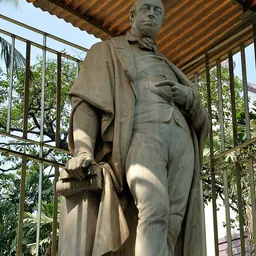


Related people
Same field, nearest in time

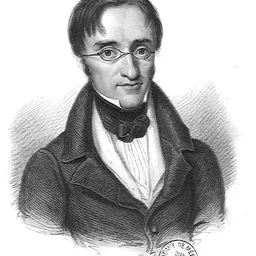




Contemporaries
People whose lives overlapped Madhusudan Gupta's






Frequently asked questions
Who was Madhusudan Gupta?
Indian physician
When was Madhusudan Gupta born?
Madhusudan Gupta was born in 1800 in Baidyabati.
When did Madhusudan Gupta die?
Madhusudan Gupta died on 15 November 1856 in Kolkata.
What was Madhusudan Gupta's occupation?
Madhusudan Gupta was a physician and anatomist.
What nationality was Madhusudan Gupta?
Madhusudan Gupta's recorded nationality: Company rule in India.
Sources & further reading
Cite this page
APA: Biography.guide. (2026). Madhusudan Gupta. https://biography.guide/madhusudan-gupta/
MLA: "Madhusudan Gupta." Biography.guide, https://biography.guide/madhusudan-gupta/.
Chicago: "Madhusudan Gupta." Biography.guide. https://biography.guide/madhusudan-gupta/.
Data last updated: 2026-09-24 · Spot an error? Report a correction.
Page generated 2026-09-27 05:00 UTC