
About Madho Rao Scindia
Lived 1876 – 1925 (aged 48–49). Madho Rao Scindia was an Indian politician.
Maharaja Sir Madhorao Scindia I of Gwalior (20 October 1876 – 5 June 1925), was the 6th Maharaja of Gwalior belonging to the Scindia dynasty of the Marathas.
Biography
Madho Rao acceded to the throne in 1886 and ruled until his death in 1925. He was noted by the British Government as a progressive ruler of a princely state. He was married twice, but only had children with his second wife in 1913, one son and one daughter, to whom King George V and Queen Mary stood sponsors. He was succeeded by his son, Maharajdhiraja Maharaja Sir George Jivaji Rao Scindia, 7th Maharaja Scindia of Gwalior. His daughter married, but died without children in 1934.
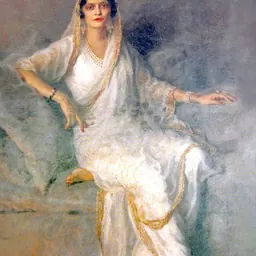
The Maharaja of Gwalior is also known as the rejected suitor of Gayatri Devi's mother, the glamorous Princess Indira of Baroda (Indira Devi), who broke off her engagement (contracted between her parents and her fiancé) by letter. The Maharaja then married Gajararaje from the Rane family of Goa. Later on, Gajararaje's sisters were married into the notable Sardar families of Gwalior, which included the Angre, Shitole & the Mahadik Families.
The Maharaja received a number of honours and decorations from the United Kingdom and other Indian States. He was appointed Honorary Aide-de-camp to King Edward VII in 1901, in recognition of his support during the Boxer Rebellion in China. In May of the following year, he received the honorary degree LL.D. from the University of Cambridge. He was invested as Knight Grand Cross of the Royal Victorian Order (GCVO) on 2 February 1903, during a visit to British India, including Gwalior, by the Duke and Duchess of Connaught.
An interesting story is that Madho Rao, the Maharajah of Gwalior, helped to fund the completion of a set of mosaics in the Church of the Ascension in Timoleague, County Cork, Ireland. The mosaics are of particular note, begun in 1894 by Mr. Robert Augustus Travers of Timoleague House in memory of family members, continued in 1918 by his son Robert in commemoration of his father and brother who were killed at Gallipoli. The last phase of the mosaics was at the expense of the Maharajah of Gwalior, installed as a memorial to his friend and physician, Lt. Col Crofts IMS from Councamore (near Timoleague), who had saved the life of his son. The mosaic was completed by Italian workmen in 1925, ten years after the doctor's death. The mosaic, most likely designed by the Church of Ireland architect W.H. Hill, is a blend of the European and the Islamic. The series of stained glass windows include a Warrington over the altar (east window), glass by Lavers, Westlake and also Mayer elsewhere. The architect Jeremy Williams wrote in "A Companion Guide to Architecture in Ireland 1837-1921" that "this building was a monument to a living friendship enshrined in a hidden masterpiece of the Arts and Crafts Movement in Ireland" and that it "transcended the sectarian divide between Irish Catholic and Protestant, the Indian Muslim and Hindu, personal friendship breaking up distinctions of caste and colour."
Titles
1876-1886: Yuvaraja Maharaj Shrimant Madho Rao Scindia Bahadur 1886-1895: His Highness Ali Jah, Umdat ul-Umara, Hisam us-Sultanat, Mukhtar ul-Mulk, Azim ul-Iqtidar, Rafi-us-Shan, Wala Shikoh, Muhtasham-i-Dauran, Maharajadhiraj Maharaja Shrimant Madho Rao Scindia Bahadur, Shrinath, Mansur-i-Zaman, Fidvi-i-Hazrat-i-Malika-i-Mua'zzama-i-Rafi-ud-Darja-i-Inglistan, Maharaja Scindia of Gwalior 1895-1898: His Highness Ali Jah, Umdat ul-Umara, Hisam us-Sultanat, Mukhtar ul-Mulk, Azim ul-Iqtidar, Rafi-us-Shan, Wala Shikoh, Muhtasham-i-Dauran, Maharajadhiraj Maharaja Shrimant Sir Madho Rao Scindia Bahadur, Shrinath, Mansur-i-Zaman, Fidvi-i-Hazrat-i-Malika-i-Mua'zzama-i-Rafi-ud-Darja-i-Inglistan, Maharaja Scindia of Gwalior, GCSI 1898-1900: Colonel His Highness Ali Jah, Umdat ul-Umara, Hisam us-Sultanat, Mukhtar ul-Mulk, Azim ul-Iqtidar, Rafi-us-Shan, Wala Shikoh, Muhtasham-i-Dauran, Maharajadhiraj Maharaja Shrimant Sir Madho Rao Scindia Bahadur, Shrinath, Mansur-i-Zaman, Fidvi-i-Hazrat-i-Malika-i-Mua'zzama-i-Rafi-ud-Darja-i-Inglistan, Maharaja Scindia of Gwalior, GCSI 1900-1903: Colonel His Highness Ali Jah, Umdat ul-Umara, Hisam us-Sultanat, Mukhtar ul-Mulk, Azim ul-Iqtidar, Rafi-us-Shan, Wala Shikoh, Muhtasham-i-Dauran, Maharajadhiraj Maharaja Shrimant Sir Madho Rao Scindia Bahadur, Shrinath, Mansur-i-Zaman, Fidvi-i-Hazrat-i-Malika-i-Mua'zzama-i-Rafi-ud-Darja-i-Inglistan, Maharaja Scindia of Gwalior, GCSI 1903-1910: Colonel His Highness Ali Jah, Umdat ul-Umara, Hisam us-Sultanat, Mukhtar ul-Mulk, Azim ul-Iqtidar, Rafi-us-Shan, Wala Shikoh, Muhtasham-i-Dauran, Maharajadhiraj Maharaja Shrimant Sir Madho Rao Scindia Bahadur, Shrinath, Mansur-i-Zaman, Fidvi-i-Hazrat-i-Malika-i-Mua'zzama-i-Rafi-ud-Darja-i-Inglistan, Maharaja Scindia of Gwalior, GCSI, GCVO 1910-1917: Major-General His Highness Ali Jah, Umdat ul-Umara, Hisam us-Sultanat, Mukhtar ul-Mulk, Azim ul-Iqtidar, Rafi-us-Shan, Wala Shikoh, Muhtasham-i-Dauran, Maharajadhiraj Maharaja Shrimant Sir Madho Rao Scindia Bahadur, Shrinath, Mansur-i-Zaman, Fidvi-i-Hazrat-i-Malika-i-Mua'zzama-i-Rafi-ud-Darja-i-Inglistan, Maharaja Scindia of Gwalior, GCSI, GCVO 1917-1918: Major-General His Highness Ali Jah, Umdat ul-Umara, Hisam us-Sultanat, Mukhtar ul-Mulk, Azim ul-Iqtidar, Rafi-us-Shan, Wala Shikoh, Muhtasham-i-Dauran, Maharajadhiraj Maharaja Shrimant Sir Madho Rao Scindia Bahadur, Shrinath, Mansur-i-Zaman, Fidvi-i-Hazrat-i-Malika-i-Mua'zzama-i-Rafi-ud-Darja-i-Inglistan, Maharaja Scindia of Gwalior, GCSI, GCVO, GBE 1918-1925: Lieutenant-General His Highness Ali Jah, Umdat ul-Umara, Hisam us-Sultanat, Mukhtar ul-Mulk, Azim ul-Iqtidar, Rafi-us-Shan, Wala Shikoh, Muhtasham-i-Dauran, Maharajadhiraj Maharaja Shrimant Sir Madho Rao Scindia Bahadur, Shrinath, Mansur-i-Zaman, Fidvi-i-Hazrat-i-Malika-i-Mua'zzama-i-Rafi-ud-Darja-i-Inglistan, Maharaja Scindia of Gwalior, GCSI, GCVO, GBE
Honours
(ribbon bar, as it would look today; incomplete)
Knight Grand Commander of the Order of the Star of India (GCSI)-1895 Kaisar-i-Hind Medal, 1st Class-1900 China War Medal (1900)-1901 Knight Grand Cross of the Royal Victorian Order (GCVO) – 2 February 1903 King Edward VII Coronation Medal-1902 Knight Grand Cross of the Order of Philip the Magnanimous of Hesse -1903 Delhi Durbar Gold Medal -1903 King George V Coronation Medal -1911 Bailiff Grand Cross of the Venerable Order of Saint John (GCStJ)-1911 Delhi Durbar Gold Medal -1911 Knight Grand Cross of the Order of the British Empire (GBE)-1917
Don’t just read it —
keep it.
Full-length biographies made to live with: read them, listen on the way to work, watch them tonight.
- E-book
- Audio
- Video
Instant download · yours to keep · every purchase keeps this site free
Important facts
Family & relationships
People in Madho Rao Scindia's life
Named in this biography and alive at the same time


Related people
Same field, nearest in time





Contemporaries
People whose lives overlapped Madho Rao Scindia's

Frequently asked questions
Who was Madho Rao Scindia?
Maharaja of Gwalior (1876–1925)
When was Madho Rao Scindia born?
Madho Rao Scindia was born in 1876 in Gwalior.
When did Madho Rao Scindia die?
Madho Rao Scindia died in 1925 in Paris.
What was Madho Rao Scindia's occupation?
Madho Rao Scindia was a politician.
What nationality was Madho Rao Scindia?
Madho Rao Scindia was Indian.
Sources & further reading
· Wikipedia: Madho Rao Scindia
Cite this page
APA: Biography.guide. (2026). Madho Rao Scindia. https://biography.guide/madho-rao-scindia/
MLA: "Madho Rao Scindia." Biography.guide, https://biography.guide/madho-rao-scindia/.
Chicago: "Madho Rao Scindia." Biography.guide. https://biography.guide/madho-rao-scindia/.
Data last updated: 2026-09-25 · Spot an error? Report a correction.
Page generated 2026-09-27 05:10 UTC