
About Madhav Rao Sapre
Lived 1871 – 1926 (aged 54–55). Madhav Rao Sapre was an Indian journalist, literary critic, translator, lexicographer, writer and newspaper editor.
Madhavrao Sapre (June 1871 – 23 April 1926) was an Indian writer, journalist, and social reformer, widely regarded as a pioneer of Hindi short stories. He is best known for Ek Tokri Bhar Mitti, considered the first Hindi short story. His contributions extended beyond storytelling to include editing, translation, lexicography, and institution-building.
Sapre played a key role in developing economic terminology in Hindi and edited the Vigyan Shabdkosh (Science Dictionary) in 1902 under the Kashi Nagari Pracharini Sabha. Many scholars also consider him one of the first Hindi literary critics.
Early life Sapre was born in June 1871 in Patharia, Damoh district, in present-day Madhya Pradesh. He belonged to a Marathi-speaking family and completed his education in Bilaspur, graduating from Calcutta University in 1899. After initially working as a tehsildar, he left his job to engage in activities related to India's independence movement and Hindi literary development.
Career In 1900, Sapre founded Chhattisgarh Mitra, one of the earliest Hindi magazines, from Pendra in present-day Chhattisgarh. Although Chhattisgarh Mitra had a short run, it is credited with laying the foundation of Hindi journalism in the region. He edited several Hindi language journals, including the Hindi edition of Kesari. He translated notable works of Marathi literature into Hindi, including Bal Gangadhar Tilak's Geeta Rahasya and Samarth Ramdas's Dasbodh.
He was instrumental in standardizing Hindi economic terminology and compiling a science dictionary (Vigyan Shabdkosh) for the Kashi Nagari Pracharini Sabha. He also started the Hindi Mathematical Magazine in Nagpur in 1906 to support Hindi literary writers, however, it was shut down by the British government due to its nationalist content in 1908.
In 1920, Sapre founded the Hindi Mandir in Jabalpur. In 1921, he founded the National School and established the first girls' school, Janaki Devi Mahila Pathshala, in Raipur. In 1924, he chaired the Hindi Sahitya Sammelan session in Dehradun. He died on 23 April 1926 at Tatipara, Raipur.
Notable works Swadeshi Andolan aur Boycott ''Europe ke Itihas Se Seekhne Yogya Baatein
National Creativity Award The Chhattisgarh government instituted the "Pandit Madhavrao Sapre Rashtriya Rachnatmakta Samman" (National Creativity Award) to recognize excellence in creative writing and contributions to Hindi literature. The award is presented annually by the state's Public Relations Department.
Don’t just read it —
keep it.
Full-length biographies made to live with: read them, listen on the way to work, watch them tonight.
- E-book
- Audio
- Video
Instant download · yours to keep · every purchase keeps this site free
Important facts
People in Madhav Rao Sapre's life
Named in this biography and alive at the same time
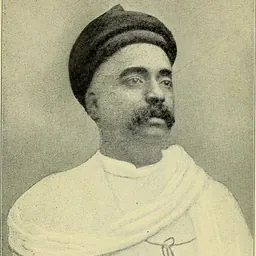
Related people
Same field, nearest in time
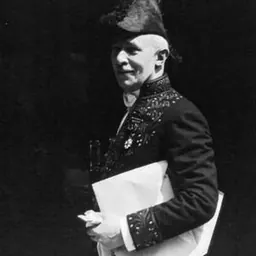
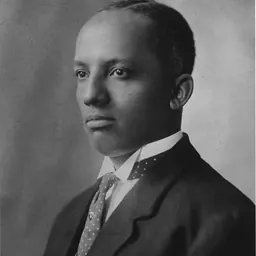

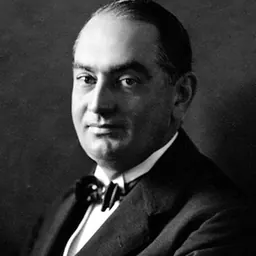

Contemporaries
People whose lives overlapped Madhav Rao Sapre's


Frequently asked questions
Who was Madhav Rao Sapre?
Indian writer, translator
When was Madhav Rao Sapre born?
Madhav Rao Sapre was born on 19 June 1871 in Damoh district.
When did Madhav Rao Sapre die?
Madhav Rao Sapre died in 1926 in Raipur.
What was Madhav Rao Sapre's occupation?
Madhav Rao Sapre was a journalist, literary critic, translator, lexicographer, writer and newspaper editor.
What nationality was Madhav Rao Sapre?
Madhav Rao Sapre was Indian.
Sources & further reading
Cite this page
APA: Biography.guide. (2026). Madhav Rao Sapre. https://biography.guide/madhav-rao-sapre/
MLA: "Madhav Rao Sapre." Biography.guide, https://biography.guide/madhav-rao-sapre/.
Chicago: "Madhav Rao Sapre." Biography.guide. https://biography.guide/madhav-rao-sapre/.
Data last updated: 2026-09-20 · Spot an error? Report a correction.
Page generated 2026-09-27 05:20 UTC