
About Madge Kendal
Lived 1848 – 1935 (aged 87). Madge Kendal was a British actor.
Dame Madge Kendal (born Margaret Shafto Robertson; 15 March 1848 – 14 September 1935) was an English actress of the Victorian and Edwardian eras, best known for her roles in Shakespeare and English comedies. Together with her husband, W. H. Kendal (né Grimston), she became an important theatre manager.
Madge Kendal came from a theatrical family. She was born in Grimsby in Lincolnshire, where her father ran a chain of theatres. She began to act as a small child and made her London debut at the age of four. As a teenager she appeared with Ellen and Kate Terry in Bath, and played Shakespeare's Ophelia and Desdemona in the West End. Under the management of J. B. Buckstone, she joined the company of the Haymarket Theatre in London in 1869, when she was 21. While in the company she met and married the actor W. H. Kendal. After their marriage, in August 1869, the two made it a rule to appear in the same productions, and became known to the public as "The Kendals". They appeared together in new plays by such dramatists as W. S. Gilbert and Arthur Pinero, and from time to time in classics by Shakespeare, Sheridan and others.
After a series of generally successful appearances in London and on tour in Britain, the Kendals joined the actor John Hare in running the St James's Theatre between 1879 and 1888, transforming the fortunes of their theatre, previously known for financial failure. In the late 1880s and early 1890s the Kendals spent much of their time in the US, touring more than 40 cities, and making a considerable amount of money. After returning to acting in Britain for more than a decade, they retired in 1908 from their long careers on the stage.
Madge Kendal was generally considered a finer actor than her husband, and was particularly known for her performances in comic parts. Critical opinion was more divided about her performances in serious roles; some critics regarded her naturalistic acting as sensitive, while others found it cold. The Kendals were part of a movement to make British theatre more socially respectable, and she became known as "the matron of the English theatre". She was active in charitable causes but became estranged from her four surviving children later in life. Kendal outlived her husband and died in retirement at her home in Chorleywood, Hertfordshire, at the age of 87.
Life and career Early years Madge Robertson, later Kendal, was born in Grimsby in Lincolnshire, Some early profiles of Kendal mistakenly take her birthplace to be the adjoining town of Cleethorpes; |group=n the youngest of the reportedly 22 children of William Shaftoe Robertson and his wife Margharetta Elisabetta, née Marinus. Her father was from a theatrical family. He performed at eight theatres his family owned in towns in and around Lincolnshire and later became manager of the same. Her mother was from a Dutch family: her father taught languages in London, and she spoke English with no trace of a foreign accent. At the age of 17, she joined the Robertsons' company, meeting William, whom she married in 1828. Her elder sisters Fanny (1830–1903) and Georgina (1840–1913) became actresses. Another brother, Edward Shafto Robertson (1844–1871), became an actor. Kendal attended a music academy and later recorded in her memoirs that her father continually educated her in literature.
Lincolnshire theatres gradually became financially unviable, and the Robertsons moved to London in the early 1850s, where William became joint manager of the Marylebone Theatre. There, in 1854, aged five, Kendal played the role of young Marie in the drama The Struggle for Gold; or, The Orphan of the Frozen Sea by Edward Stirling, under her father's management. Other child roles quickly followed: Jeannie, a blind girl, in The Seven Poor Travellers (a stage adaptation of a story by Charles Dickens), and roles in the pantomime Tit-Tat-Toe and an old melodrama, The Stranger, by August von Kotzebue.
The family moved to Bristol in 1855, where Kendal played Eva in a dramatised Uncle Tom's Cabin, in which she had four songs. Her singing was much praised, and an operatic career seemed possible, but she contracted diphtheria, and her voice suffered after the removal of her tonsils. Nevertheless, she played a singing role in A Midsummer Night's Dream at the Bath Theatre in 1863, starring the sisters Ellen and Kate Terry as Titania and Oberon, respectively. Seventy years later Kendal recalled the production: "Even today I remember Ellen Terry's performance of Titania as a dream of charm. As girls we were 'Nellie' and 'Madge' to one another and 'Nellie' and 'Madge' we remained until her death".
Over this decade, the Robertsons played steadily in provincial theatres. After Bristol and Bath there was a false start in Kendal's career when she was engaged to play leading roles in the West End. In July 1865 she opened at the Haymarket Theatre, playing Ophelia to the Hamlet of Walter Montgomery. Her performance attracted favourable notice. The Era wrote: Miss Madge Robertson … is youthful in figure, but thoroughly practised in her art, and has a bright, intelligent face, which seems capable of expressing every variety of emotion. The mad scene in the fourth act was rendered with much taste, pathos and discrimination, and the debutante obtained a conspicuous share of the honours of the evening.
In the same Haymarket season she played Blanche to Montgomery's King John, and Desdemona to the Othello of Ira Aldridge. But despite good business at the box office, Montgomery was not a top-rank star, and the season did not mark a breakthrough in the leading lady's career. Later the same year she appeared there as Nerissa, with Mary Frances Scott-Siddons as Portia and Montgomery as Shylock, in The Merchant of Venice.
The next year Kendal rejoined her mother in Hull. There she played Lady Macbeth opposite Samuel Phelps. and after their marriage they almost always appeared in the same productions.
The Haymarket company disbanded in late 1874, and the Kendals then set up their own tour beginning in Birmingham in November. For six consecutive nights they appeared there in Romeo and Juliet, The Lady of Lyons, The Hunchback, As You Like It, East Lynne, Uncle's Will and Weeds.
The Kendals joined the actor John Hare at the Court Theatre in March 1875, opening in a new comedy, Lady Flora. Hare had a comic character role, and the Kendals played the romantic leads, Flora and Harry Armytage. She went on to play Mrs Fitzroy in Hamilton Aide's A Nine Days' Wonder, and then Lady Hilda in Gilbert's fairy comedy, Broken Hearts. She played Susan Hartley (a part she reprised in several later revivals) in Palgrave Simpson's adaptation of a French comedy, called A Scrap of Paper. and it continued throughout most of the 19th century: "an establishment long reputed the most unfortunate in London (1859); "this seemingly ill-fated place of amusement" (1875); "an unlucky one; its capacity was so small that [it did not pay] even with full houses" (1888); |group= n At the invitation of Lord Newry, the owner of the freehold of the theatre, the Kendals and John Hare jointly took over the management of the house in 1879. For the first time, the theatre's reputation was steadily defied. The new lessees aimed both to amuse and to improve public taste, and in the view of the theatre historian J. P. Wearing, they achieved their aim. Under their management the St James's staged twenty-one plays: seven were new British pieces, eight adaptations of French plays, and the rest were revivals. whereas Kendal's Rosalind, which had always been one of her best-loved roles, was again well regarded. among their male colleagues were George Alexander, Allan Aynesworth, Albert Chevalier, Henry Kemble, William Terris, Brandon Thomas and Lewis Waller. The Kendals imposed a high moral code on the members of their company both on stage and behind the scenes. At the same theatre the Kendals also presented The Ironmaster, to comparable popular and critical approval. After a brief return to London they set off on a second and more extensive American tour with a larger repertoire. From October 1891 to May 1892 they made what they billed as their third and last American tour, playing in a total of thirty-five cities. They reappeared on the London stage at the Avenue Theatre from January 1893 in a repertory of four plays, and then toured the English provinces, adding to their repertoire The Second Mrs Tanqueray, which had recently premiered in London starring Mrs Patrick Campbell. The critic William Archer compared the two actresses in the title role: What of Mrs Kendal's reading of the part of Paula? It is the work of an accomplished comedienne who has at her command all the resources of her art. Comparisons are odious, and I do not propose to compare Mrs Kendal with Mrs Patrick Campbell except on one point. She certainly puts a greater depth of feeling into the later acts, and on the whole (I should say) she does rightly. The Kendals then took the play to the US, where self-appointed guardians of morality condemned it, and audiences flocked to see it. Shaw judged that "her finish of execution, her individuality and charm of style, her appetisingly witty conception of her effects, her mastery of her art and of herself [make] her still supreme among English actresses in high comedy". on the day that Tree took over her role.
The Kendals had at least six children. Two died young, and the Kendals became estranged from four others. John Gielgud believed the blame lay with the parents, and reports Kendal as reproaching herself shortly before her death. Kendal was awarded the freedom of her native town, Grimsby, in 1932, the first woman to receive that honour.
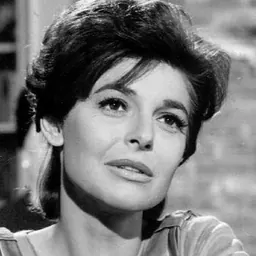
In fiction Kendal is a featured character in the 1979 play The Elephant Man and the unrelated 1980 film of the same name, both based on the life of Joseph Merrick. In the film, she was portrayed by Anne Bancroft, whom Gielgud (who also appeared in the film) thought beautiful but quite unsuited to the role: "Mrs Kendal would be turning somersaults in her grave".
Reputation Gielgud wrote that many people, including James Agate, the leading critic of the time, "considered Madge Kendal the finest actress in England, a mistress of comedy and domestic drama even surpassing Ellen Terry". (Gielgud, who was born in 1904, was less sure of her excellence as a Shakespearean actress.) Agate rated her above Edith Evans and Marie Tempest and in the same league as Ellen Terry, Mrs Patrick Campbell and Sybil Thorndike. The Manchester Guardian's obituary was headed "Dame Madge Kendal: The Most Accomplished Actress of Her Generation", but an unflattering reference in The Times's obituary caused protests. The anonymous writer commented: A very unhistrionic coldness of temperament and a superficiality of thought were the barriers between her acting and any form of greatness; and her rare adventures into the more exacting plays of the modern drama (The Second Mrs. Tanqueray was one of them) left the audience cold. This drew immediate responses; a colleague, F. Forbes-Robertson, wrote: Madge Kendal was undoubtedly our greatest comedian; she was the first to interpret her art in a modern spirit – the first to be untheatrical, unsentimental – attainments described by your critic as "coldness of temperament and superficiality of thought". Surely a flagrantly indiscriminate summary of the subtle, sensitive acting of this great comedian. That she failed in the second-rate neurotic drama The Second Mrs Tanqueray was due to her unsuitability for exaggerated histrionics. St John Ervine wrote "Madge Kendal was an accomplished but not a great actress", but a "great comedienne". He praised her "verve … extraordinary vitality and her gaiety". Ervine considered that her husband's determination to be respectable hampered her artistic development. (Ervine wrote that W.H.) Kendal was not in his wife's class as an actor: "he was dull and pompous, both as a player and a private person, a solemn, sententious man whose heavy utterances were received by his wife as the most delicious sallies of wit; and he made a cult of respectability which, although it earned appreciation for him and his far abler wife, made them both disliked in many quarters."
Notes, references and sources
Don’t just read it —
keep it.
Full-length biographies made to live with: read them, listen on the way to work, watch them tonight.
- E-book
- Audio
- Video
Instant download · yours to keep · every purchase keeps this site free
Important facts
more
Mrs. William H. Kendal, Margaret Shafto Grimston, Dame Madge KendalPeople in Madge Kendal's life
Named in this biography and alive at the same time





Related people
Same field, nearest in time



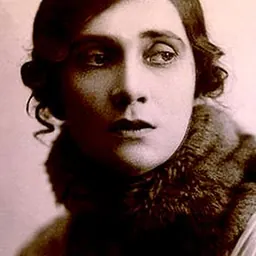
Contemporaries
People whose lives overlapped Madge Kendal's

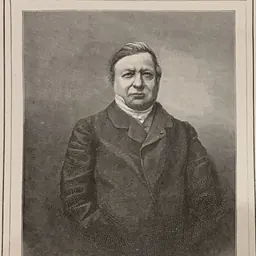
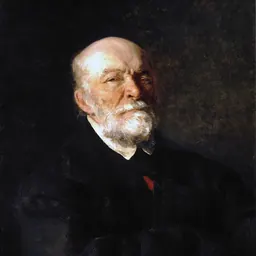


Frequently asked questions
Who was Madge Kendal?
British actor and theatre manager (1848–1935)
When was Madge Kendal born?
Madge Kendal was born on 15 March 1848 in Grimsby.
When did Madge Kendal die?
Madge Kendal died on 14 September 1935 in Chorleywood.
What was Madge Kendal's occupation?
Madge Kendal was an actor.
What nationality was Madge Kendal?
Madge Kendal was British.
Sources & further reading
Cite this page
APA: Biography.guide. (2026). Madge Kendal. https://biography.guide/madge-kendal/
MLA: "Madge Kendal." Biography.guide, https://biography.guide/madge-kendal/.
Chicago: "Madge Kendal." Biography.guide. https://biography.guide/madge-kendal/.
Data last updated: 2026-09-20 · Spot an error? Report a correction.
Page generated 2026-09-27 05:30 UTC