
About Mademoiselle Parisot
Born 1770. Mademoiselle Parisot was a French singer and ballet dancer.
Mademoiselle Parisot (c. 1775 – after 1837) was a French opera singer and ballet dancer in the late 18th and early 19th centuries. Her provocative costumes and dances caused an uproar in London and led to the imposition of restrictions on performances.
Background Parisot's given name has been cited as Rose and as Céline, but during her career she was commonly referred to simply as "Mademoiselle" or "Madame" Parisot. She debuted at the Théâtre de Monsieur in Paris at age 14 in a 20 December 1789 production of l'Infante de Zamora. Parisot was trained by Jean-Antoine Favre Guiardele, the ballet-master of the French Opera. The Victoria & Albert Museum identifies Parisot's father as the journalist Pierre-Germain Pariseau who was mistaken for a royalist and subsequently guillotined in 1794; The Morning Chronicle spoke of the 19-year-old's performance favorably and described her balance "as positively magical, for her person was almost horizontal while turning as a pivot on her toe." Parisot frequently wore costumes that accentuated her legs as she danced, leading the Monthly Mirror to remark on her degree of flexibility in a 1796 performance in the ballet le Triomphe de l'Amour as creating "a stir by raising her legs far higher than was customary for dancers", while Leigh Hunt reported that she was "very thin and always smiling". Mademoiselle Parisot in a 1796 caricature by Robert Newton. The Bishop of Durham and the Duke of Queensberry are in the theatre box to the left. In the late 1790s, Parisot often danced with Rose and Charles Didelot, a husband and wife ballet pair that were trained in Paris and were later influential in developing Russian ballet. In 1798 The Hon. Shute Barrington, Bishop of Durham, denounced a dress she had worn while dancing at the Opera as "indecent". The risqué dance moves of Parisot and the Didelots and Parisot's use of sheer, neoclassical costumes that often exposed one breast The church's response attracted much ridicule and was parodied by many British caricaturists, including James Gilray, Isaac Cruikshank and Robert Newton, who produced multiple caricatures of the Bishop and the Duke of Queensberry looking under Parisot's skirt. In response to the outcry, the colour of dancer's costumes was changed from light pink, flesh-toned pieces to a less provocative white
In 1799, Parisot "astounded" British theatre goers when she dressed in menswear to play Lindor in a production of The Agreeable Surprise. A "shawl dance" performed by Parisot at the King's Theatre as part of the January 1805 production of the ballet, La belle Laitiere, ou Blanche, Reine de Castile "was received with enthusiastic applause." On 15 June 1805, a riot occurred at the Opera due to the manager Mr. Kelly, following the Bishop of London's orders to end the ballet by midnight, drawing the curtain before a dance by Parisot was completed. The angry theatre patrons "threw all the chairs out of the boxes into the pit tore up the benches, destroyed the chandeliers, jumped into the orchestra, smashed the piano forte and broke all the instruments of the poor unoffending performers." who lived at Golden Square. An announcement in The Gentleman's Magazine for December 1807 read simply
At the time of her retirement, she was still playing at the King's Theatre in the ballet La belle Laitiere, and it was reported in January 1808 that she had been replaced in this by a Miss Cranfield. In March of that year Le Beau Monde reported Parisot's marriage to a Mr J. Hughes and claimed that "the lady is said to be three score years of age and to have retired from public life with three score thousand pounds". The actual sum she accrued from her performances is estimated to be around £12,000.
An 1827 advertisement in the Morning Chronicle listed "Madame PARISSOT de PARIS" as a business selling French perfume and flowers at No. 324 Oxford St in London.
Legacy The 1796 Epsom Oaks winner, the Thoroughbred racehorse Parisot, was named after Mademoiselle Parisot.
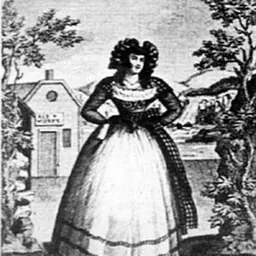
In January 1799, a coloured mezzotint by Charles Turner after John James Masquerier was published which showed Parisot dancing, lightly clothed with a garland (illustration above).
Gallery
Don’t just read it —
keep it.
Full-length biographies made to live with: read them, listen on the way to work, watch them tonight.
- E-book
- Audio
- Video
Instant download · yours to keep · every purchase keeps this site free
Important facts
Related people
Same field, nearest in time


Frequently asked questions
Who was Mademoiselle Parisot?
French singer and ballet dancer
When was Mademoiselle Parisot born?
Mademoiselle Parisot was born in 1770.
When did Mademoiselle Parisot die?
Mademoiselle Parisot died in former 12th arrondissement of Paris.
What was Mademoiselle Parisot's occupation?
Mademoiselle Parisot was a singer and ballet dancer.
What nationality was Mademoiselle Parisot?
Mademoiselle Parisot was French.
Sources & further reading
· Wikipedia: Mademoiselle Parisot
· DBpedia: Mademoiselle Parisot
Cite this page
APA: Biography.guide. (2026). Mademoiselle Parisot. https://biography.guide/mademoiselle-parisot/
MLA: "Mademoiselle Parisot." Biography.guide, https://biography.guide/mademoiselle-parisot/.
Chicago: "Mademoiselle Parisot." Biography.guide. https://biography.guide/mademoiselle-parisot/.
Data last updated: 2026-09-25 · Spot an error? Report a correction.
Page generated 2026-09-27 05:10 UTC