
About Madeleine Riffaud
Lived 1924 – 2024 (aged 100). Madeleine Riffaud was a French war correspondent, journalist, poet, french resistance fighter, political activist and writer.
Marie-Madeleine Riffaud (23 August 1924 – 6 November 2024) was a French Resistance fighter, poet, journalist and war correspondent. After active resistance to the German occupation of France during World War II, in the course of which she was imprisoned and tortured, Riffaud reported for the Communist newspaper L'Humanité and other left-wing publications on the Algerian War (during which she survived an assassination attempt) and on the French, and subsequently American, wars in Vietnam. Her reporting on Vietnam was informed by four years she spent in the North in the early 1950s, and in the 1960s by the connections she developed in the South with the Viet Cong.
Her first poetry collection, Le Poing Fermé (The Clenched Fist), including poems written in prison, was published in 1945. A memoir giving them context, On l'appelait Rainer (Called Rainer), appeared in 1994.
Resistance fighter Riffaud was born on 23 August 1924 in Arvillers (Somme), a village that had been occupied by the Germans in 1870, and destroyed by their advance into France in 1914. Her parents, Gabrielle (Boissin) Riffaud, a devout Catholic, and Jean-Émile Riffaud were both teachers.
Riffaud acknowledged a political debt to her father. Jean-Émile had volunteered for service in the Great War, had been wounded and, in protest against "suicidal" offensives, had participated in the mutinies of 1917. In 1936, when the Spanish Civil War broke out, he had wanted to volunteer for the Republic but was turned down because of "his bum left leg". The experience, together with "a massive kick in the ass" delivered in a train station by Germans whose advances she had resisted, steeled her determination to resist the occupation. She operated under the codename "Rainer", In June, the Waffen-SS massacred 642 civilians in a village from Riffaud's childhood, Oradour-sur-Glane, Riffaud recalled:I have no hate. It was a mission. We had to do it in daylight, to encourage the population. To show them there was an opposition to the German occupation and it was French. I wanted to do more than simply harangue people in queues, telling them the truth of what was happening and I was cross at being told always to carry weapons across town for the men to use, so I asked for permission to use a gun myself. She later reflected: “Can one be mean, when one looks at the Seine? He was perhaps a good guy… but well, that’s war”. She immediately returned to the Resistance. On 23 August, in command of four men, and with the support of railway workers she trapped a train carrying loot and munitions in the Buttes-Chaumont tunnel and secured the surrender of the 80 German soldiers aboard. On the 25th she took part in an attack on the barracks on Place de la République, whose garrison had refused to accept von Choltitz's order to surrender.
Poet, journalist and anti-colonial war correspondent Riffaud said she owed her life to the surrealist poet Paul Éluard who encouraged her to write.
While working as a journalist for Ce soir, a newspaper run by Aragon, in 1945 Riffaud published her first poetry collection, Le Poing Fermé (The Clenched Fist), with a preface by Éluard and a sketch portrait of her by Picasso on the cover.
Anti-Colonialism
Riffaud understood support for anti-colonial struggle as a continuation of her wartime commitment to liberation of France: "a people who oppress another", she maintained, "can never be a free people". Ruffaud's opposition to the Communist Party's participation in a post-war government, intent on reasserting French colonial authority, ended a brief marriage to Pierre Daix, Their young daughter, Fabienne,
Algeria Already, in 1946, Riffaud was familiar with the violence of French rule in Algeria. She had hosted an Algerian high school student, the future writer and journalist Kateb Yacine, who bore witness to massacres in Algeria that had followed the Muslim demonstrations of 8 May 1945. In Paris, Riffaud supported the Movement for the Triumph of Democratic Liberties (MTLD), led by Messali Hadj, and their banned demonstration of 14 July 1953 which the police dispersed with deadly fire.
In 1952, and again 1954, La Vie Ouvrière, the press organ of the labour federation CGT, sent Riffaud to Algeria where she reported on the political and social tensions rising in advance of the Algerian insurrection. Initially, she covered the Algerian War for L’Humanité from Paris. She documented the torture and disappearance of Algerian activists in the city, repression that culminated in the 1961 Paris massacre when police killed, possibly, two to three hundred Algerians.
Returned to Algeria, in 1962 her vehicle was ambushed by the pro-settler Organisation Armée Secrète (OAS),
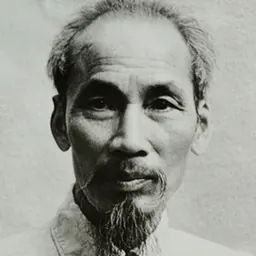
Vietnam In July 1946, Riffaud met Ho Chi Minh in Paris where he had sought to negotiate an end to French colonial rule in Vietnam. A few months later, in November 1946, she published a poem in La Vie Ouvrière decrying the French bombardment of Haiphong (the opening salvo of the First Indochina War).
Later, in the 1960s, she reported from South Vietnam where, with the Australian journalist Wilfred Burchett, she was embedded for eight weeks with the Viet Cong. Riffaud also published Au Nord-Vietnam: écrit sous les bombes (1967), a diary of the North under American bombing.
Later life Upon her return from Vietnam in 1973, and after working in as a nursing assistant in a Paris hospital, she wrote her best-seller Les Linges de la nuit (1974) exposing the drudgery and poor work conditions of hospital workers. She also published another anthology of poems, Cheval rouge: anthologie poétique, 1939–1972. That year a curator found some of her poetry, partly written in prison, and convinced her to write a memoir giving them context; this resulted in the book On l'appelait Rainer. In 2013, President Nicholas Sarkozy awarded her the Ordre national du Mérite for her contributions to France and the world. She received the Vietnamese Order of Resistance in 1984, and the Friendship Medal in August 2004,
Riffaud turned 100 on 23 August 2024. The occasion was marked by a visit from Vietnamese ambassador to France and the release of the final volume of her graphic war-time memoir, Madeleine, Résistante, created with artist Dominique Bertail and writer Jean-David Morvan.
Publications (1945), (1949), (1951), (1953), (1958), (1961),
(1964), (1965), (1967), (Mãt trãn trên cao) (1968), (1973), (1974), (1994), (2001), (2004),
In German Graphic novel
Don’t just read it —
keep it.
Full-length biographies made to live with: read them, listen on the way to work, watch them tonight.
- E-book
- Audio
- Video
Instant download · yours to keep · every purchase keeps this site free
Important facts
People in Madeleine Riffaud's life
Named in this biography and alive at the same time



Related people
Same field, nearest in time



Contemporaries
People whose lives overlapped Madeleine Riffaud's


Frequently asked questions
Who was Madeleine Riffaud?
French poet (1924–2024)
When was Madeleine Riffaud born?
Madeleine Riffaud was born on 23 August 1924 in Arvillers.
When did Madeleine Riffaud die?
Madeleine Riffaud died on 6 November 2024 in Paris, 3rd arrondissement of Paris.
What was Madeleine Riffaud's occupation?
Madeleine Riffaud was a war correspondent, journalist, poet, french resistance fighter, political activist and writer.
What nationality was Madeleine Riffaud?
Madeleine Riffaud was French.
Sources & further reading
· Wikipedia: Madeleine Riffaud
Cite this page
APA: Biography.guide. (2026). Madeleine Riffaud. https://biography.guide/madeleine-riffaud/
MLA: "Madeleine Riffaud." Biography.guide, https://biography.guide/madeleine-riffaud/.
Chicago: "Madeleine Riffaud." Biography.guide. https://biography.guide/madeleine-riffaud/.
Data last updated: 2026-09-20 · Spot an error? Report a correction.
Page generated 2026-09-27 05:17 UTC