
About Madeleine Brès
Lived 1842 – 1921 (aged 79). Madeleine Brès was a French physician.
Madeleine Alexandrine Brès (née Gebelin; 26 November 1842 – 30 November 1921) was a French pediatrician and the first French woman to obtain a medical degree. In 1875, she defended her thesis on breastfeeding. As a result, she was the first French woman to become a doctor of medicine. At the hospital, a nun took a liking to her and taught her basic techniques, such as the preparation of herbal teas and poultices.
She was twelve when the Gebelin family moved to Paris, and was only fifteen when she married Adrien-Stéphane Brès, a tram conductor and took his surname, becoming known as Madeleine Brès. Brès earned her baccalaureate undergraduate degree in three years. She was admitted and studied alongside three foreign women, the American Mary Putnam, the Russian Catherine Gontcharoff, and the Englishwoman Elizabeth Garrett Anderson, all of whom held Bachelor level equivalent degrees in their respective countries.
Internship and war service Brès excelled in her studies. During her second year in 1869, she was a student under Professor Broca at the Pitié Hospital. The onset of the Franco-Prussian War (1870-1871) led to the departure of many hospital physicians for the front, leading Professor Broca to suggest she be made a temporary intern. She served in this capacity from September 1870 to July 1871. During the Siege of Paris and the Paris Commune, she remained at her post.
Certificates from other physicians and the hospital administration praised her performance. Despite Professor Broca's support, the director of the hospital's Public Assistance refused her authorisation to apply for an externship on 21 December 1871. The refusal stated:
If it had been just you personally, I think I can tell you that permission would probably have been granted. But the Council understood that it could not limit the issue in this way and, examining it in general terms in terms of its application and future consequences, the Council regretted that it could not authorise the innovation that our Administration would have enshrined.
Career in medicine
While studying medicine, Brès spent four years at the Museum of Natural History under Edmond Frémy and three years in the laboratory of Charles Adolphe Wurtz. She prepared a research thesis titled Of Breasts and Breastfeeding (French: De la mamelle et de l'allaitement), which she defended on 3 June 1875. She demonstrated that the chemical composition of breast milk is modified during the course of breastfeeding to better aid the growth and development of the infant.
Brès received a grade of "extrêmement bien" (extremely good)
Widowed and responsible for three children, Brès decided against further pursuit of a hospital job. She moved to the Rue Boissy-d'Anglas in Paris and specialised in pediatric medicine and hygiene. She was surrounded by a wealthy middle-class clientele.
In 1885, she founded her own nursery at 83 Rue Nollet in the Batignolles district, where she cared for infants and children up to age 3 for free. This institution, which she financed herself, was visited by Théophile Roussel and later by Marie-Louise Loubet. The nursery eventually became a municipal institution but retained her name in recognition of her services.
Death In 1921, the Pennsylvania Medical Journal reported that at age 82, Brès was "blind and penniless". She died in poverty in Montrouge on 30 November 1921.
Works and publications De la mamelle et de l'allaitement [Of Breasts and Breastfeeding]. Thesis for the doctorate of medicine, 1875. L'Allaitement artificiel et le biberon [Artificial Feeding and the Bottle].[attachment_0](attachment) G. Masson (Paris), 1877. Available on Gallica. A clinical report on Vin Nourry Iodotané. New York: E. Fougera & Company, 1893.
Tributes
Several schools and nurseries (crèches) in France are named after her, including those in Bobigny, Fresnes, and Pas-de-Calais. A wing of the Hospital of Argenteuil (Val-d'Oise), opened in 2013, is named in her honour. Streets in Paris, Besançon, Nantes, Cabestany, Limoux, Perpignan, Poitiers, Lille, and Laval have been named after her. On 25 November 2019, Google celebrated her 177th birthday with a Google Doodle.
In 2026, Brès was announced as one of 72 historical women in STEM whose names were proposed to be added to the 72 men already celebrated on the Eiffel Tower. The plan was conceived by a student and tour guide named Bernard Rigaud and the list was announced by the Mayor of Paris, Anne Hidalgo following the recommendations of a committee led by Isabelle Vauglin of Femmes et Sciences and Jean-François Martins, representing the operating company which runs the Eiffel Tower.
Distinctions Officer of the Academy (Officier d'Académie) in 1878. Officer of Public Instruction (Officier de l'Instruction Publique) in 1887.
Don’t just read it —
keep it.
Full-length biographies made to live with: read them, listen on the way to work, watch them tonight.
- E-book
- Audio
- Video
Instant download · yours to keep · every purchase keeps this site free
Important facts
People in Madeleine Brès's life
Named in this biography and alive at the same time


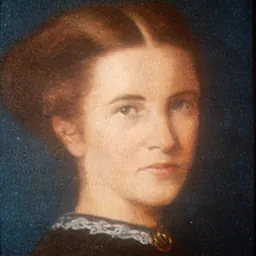

Related people
Same field, nearest in time
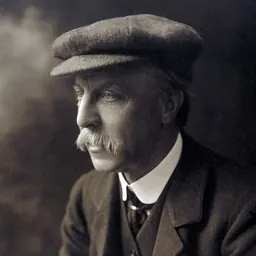
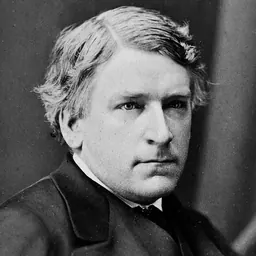


Contemporaries
People whose lives overlapped Madeleine Brès's

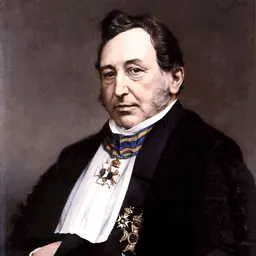
Frequently asked questions
Who was Madeleine Brès?
French physician (1849–1921)
When was Madeleine Brès born?
Madeleine Brès was born on 25 November 1842 in Bouillargues.
When did Madeleine Brès die?
Madeleine Brès died on 30 November 1921 in Montrouge.
What was Madeleine Brès's occupation?
Madeleine Brès was a physician.
What nationality was Madeleine Brès?
Madeleine Brès was French.
Sources & further reading
Cite this page
APA: Biography.guide. (2026). Madeleine Brès. https://biography.guide/madeleine-bres/
MLA: "Madeleine Brès." Biography.guide, https://biography.guide/madeleine-bres/.
Chicago: "Madeleine Brès." Biography.guide. https://biography.guide/madeleine-bres/.
Data last updated: 2026-09-20 · Spot an error? Report a correction.
Page generated 2026-09-27 05:24 UTC