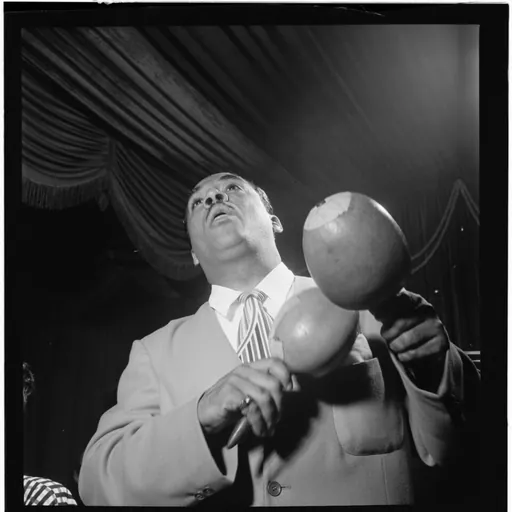
About Machito
Lived 1912 – 1984 (aged 72). Machito was an American and Cuban singer, conductor, bandleader, jazz musician, percussionist and songwriter.
Frank Grillo (born Francisco Raúl Gutiérrez Grillo; December 3, 1909 – April 15, 1984) known professionally as Machito (previously as Macho), was a Latin jazz musician who helped refine Afro-Cuban jazz and played a key role in the creation of both Cubop and salsa music. He was raised in Havana with his foster sister, the singer Graciela.
In New York City, Machito formed the Afro-Cubans in 1940, and with Mario Bauzá as musical director, brought together Cuban rhythms and big band arrangements in one group. He made numerous recordings from the 1940s to the 1980s, many with Graciela as singer. Machito changed to a smaller ensemble format in 1975, touring Europe extensively. He brought his son and daughter into the band, and received a Grammy Award in 1983, one year before he died.
Machito's music had an effect on the careers of many musicians who played in the Afro-Cubans over the years, and on those who were attracted to Latin jazz after hearing him. George Shearing, Dizzy Gillespie, Charlie Parker, Cab Calloway and Stan Kenton credited Machito as an influence. An intersection in East Harlem is named "Machito Square" in his honor.
Early life Machito gave conflicting accounts of his birth. He sometimes said he was a native Cuban from Havana. Other accounts place his birth in Tampa, Florida, making him an American of Cuban ancestry. He may have been born in 1908 in the Jesús María district of Havana 1909 in the Marianao Beach district of Havana or in Tampa, 1912 in Tampa or Havana, or even 1915 in Havana.
Regardless of his place of birth, Machito was fostered from an early age in the Jesús María district of Havana, where Graciela was born on August 23, 1915. Her parents raised both of them. In his teens and twenties in Cuba, "Macho" became a professional musician, playing in several ensembles from 1928 to 1937.
Career Macho moved to New York City in 1937 as a vocalist with Las Estrellas Habaneras (Havana Stars). He worked with several Latin artists and orchestras in the late 1930s, recording with Conjunto Moderno, Cuarteto Caney, After an earlier attempt to launch a band with Mario Bauzá, in 1940 he founded the Afro-Cubans, and conducted their first rehearsal on December 3 at the Park Palace Ballroom located at W. 110th Street in Harlem. A big band-style brass section with trumpets and saxes was backed by a trap drum, piano, bass and a Cuban bongo. Several weeks later, in early January 1941, Machito took on Mario Bauzá as musical director; a role he retained for 34 years.
The band had an early hit with "Sopa de Pichon" in 1941. Its title is slang for "pigeon soup", a Puerto Rican joke about nearly starving as an immigrant in New York.
Machito and the Afro-Cubans, were among the first to fuse Afro-Cuban rhythms with jazz improvisation and arrangements for a big band. Machito was the front man and maraca player of the Afro Cubans, while Bauza determined the character of the band as musical director. Bauza, Machito's brother-in-law from his marriage to Machito's sister Estela, hired jazz-oriented arrangers and musicians to replace the band's founding member and original arranger, José "Pin" Madera, who had been drafted into the U.S. Military and served in World War II.
As a result, Machito's music greatly inspired such United States jazz musicians as Dizzy Gillespie, Charlie Parker and Stan Kenton. One of the items in the Kenton orchestra's repertoire was an idiomatic Afro-Cuban number known as "Machito", composed by Stan Kenton with Pete Rugolo and released as a Capitol 78 in 1947.
In April 1943 during World War II, Machito was drafted into the United States Army. After a few months of training, he suffered a leg injury and was discharged in October. Earlier, anticipating a long absence of the band's leader, Bauza had sent for Machito's younger foster sister Graciela, who traveled to New York from Havana where she had been touring with El Trio Garcia, and singing lead with the all-female Orquesta Anacaona.
In 1983, Machito won a Grammy Award in the Best Latin Recording category for Machito & His Salsa Big Band '82. The recording was made in the Netherlands in about four hours, mostly one take per tune. Frank and Hilda Grillo produced five children: Martha (1941), Frank Jr (1943), Barbara (1948), The family lived in Spanish Harlem at 112th Street and Second Avenue, where Machito enjoyed cooking for his children, writing the occasional song such as "Sopa de Pichón" while working in the kitchen.
Machito suffered a stroke before a concert in London, England in 1984, collapsing while waiting to go on stage at Ronnie Scott's club.
Mario Bauzá died in 1993. Hilda Grillo, a patron of Latin music after her husband's death, died in July 1997. Having never married, Graciela died in April 2010 at the age of 94. Machito lived as a young adult in an apartment on the southwest corner of the intersection.
A documentary film by Isabelle Leymarie and Carlos Ortiz (Leymarie’s name was unduly left out of the credits by Ortiz), Machito: A Latin Jazz Legacy, was released in 1987, showing an elderly Machito and his wife in their Bronx apartment, as well as archival footage from performances in the 1940s and afterward.
Selected discography As leader Mucho Macho Machito (Clef, 1948–1949; Pablo, 1978) 2-LP compilation Kenya (Roulette, 1957) Vacation at the Concord (Verve, 1958) Machito with Flute to Boot (Roulette, 1959) Machito at the Crescendo (GNP Crescendo, 1961) Soul Source (VSP, 1966) Fireworks with Lalo Rodriguez (Coco Records, 1977) Machito and his Salsa Big Band 1982 (Timeless, 1983) Live at North Sea '82 (Timeless, 1983) Machito!!! (Timeless, 1983)
As sideman Miguelito Valdés, Bim Bam Boom – An Album of Cuban Rhythms (Decca, 1946; Decca [10"], 1949) Miguelito Valdés, Afro-Cuban Music (Decca, 1947; Decca [10"], 1951) Charlie Parker, South of the Border (Mercury/Clef/Verve, 1948 and 1951–1952) Dizzy Gillespie, Afro-Cuban Jazz Moods (Pablo, 1975)
Don’t just read it —
keep it.
Full-length biographies made to live with: read them, listen on the way to work, watch them tonight.
- E-book
- Audio
- Video
Instant download · yours to keep · every purchase keeps this site free
Important facts
People in Machito's life
Named in this biography and alive at the same time


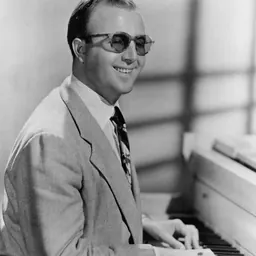
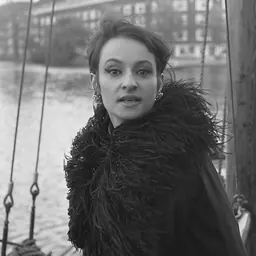
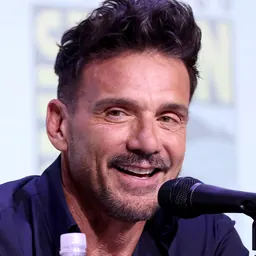
Related people
Same field, nearest in time
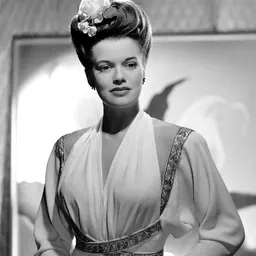



Contemporaries
People whose lives overlapped Machito's





Frequently asked questions
Who was Machito?
Latin jazz musician (1912-1984)
When was Machito born?
Machito was born on 16 February 1912 in New York City, Havana.
When did Machito die?
Machito died on 15 April 1984 in London.
What was Machito's occupation?
Machito was a singer, conductor, bandleader, jazz musician, percussionist and songwriter.
What nationality was Machito?
Machito was American and Cuban.
Sources & further reading
Cite this page
APA: Biography.guide. (2026). Machito. https://biography.guide/machito/
MLA: "Machito." Biography.guide, https://biography.guide/machito/.
Chicago: "Machito." Biography.guide. https://biography.guide/machito/.
Data last updated: 2026-09-21 · Spot an error? Report a correction.
Portrait: Wikimedia Commons · author & licence
Page generated 2026-09-27 05:00 UTC